
📌 At a glance
- Series: Fania Presents: Salsa Around the World
- Presented by: Fania Records (announced by Craft Latino, produced by Edwin Rivera)
- Episodes: 15 episodes, 10 countries, posted from April 1 to October 14, 2022
- Channel: Fania Presents We Love To See You Dance (YouTube)
- Concept: award-winning dancers, an iconic location, a Fania classic
- Artists: Fernando Sosa, Johnny Vazquez, Eddie Torres Jr.
Fania Presents: “Salsa Around the World,” 15 episodes, 10 countries 🌍🔥
Discover Fania Presents: Salsa Around the World, a series of fifteen short dance films presented by Fania Records. In 2022, award-winning dancers from around the world dance to classics from the Fania catalog at iconic locations in their cities. Want to dance like them? Book your free trial class at Studio24!
About this article
This article tells the story of the series Salsa Around the World, from Fania’s beginnings in 1964 to the final episode in October 2022, examining the misconceptions surrounding it along the way. The facts come from official episode descriptions, the press, and academic works, with the artists’ own words where available. The numbers in brackets refer to the notes at the bottom of the page, which also provide details and discrepancies between sources.
Last updated: October 2026.
Contents
- Did Fania create Salsa? 15 countries? The 9 myths about Salsa Around the World
- New York, 1964: Pacheco and Masucci launch Fania
- New York, August 26, 1971: the Cheetah, a venue too small
- New York, 1972-1973: Our Latin Thing, then Yankee Stadium
- New York, the 1970s: the word “Salsa” and its critics
- 1997-2005: Fania, from lawsuits to acquisition
- 2022: Craft Latino and Fania launch the series
- April 1 – June 22, 2022: episodes 1 to 6, from Puerto Rico to Australia
- June 24 – September 7, 2022: episodes 7 to 12, from Monaco to San Francisco
- September 16 – October 14, 2022: episodes 13 to 15, from Milan to New York
- Summary table of the 15 episodes
- The World Mastery artists in the series
- Learn with world-renowned masters
- Learning Salsa in Liège and online
- FAQ: all about Salsa Around the World
- Sources and references
Fania created Salsa. The series brings together fifteen countries. Our Latin Thing gave birth to Salsa. You hear a lot of things about Salsa Around the World, and several sound right without being entirely true. The series itself is simple: fifteen films lasting two to five minutes, posted from April 1 to October 14, 2022, on a Fania YouTube channel [1][2].
To understand it, we need to go back to 1964, to Fania’s beginnings. But before following the thread, nine misconceptions to examine.
Did Fania create Salsa? 15 countries? The 9 MYTHS about Salsa Around the World, TRUE or FALSE
Nine misconceptions keep coming up about the series and Fania. Which ones hold up? The verdict at a glance, followed by the details in the indicated section.
❌ MYTH 1 · Did Fania create Salsa?
The Fania label supposedly invented Salsa
✅ Needs nuance — Fania popularized the word and promoted this music in the marketplace; the music itself emerged in New York in the 1960s [3]. Johnny Pacheco himself says: “It is Cuban music.” (It’s Cuban music.) [4].
❌ MYTH 2 · Did Our Latin Thing give birth to Salsa?
The 1972 film supposedly gave birth to Salsa
✅ False — the film shows a concert from August 26, 1971, and was released in 1972 [5]. According to McMains, the word “was not in general circulation in 1971” (was not in general circulation in 1971) [5].
❌ MYTH 3 · 15 countries?
The series supposedly brings together fifteen countries
✅ False — there are fifteen episodes, but ten countries: Colombia, Spain, and Italy appear twice, the United States three times [2].
❌ MYTH 4 · Produced by Fania?
The series is supposedly a Fania production
✅ Needs nuance — Fania presents it and Craft Latino announces it. Dancer and DJ Edwin Rivera produces it, or co-produces it, and each episode is filmed by a local crew [1][2].
❌ MYTH 5 · Does everyone represent their country of birth?
Each dancer supposedly represents the country where they were born
✅ Not always — Johnny Vazquez was born in Mexico and lives in Italy; Fernando Sosa comes from Uruguay and represents Italy; Rafael Barros and Carine Morais come from Brazil and dance in Miami [2].
❌ MYTH 6 · All world champions?
All the dancers are supposedly world champions
✅ Not established — Fania refers to “top award-winning salsa dance professionals” (Salsa dance professionals awarded at the highest level) [6], without presenting them all as world champions. Tito Ortos and Tamara Livolsi are presented as judges and instructors, Terry Tauliaut as the champion of Guadeloupe [2].
❌ MYTH 7 · Eddie Torres Jr., the “Mambo King”?
Eddie Torres Jr. is supposedly the “Mambo King”
✅ False — “Mambo King” is his father Eddie Torres’s nickname and the name of his stage act [7]. The son is a dancer who trained at Ballet Hispanico [2].
❌ MYTH 8 · Is Salsa Cuban music?
“Salsa” is supposedly just a new name for Cuban music
✅ Debated — Tito Puente said: “I play Cuban music, not salsa.” (I play Cuban music, not Salsa.) [3]. Pacheco responds with the image of a sauce and its seasonings [4].
❌ MYTH 9 · One Salsa style per episode?
Each episode supposedly illustrates a specific style
✅ Not established — no official description names the style being danced. All we know is that Hide & Peko finished fourth in the Pro On1 division of the World Latin Dance Cup 2018 [2].
NEW YORK, 1964: Pacheco and Masucci launch FANIA 💿
It all begins in New York. In 1964, Dominican musician Johnny Pacheco and Italian American lawyer Jerry Masucci found the label Fania Records [4][5][8].
The initial investment is 5 000 dollars, or 2 500 dollars each [9][10]. Their office is the size of a broom closet, and they sell records out of a car trunk in Latino neighborhoods [8].
Why a label? Pacheco’s answer comes down to the musicians’ money. He says he launched Fania to guarantee them income from record sales: “It was just getting royalties” (It was simply about receiving royalties) — Johnny Pacheco, NPR / Latino USA, 2008 [4].
The label grows quickly. It signs future legends: Héctor Lavoe, Celia Cruz, Ray Barretto [4], and Willie Colón, another of the label’s stars [5]. Willie Colón died on Saturday, February 21, 2026, at the age of 75 [11]. In 1968, Pacheco brings together a supergroup of musicians: the Fania All-Stars [4].
NEW YORK, August 26, 1971: the CHEETAH, a venue too small 🐆
On August 26, 1971, the Fania All-Stars play live at the Cheetah on 52nd Street in New York [5][8]. Pacheco remembers the crowd: “I remember the capacity at the Cheetah was something like 800 people and we put in close to 2,000.” (I remember that the Cheetah’s capacity was about 800 people and we put in nearly 2 000.) — Johnny Pacheco, Billboard, 2014 [9]. The Guardian, for its part, describes a club with a capacity of 2 000 [12].
Leon Gast films the concert for the documentary Our Latin Thing. It is also chronicled in two albums, Live at the Cheetah (volumes 1 and 2) [8].
One myth says Salsa was born that night. Carnegie Hall itself lists it among the myths: “The myth goes that salsa was born on August 26, 1971, at the Cheetah Club on West 52nd Street” (The myth has it that Salsa was born on August 26, 1971, at the Cheetah Club on West 52nd Street) — Carnegie Hall, 2024 [8].
Specialists instead place the birth of this music in the 1960s: “The music we today know as salsa emerged in New York City in the 1960s” (The music we know today as Salsa emerged in New York in the 1960s) — Sydney Hutchinson, 2014 [3]. And the word itself is not yet common: McMains writes that the term “was not in general circulation in 1971” (was not in general circulation in 1971) [5].
NEW YORK, 1972-1973: OUR LATIN THING hits theaters, then YANKEE STADIUM 🎬
The film is released in 1972 [5]. Its stars, writes Juliet McMains, are “the Fania AllStars and the Spanish Speaking People of New York City” (the Fania AllStars and the Spanish-speaking people of New York City). In her view, the film “sealed the dominance of the Fania record label over the new musical movement” (sealed the Fania label’s dominance over the new musical movement) — Juliet McMains, 2015 [5].
So the film did not give birth to Salsa: it comes after years of music and helps Fania establish its dominance. On August 23, 1973, the Fania All-Stars play at Yankee Stadium [9][13].
NEW YORK, the 1970s: the WORD “Salsa” and its critics 🗣️
In the 1970s, a word travels faster than the music. According to Lise Waxer, by the start of the decade, “Salsa” has become the common term in Latin America, “owing in large part to its use by Fania Records as a commercial label” (largely thanks to its use by Fania Records as a commercial label) [14]. McMains highlights the role of Izzy Sanabria’s magazine Latin NY and Fania’s record covers in the popular use of the word, around the mid-1970s [5]. Hutchinson sums it up: “Fania Records was the driving commercial force behind the music, popularizing the term “salsa”” (Fania Records was the driving commercial force behind this music, popularizing the term “Salsa”) [3].
Not everyone likes this word. Tito Puente, McMains summarizes, always maintained that he “never played salsa—he ate salsa. He played mambo” (never played Salsa: he ate it. He played Mambo) [5]. In Hutchinson’s book, his statement is shorter: “I play Cuban music, not salsa.” (I play Cuban music, not Salsa.) [3].
Mario Bauzá, quoted by McMains, responds to a famous Cuban writer as follows: “Salsa? Salsa? Listen, son, this isn’t a serious interview. Do you want to interview me or poison my blood talking about that? Who said salsa exists? Go ahead, show me a paper with salsa music, come on.” (Salsa? Salsa? Listen, son, this is not a serious interview. Do you want to interview me or poison my blood with that? Who said Salsa exists? Come on, show me a paper with Salsa music, come on.) [5].
Izzy Sanabria, Fania’s host, repeats a Cuban writer’s criticism: “A woman writer from Cuba said the word salsa is used to disguise the fact that salsa is really Cuban music, that we changed it in order not to give credit to Cuba. She’s right, but this was not preplanned.” (A Cuban writer said that the word Salsa is used to hide the fact that Salsa is really Cuban music, that we changed it so as not to give credit to Cuba. She is right, but it was not premeditated.) [5].
Musicologist Peter Manuel, quoted by McMains, reports that to many the word has always seemed like a commercial label: “To many, the term has always seemed to be an artificial, commercial rubric, designed partially to obscure the politically inconvenient Cuban origin of the music.” (To many, the term has always seemed like an artificial, commercial label, intended in part to hide the music’s politically inconvenient Cuban origins.) [5].
McMains adds a specific fact: “Some “salsa” songs released by the Fania label in the 1970s substituted for the names of the Cuban composers the initials “DR,” standing for derechos reservados (rights reserved). As a result of the political animosity between the Cuban and American governments, none of those Cuban composers saw a peso in royalties.” (Some “Salsa” songs released by Fania in the 1970s replaced the names of Cuban composers with the initials “DR,” for derechos reservados. Because of the political animosity between the Cuban and American governments, none of those Cuban composers received a peso in royalties.) [5].
Pacheco, quoted by Hutchinson, defends the original idea. He describes Fania’s work this way: “What we were doing was taking Cuban music and adding more progressive chords, emphasizing rhythms, and highlighting certain aspects.” (What we were doing was taking Cuban music and adding more progressive chords, emphasizing rhythms, and highlighting certain aspects.) [3]. And he recounts the origin of the word: “It is Cuban music. But the thing is, like, the idea came because we had Puerto Ricans, Cubans, Dominicans in the Fania All-Stars […] And when you make a salsa, you have different condiments. I said, “This is perfect to cook a salsa.”” (It is Cuban music. But the idea came from the fact that we had Puerto Ricans, Cubans, and Dominicans in the Fania All-Stars […] And when you make a Salsa, you have different condiments. I said to myself, “This is perfect for cooking a Salsa.”) — Johnny Pacheco, NPR / Latino USA, 2008 [4].
1997-2005: FANIA, from lawsuits to acquisition 💼
Hutchinson, drawing on Chris Washburne’s work, writes that the label “was eventually embroiled in lawsuits related to its brutal treatment of artists and neglect of royalty payment, and it was sold off in 1997” (eventually became embroiled in lawsuits related to its brutal treatment of artists and neglect of royalty payments, and was sold in 1997) [3].
Jerry Masucci dies in 1997, and his estate remains “tied up in probate for eight years” (tied up for eight years in probate proceedings) [15]. In 2005, his family sells Fania and its roughly 1 300 albums to Emusica, a Miami company [16][15].
The two accounts exist side by side. In 2008, Pacheco said he had founded Fania to guarantee royalties for musicians (see 1964) [4]; Hutchinson, meanwhile, reports lawsuits related to royalty payments [3].
2022: CRAFT LATINO and FANIA launch “Salsa Around the World” 🎬
Craft Latino announces the launch of Salsa Around the World, “a new groundbreaking dance series presented by Fania Records” (a new, innovative dance series presented by Fania Records) [1]. The fifteen-second trailer is posted online on March 28, 2022 [6]; the press publishes the announcement on April 5, 2022 [1].
Here is Fania’s promise: “for the first time ever, Fania Records selects top award-winning salsa dance professionals from around the world to showcase their best moves, all set to exciting Fania salsa music” (for the first time, Fania Records selects award-winning Salsa dance professionals from around the world to showcase their best moves, set to Fania’s exciting Salsa music) — Fania Records, trailer, 2022 [6].
Each episode focuses on a dancer, a couple or, in episode 9, a trio, at an iconic location in their city, set to a Fania classic [1][6]. It is produced, or co-produced, by dancer and DJ Edwin Rivera, and filmed on location by a local crew: Rabbit Media Puerto Rico for episode 1, Marcelo “Chelosaoko” Rosero and Electropikal Creative for episode 4 [1][2].
The episodes, lasting 2 to 5 minutes, are announced for every other Friday, with some shifts in online release dates, on the “Fania Presents We Love To See You Dance” channel, created by Fania Records [1]. The dancers represent, the trailer says, “United States, Italy, Colombia, Spain, Japan, among many others” (the United States, Italy, Colombia, Spain, Japan, among many others) [6].
April 1 – June 22, 2022: EPISODES 1 to 6, from PUERTO RICO to AUSTRALIA 🌎
On April 1, 2022, the first episode is posted online: Tito Ortos and Tamara Livolsi dance in front of El Morro in San Juan. Italy, Colombia, Spain, Japan, and Australia follow [2]. Fifteen countries? No: fifteen episodes, ten countries.
🇵🇷 EP. 1 | PUERTO RICO
Tito Ortos & Tamara Livolsi
🎵 “Soy Boricua” – Bobby Valentín
📍 El Morro, San Juan
📅 posted online on April 1, 2022
According to Fania’s description, Tito and Tamara, from Puerto Rico, are “award-winning dancers and instructors” (award-winning dancers and instructors) who have traveled around the world to take part in competitions “as dancers, judges and instructors” (as dancers, judges, and instructors) and run their own company, TNT Entertainment [2]. Tito qualifies this account of his career. He says: “yo no competí en el ambiente del baile pero yo toda mi vida competí” (I did not compete in the dance world, but I have competed all my life), referring mainly to his years in competitive sports; he specifies that he only competed in “dos cositas de relacionadas al baile” (two little things related to dance). Along with Tamara, he served on the committees that wrote the competition rules [17]. Footage: Rabbit Media Puerto Rico.
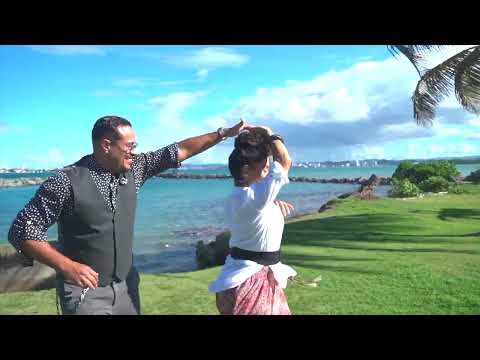
🎬 Episode 1 – Puerto Rico: Tito Ortos & Tamara Livolsi in front of El Morro [2]
🇮🇹 EP. 2 | ITALY
Johnny Vazquez y Su Imperio Azteca
🎵 “Guarare” – Ray Barretto (1975)
📍 Villa Bagatti Valsecchi, Lombardy
📅 posted online on April 15, 2022
Born in Guadalajara, Mexico, Johnny learns Salsa in Los Angeles from his brothers Luis and Francisco; Eddie Torres nicknames him “El Príncipe de la Salsa.” In 2002, he leaves for Europe; around 2006-2007, he settles in Italy, where he runs the Johnny Vazquez Dance School near Milan. Together with Francisco, he speaks of three wins at the Mayan Club, a Los Angeles competition [18]. With his company Imperio Azteca, he ranks among the world’s best Salsa instructors and dancers according to Fania, and has a career spanning more than 25 years [2]. Footage: Pegasus Music Films.
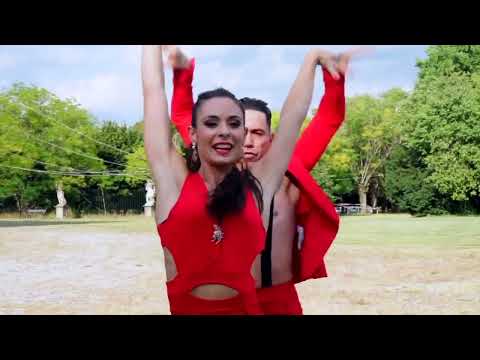
🎬 Episode 2 – Italy: Johnny Vazquez y Su Imperio Azteca in front of Villa Bagatti Valsecchi [2]
🇨🇴 EP. 3 | COLOMBIA
Juan Camilo Diago
🎵 “Qué Rico Suena Mi Tambor” – Fania All Stars (1975)
📍 Boulevard del Río, Cali
📅 posted online on April 29, 2022
A Colombian dancer, Juan Camilo has been a professional soloist for eight years when the episode is released. Competitions have taken him to Turkey, Panama, Peru, and Chile, and he has won in the professional male solo division at the World Latin Dance Cup’s Ultimate Championship, the World Salsa Open, and the World Salsa Festival [2].
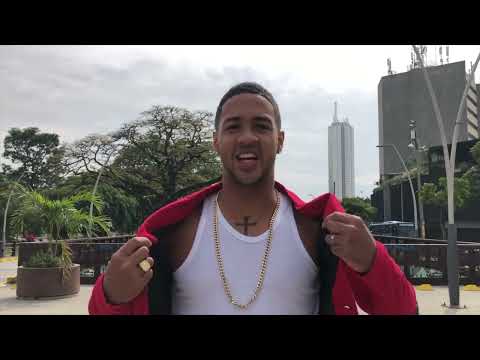
🎬 Episode 3 – Colombia: Juan Camilo Diago in front of Boulevard del Río in Cali [2]
🇪🇸 EP. 4 | SPAIN
Adrián & Anita
🎵 “Ponte Duro” – Roberto Roena (1970)
📍 Sagrada Familia, Barcelona
📅 posted online on May 13, 2022
Anita, born in Ponta Grossa, Brazil, comes from classical ballet; Adrián, born in Montevideo, Uruguay, comes from music. They meet at the Salsa congress in Tarragona in 2005 and have danced together ever since. Their six titles: Puerto Rico in 2007, 2008, and 2011, Greece in 2008 and 2009, according to them, and the World Salsa Masters in Madrid in 2014 [19]. According to Fania, they have visited more than 40 countries and teach techniques based on Caribbean rhythms [2]. Directed by Marcelo “Chelosaoko” Rosero; production: Electropikal Creative.

🎬 Episode 4 – Spain: Adrián & Anita in front of the Sagrada Familia [2]
🇯🇵 EP. 5 | JAPAN
Hide & Peko
🎵 “Mi Gente” – Héctor Lavoe (1975)
📍 Asakusa, Tokyo
📅 posted online on May 27, 2022
A Japanese couple, Hide and Peko have danced together since 2013. They have won Japan’s national Salsa competition four times and placed fourth in the Pro On1 division at the 2018 World Latin Dance Cup [2]. Footage: Tamago.
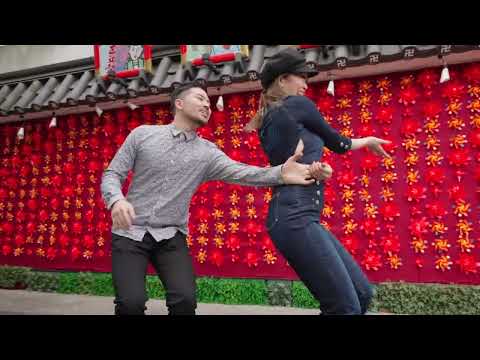
🎬 Episode 5 – Japan: Hide & Peko dance to “Mi Gente” in Tokyo [2]
🇦🇺 EP. 6 | AUSTRALIA
Oliver Pineda & Mercedes Olivera
🎵 “Cocinando” – Ray Barretto (1972)
📅 posted online on June 22, 2022
Born in Australia and of Chilean descent, Oliver holds 10 world Salsa titles, in solo and partner divisions, won from 2001 to 2019. Mercedes, born in Peru, arrived in Australia as a child; a competitive dancer, instructor, and choreographer, she specializes in Salsa, Mambo On2, Bachata, and Brazilian axé. Official dance partners, they jointly run the Latin Motion Dance Academy, which Oliver founded and directs [2]. Footage: Karim Hayek (Subconscious Films).

🎬 Episode 6 – Australia: Oliver Pineda & Mercedes Olivera dance to “Cocinando” [2]
June 24 – September 7, 2022: EPISODES 7 to 12, from MONACO to SAN FRANCISCO 🌉
On June 24, 2022, episode 7 takes the series to Monaco. Canada, Colombia, Spain, Miami, and San Francisco follow [2]. In Miami, Rafael Barros and Carine Morais are presented as coming from Brazil.
🇫🇷 EP. 7 | FRANCE/MONACO
Terry “La Guagua” Tauliaut & Cecile Ovide
🎵 “Mi Desengaño” – Roberto Roena (1975)
📍 Espace Léo Ferré and the Fontvieille terraces, Monaco
📅 posted online on June 24, 2022
Born in France with roots in Guadeloupe, Terry has danced since childhood; at 23, he is a Salsa champion in Guadeloupe. Soon afterward, he meets Cecile at a dance school in Paris: French with roots in Martinique and trained in several styles, she has specialized in Salsa. Members of the U-Tribe company, they open the Salsalianza school in 2007 [2].

🎬 Episode 7 – France/Monaco: Terry & Cecile in Fontvieille [2]
🇨🇦 EP. 8 | CANADA
Harold Rancano & Regan Hirose
🎵 “Escarcha” – Héctor Lavoe (1987)
📍 Winnipeg
📅 posted online on July 8, 2022
Partners for more than ten years, Harold and Regan hold thirteen titles in Salsa and Bachata, including nine Bachata Cabaret world championship titles. Together, they founded Dance World Co., both a dance school and an online platform for all Latin dances [2]. Footage: Kiya Gedion.
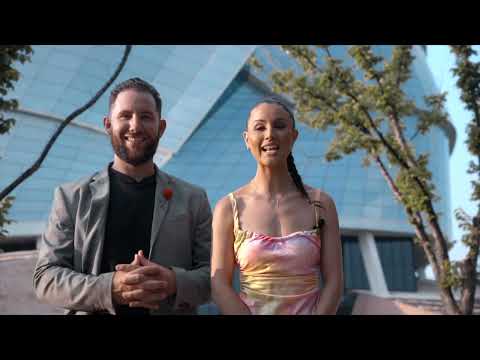
🎬 Episode 8 – Canada: Harold Rancano & Regan Hirose in Winnipeg [2]
🇨🇴 EP. 9 | COLOMBIA
Esfera Latina (Danny Santiago Gonzalez, Alex Gonzalez & Judy Garzon)
🎵 “Sonido Bestial” – Richie Ray & Bobby Cruz
📍 Plaza de Bolívar, Bogotá
📅 posted online on July 22, 2022
The Colombian trio Esfera Latina are world Salsa champions according to Fania, with more than fifteen years of experience. They run two academies in Bogotá, Esfera Latina and La Fabrica Pro [2]. Footage: Julian Parrado.

🎬 Episode 9 – Colombia: Esfera Latina on Plaza de Bolívar in Bogotá [2]
🇪🇸 EP. 10 | SPAIN
José Aranda & María Vela (Pura Pasión)
🎵 “Besito de Coco” – Celia Cruz (song by Ismael Rivera)
📍 Málaga
📅 posted online on August 5, 2022
José and María, the duo Pura Pasión, have danced together since 2010: they teamed up for a Salsa competition and won their first title there. They teach, perform, and compete around the world. In 2021, they become the first Spanish couple to win a Salsa world championship, at the World Latin Dance Cup [2]. Footage: Danilo Giorgianni, at several locations in Málaga, from the port to Gibralfaro.
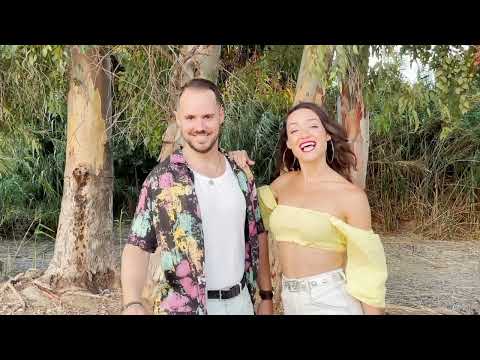
🎬 Episode 10 – Spain: José Aranda & María Vela in Málaga [2]
🇺🇸 EP. 11 | MIAMI
Rafael Barros & Carine Morais
🎵 “Indestructible” – Ray Barretto (1973)
📍 Miami, Florida
📅 posted online on August 22, 2022
Presented by Fania as coming from Brazil, Rafael and Carine have danced together for twelve years. They hold eight world titles in partner Salsa, won in Brazil, Canada, and the United States, and travel the world to compete and teach. They run a school in São Paulo and organize the Brazil Latin Open competition [2].
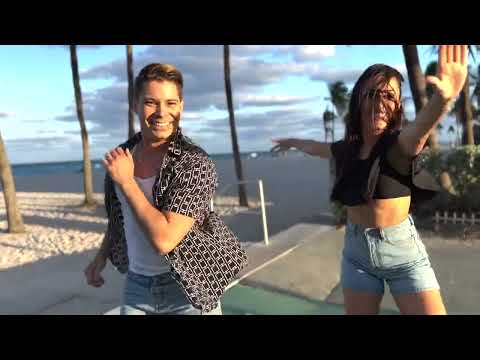
🎬 Episode 11 – Miami: Rafael Barros & Carine Morais [2]
🇺🇸 EP. 12 | SAN FRANCISCO
John Navarez & Liz Rojas
🎵 “Abran Paso” – Ismael Miranda (1971)
📍 Golden Gate Bridge, San Francisco
📅 posted online on September 7, 2022
World Salsa champions according to Fania, with awards individually and as a couple, John and Liz represent the United States. They have collected more than 155 medals at the World Latin Dance Cup and founded the Salsamania Dance Company in the Bay Area [2]. Footage: Takeshi Young.
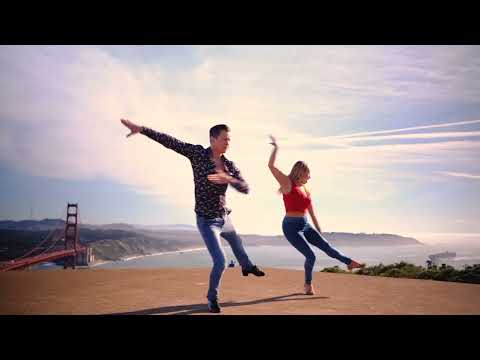
🎬 Episode 12 – San Francisco: John Navarez & Liz Rojas in front of the Golden Gate Bridge [2]
September 16 – October 14, 2022: EPISODES 13 to 15, from MILAN to NEW YORK 🗽
On September 16, 2022, episode 13 is posted online: Fernando Sosa and Tatiana Bonaguro dance in front of the Duomo di Milano. On September 30, episode 14 features Büşra and Emek Yete, who represent Istanbul. On October 14, the series ends in New York [2].
🇮🇹 EP. 13 | MILAN
Fernando Sosa & Tatiana Bonaguro
🎵 “Juan Pachanga” – Rubén Blades (1979)
📍 Duomo di Milano
📅 posted online on September 16, 2022
Born in Montevideo, Uruguay, Fernando leaves for Italy in 1993 to play soccer; the Cuban master Alberto Valdés changes his path. In 2000, he co-founds the Tropical Gem company in Milan with Rafael González. Tatiana, from Milan, starts as a student of Fernando and Alyra Lennox in 2001, and makes her stage debut with Tropical Gem in March 2003. She becomes his stage partner in the late 2000s and now co-directs the company [20]. Fernando’s method is taught in World Mastery Salsa On1.
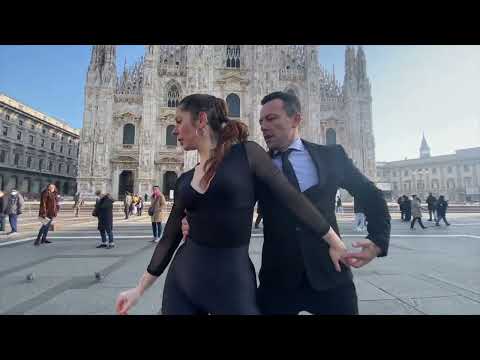
🎬 Episode 13 – Milan: Fernando Sosa & Tatiana Bonaguro in front of the Duomo di Milano [2]
🇹🇷 EP. 14 | TURKEY
Büşra & Emek Yete
🎵 “La Dicha Mía” – Celia Cruz (1986)
📍 Istanbul
📅 posted online on September 30, 2022
Since 2011, they have been one of Turkey’s most popular Salsa couples, according to Fania. In 2019, they opened their academy in Istanbul, where they have since trained many students and instructors. Their results include first place in the IDO online world championship in 2021, in adult couples, and third place in Pro Couple On2 at the World Latin Dance Cup Online 2021 [2].
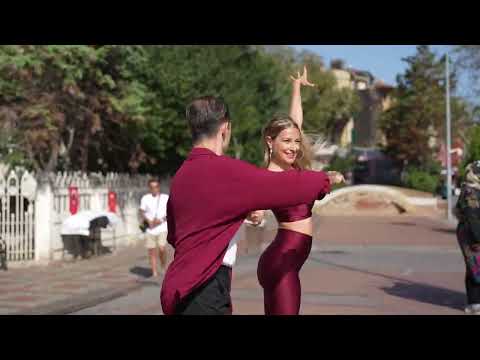
🎬 Episode 14 – Turkey: Büşra & Emek Yete dance to “La Dicha Mía” [2]
🗽 EP. 15 | NEW YORK
Eddie Torres Jr. & Princess Serrano
🎵 “Ponte Duro” – Roberto Roena (1970)
📍 Times Square, New York
📅 uploaded on October 14, 2022
The son of Eddie Torres and a flamenco dancer, Eddie Jr. studies piano and clarinet at the Celia Cruz Bronx High School of Music, then dance at Ballet Hispanico and the Peridance Capezio Center; he has been dancing with his father since 2009 [7]. Princess Serrano, who is of Puerto Rican descent, trained with several Latin dance companies, including Fuego Dance Company, before coming to study in New York [2]. Together, they are associate Latin choreographers and principal dancers in the film In The Heights (2021), and run Mambo Royalty NYC with Tito Puente Jr. [7]. This is the last episode of the series.

🎬 Episode 15 – New York: Eddie Torres Jr. & Princess Serrano in Times Square [2]
In episode 14, Büşra and Emek Yete sum up their vision of dance as follows: “Successful people are not just naturally gifted, they are simply those who work with their whole heart.” (Successful people are not just naturally gifted; they are simply those who work with their whole heart.) — Büşra & Emek Yete, official description of episode 14, 2022 [2].
Episode 15 features the son of Eddie Torres. The nickname “Mambo King” belongs to the father. Torres tells the story himself: “It started with us when we started working together in the year 1979 with Tito, Maria and I. And then when people would see us perform people started saying: Oh look, we got the Mambo King of Music and the Mambo King of Dance” (it started when we began working together, in 1979, with Tito, Maria and me. And when people saw us, they started saying: look, we have the king of Mambo music and the king of Mambo dance) — Eddie Torres, podcast This Scene of Ours (“Pioneers of the Movement”), 2025 [7]. It is also the name of his stage act in a 1990 Channel 9 News report [7]. As for the date of 1979, Juliet McMains writes that in 1980 Torres began performing onstage with Tito Puente and his orchestra [5]. She also describes him as “New York’s most influential teacher of Latin dance” (New York’s most influential Latin dance teacher) [5].
Summary TABLE of the 15 episodes 📊
All the episodes of Salsa Around the World at a glance, with their upload dates [2].
| Ep. | Country | Dancers | Song | Location | Uploaded on |
|---|---|---|---|---|---|
| 1 | 🇵🇷 Puerto Rico | Tito Ortos & Tamara Livolsi | Soy Boricua | El Morro, San Juan | April 1, 2022 |
| 2 | 🇮🇹 Italy | Johnny Vazquez y Su Imperio Azteca | Guarare | Villa Bagatti Valsecchi | April 15, 2022 |
| 3 | 🇨🇴 Colombia | Juan Camilo Diago | Qué Rico Suena Mi Tambor | Boulevard del Río, Cali | April 29, 2022 |
| 4 | 🇪🇸 Spain | Adrián & Anita | Ponte Duro | Sagrada Familia, Barcelona | May 13, 2022 |
| 5 | 🇯🇵 Japan | Hide & Peko | Mi Gente | Asakusa, Tokyo | May 27, 2022 |
| 6 | 🇦🇺 Australia | Oliver Pineda & Mercedes Olivera | Cocinando | — | June 22, 2022 |
| 7 | 🇫🇷 France/Monaco | Terry & Cecile | Mi Desengaño | Fontvieille, Monaco | June 24, 2022 |
| 8 | 🇨🇦 Canada | Harold Rancano & Regan Hirose | Escarcha | Winnipeg | July 8, 2022 |
| 9 | 🇨🇴 Colombia | Esfera Latina | Sonido Bestial | Plaza de Bolívar, Bogotá | July 22, 2022 |
| 10 | 🇪🇸 Spain | José Aranda & María Vela | Besito de Coco | Málaga | August 5, 2022 |
| 11 | 🇺🇸 United States (Miami) | Rafael Barros & Carine Morais | Indestructible | Miami | August 22, 2022 |
| 12 | 🇺🇸 United States (San Francisco) | John Navarez & Liz Rojas | Abran Paso | Golden Gate Bridge | September 7, 2022 |
| 13 | 🇮🇹 Italy (Milan) | Fernando Sosa & Tatiana Bonaguro | Juan Pachanga | Duomo di Milano | September 16, 2022 |
| 14 | 🇹🇷 Turkey (Istanbul) | Büşra & Emek Yete | La Dicha Mía | Istanbul | September 30, 2022 |
| 15 | 🇺🇸 United States (New York) | Eddie Torres Jr. & Princess Serrano | Ponte Duro | Times Square | October 14, 2022 |
WORLD MASTERY Artists in Salsa Around the World 🏆
Two artists from this series are featured in our programs.
🇮🇹 Fernando Sosa (Episode 13)
Fernando Sosa, originally from Uruguay, appears in episode 13 in Milan, with Tatiana Bonaguro [2]. His method is taught in the World Mastery Salsa On1 program at Studio24 [21].
He begins dancing in Italy with Cuban master Alberto Valdés, between 1993 and 1997 according to his accounts, and co-founds Tropical Gem with Rafael González in Milan in 2000 [20]. His style, the Sosa Style, is danced on 1 [20].
🇪🇸 Adrián & Anita (Episode 4)
Adrián & Anita, from Spain, dance in episode 4 in front of the Sagrada Familia and the Agbar towers in Barcelona [2]. They have visited more than 40 countries and give lectures on techniques based on Caribbean rhythms [2]. Anita, born in Brazil, and Adrián, born in Uruguay, have danced together since meeting at the Tarragona congress in 2005; they hold six Salsa world championship titles, from Puerto Rico (2007) to Madrid (2014). Their story is told in our biography of Adrián y Anita [19].
This couple is also featured in Studio24’s World Mastery program [21].
The method of Adolfo Indacochea, a student of Eddie Torres, is available at Studio24.
All the profiles on the blog are gathered on the page about the big names in Salsa, Mambo and Bachata.
🔥 Learn with world-renowned masters!
The methods of Fernando Sosa (Salsa On1), Eddie Torres (Mambo On2) and Korke & Judith (Bachata Sensual) are taught at Studio24 in Liège by Xavier Colina, who trained directly with these masters.
Learning SALSA in Liège and online
The dancers in the series come from Tokyo, Bogotá, Barcelona or Winnipeg. In Liège, you can start with a free trial class: Studio24 offers group classes and private lessons with Xavier Colina.
To put your steps into practice, join us at Puerto Rico Nights. And if you live far from Liège, Studio Live offers online classes.
FAQ about Salsa Around the World ❓
Everything you need to know about the series Fania Presents: Salsa Around the World.
What is “Fania Presents: Salsa Around the World”?
“Salsa Around the World” is a series of 15 episodes lasting 2 to 5 minutes, presented by Fania Records, announced by Craft Latino and produced by Edwin Rivera. Award-winning dancers perform to Fania classics in iconic locations in their cities, in 10 countries. The episodes are uploaded from April 1 to October 14, 2022 [1][2].
Which famous artists appear in Salsa Around the World?
The series features, among others, Johnny Vazquez (three wins at the Mayan Club in Los Angeles, according to him and his brother Francisco [18]), Fernando Sosa (Tropical Gem), Eddie Torres Jr. (son of Eddie Torres, nicknamed “Mambo King”), Oliver Pineda (10 Salsa world titles) and other award-winning couples [2].
Which styles of Salsa are represented in the series?
Fania does not name each couple’s style. We only know that Hide & Peko finished fourth in the Pro On1 division of the World Latin Dance Cup 2018, that Büşra & Emek Yete took third place in Pro Couple On2 at the World Latin Dance Cup Online 2021, and that Harold & Regan are nine-time world champions in Bachata Cabaret [2]. To discover Salsa On1 and Mambo On2, join our Salsa classes in Liège.
Where can you watch the episodes of Salsa Around the World?
All episodes are available for free on YouTube, on the “Fania Presents We Love To See You Dance” channel, created by Fania Records. The official playlist is called “SALSA AROUND THE WORLD”. The trailer and all fifteen episodes are also embedded in this article [1][2].
How can you learn Salsa in Liège?
To learn Salsa in Liège, Studio24 offers group classes and private lessons with Xavier Colina. The methods taught are those of world-renowned masters: Fernando Sosa (Salsa On1) and Adolfo Indacochea (Mambo On2). Try a free trial class to discover them!
How can you learn Salsa in Belgium?
In Belgium, Studio24 in Liège is the go-to place to learn Salsa with the methods of world-renowned masters. There are also online Salsa classes available through Studio Live so you can learn from home. For beginners, progressive programs help you learn the basic steps. Check our Salsa party calendar for Belgium to practice!
Where can you practice Salsa in Liège?
To dance Salsa in Liège, check our party calendar. The Puerto Rico Nights at Studio24 are the perfect opportunity to put what you have learned into practice in a festive, friendly atmosphere. A dance lesson gift voucher also makes a great present!
What is the difference between Salsa On1 and Mambo On2?
It comes down to the count. In the New York style popularized by Eddie Torres, you step on 1, break on 2, take another step on 3, then pause on 4 [5]. That is the count for Mambo On2 (NY Style). Salsa On1 (LA Style) is the other major style, which you can learn in our classes.
What is the history of Fania Records?
Fania Records was founded in 1964 in New York by Johnny Pacheco and Jerry Masucci, with 5 000 dollars, or 2 500 each [4][9][10]. The label helped popularize the word “Salsa” and produced artists such as Celia Cruz, Héctor Lavoe and Willie Colón (who died on February 21, 2026) [3][4][11]. Also discover the documentary Our Latin Thing (1972), which filmed the concert at the Cheetah [5].
Can you give Salsa classes as a gift?
Yes! Studio24 offers gift vouchers so you can give Salsa or Bachata classes as a gift. It’s the perfect gift for Latin dance lovers. Also ideal for a bachelorette party or a wedding first dance!
Sources and references
- ↩
Series announcement, press:
SCHUBE, Will, 2022. Fania Records Launches New Salsa Dance Series, « Salsa Around The World » [online]. uDiscover Music, April 5, 2022. Available at: https://udiscovermusic.com/news/fania-records-dance-series-salsa-around-the-world [accessed October 25, 2026].
Clarification: the article announces that Craft Latino is launching a series “presented by Fania Records,” with each episode “produced by acclaimed dancer and DJ Edwin Rivera”; the 2- to 5-minute episodes are scheduled for release every other Friday starting April 1, for a total of 15 episodes. It describes the channel as “created by legendary label Fania Records.”
Clarification: its schedule lists episode 6 for June 10, episode 11 for August 19 and episode 12 for September 2; the uploads take place on June 22, August 22 and September 7, 2022. The other twelve dates match. It also lists Ricardo & Karen (Chile) for episode 14, replaced by Büşra & Emek Yete, and presents episode 11 as “Carine & Rafael (Brazil).” - ↩
The 15 episodes, official descriptions :
FANIA PRESENTS WE LOVE TO SEE YOU DANCE, 2022. Episode 1 | Salsa Around the World Goes to Puerto Rico [online video]. YouTube, April 1, 2022. Available at: https://youtu.be/awlSY_2-XAI [accessed October 25, 2026].
FANIA PRESENTS WE LOVE TO SEE YOU DANCE, 2022. Episode 2 | Salsa Around the World Goes to Italy [online video]. YouTube, April 15, 2022. Available at: https://youtu.be/85OAuajvCqg [accessed October 25, 2026].
FANIA PRESENTS WE LOVE TO SEE YOU DANCE, 2022. Episode 3 | Salsa Around the World Goes to Colombia [online video]. YouTube, April 29, 2022. Available at: https://youtu.be/AWnk5Q6OjMg [accessed October 25, 2026].
FANIA PRESENTS WE LOVE TO SEE YOU DANCE, 2022. Episode 4 | Salsa Around the World Goes to Spain [online video]. YouTube, May 13, 2022. Available at: https://youtu.be/c5WAbdd2mv4 [accessed October 25, 2026].
FANIA PRESENTS WE LOVE TO SEE YOU DANCE, 2022. Episode 5 | Salsa Around the World Goes to Japan [online video]. YouTube, May 27, 2022. Available at: https://youtu.be/beGgsZpVUnI [accessed October 25, 2026].
FANIA PRESENTS WE LOVE TO SEE YOU DANCE, 2022. Episode 6 | Salsa Around the World Goes to Australia [online video]. YouTube, June 22, 2022. Available at: https://youtu.be/51_rSuy53w8 [accessed October 25, 2026].
FANIA PRESENTS WE LOVE TO SEE YOU DANCE, 2022. Episode 7 | Salsa Around the World Goes to France/Monaco [online video]. YouTube, June 24, 2022. Available at: https://youtu.be/Zj8bVSlUW1E [accessed October 25, 2026].
FANIA PRESENTS WE LOVE TO SEE YOU DANCE, 2022. Episode 8 | Salsa Around the World Goes to Canada [online video]. YouTube, July 8, 2022. Available at: https://youtu.be/y3VPhAS7tqM [accessed October 25, 2026].
FANIA PRESENTS WE LOVE TO SEE YOU DANCE, 2022. Episode 9 | Salsa Around the World Goes to Colombia [online video]. YouTube, July 22, 2022. Available at: https://youtu.be/ugDMLfoyp9E [accessed October 25, 2026].
FANIA PRESENTS WE LOVE TO SEE YOU DANCE, 2022. Episode 10 | Salsa Around the World Goes to España [online video]. YouTube, August 5, 2022. Available at: https://youtu.be/ukfEc42qk78 [accessed October 25, 2026].
FANIA PRESENTS WE LOVE TO SEE YOU DANCE, 2022. Episode 11 | Salsa Around the World Goes to Miami [online video]. YouTube, August 22, 2022. Available at: https://youtu.be/rwUHBykh0LY [accessed October 25, 2026].
FANIA PRESENTS WE LOVE TO SEE YOU DANCE, 2022. Episode 12 | Salsa Around the World Goes to San Francisco [online video]. YouTube, September 7, 2022. Available at: https://youtu.be/VCimI5t5vuM [accessed October 25, 2026].
FANIA PRESENTS WE LOVE TO SEE YOU DANCE, 2022. Episode 13 | Salsa Around the World Goes to Milano [online video]. YouTube, September 16, 2022. Available at: https://youtu.be/GlSEEWAqPQs [accessed October 25, 2026].
FANIA PRESENTS WE LOVE TO SEE YOU DANCE, 2022. Episode 14 | Salsa Around the World Goes to Turkey [online video]. YouTube, September 30, 2022. Available at: https://youtu.be/E_5QM7hphAc [accessed October 25, 2026].
FANIA PRESENTS WE LOVE TO SEE YOU DANCE, 2022. Episode 15 | Salsa Around the World Goes to New York [online video]. YouTube, October 14, 2022. Available at: https://youtu.be/R18e0V_Pim4 [accessed October 25, 2026].
Note: the dates are the YouTube upload dates, not the filming dates. The episode titles refer to ten countries or territories (Puerto Rico, Italy, Colombia, Spain, Japan, Australia, France/Monaco, Canada, United States, Turkey); eleven if Monaco is counted separately. The channel’s official playlist is called “SALSA AROUND THE WORLD”: https://www.youtube.com/playlist?list=PL9DUVb0YADqi1Rf8xWE-QkDAUSSDsf6_m.
Note: in episode 6, the description does not name any filming location. In episode 11, it introduces Rafael Barros and Carine Morais “from Brazil,” dancing “from beautiful Miami, FL.” In episode 14, it says “representing Istanbul, Turkey,” then repeats the sentence from episode 13 about the Duomo di Milano; the episode’s footage, however, shows Istanbul, with a “Galata Tower Ticket Office” sign and signs in Turkish. In episode 15, it says “Time Square” for Times Square.
Note: in episode 2, Johnny Vazquez is “the director of the famous dance company Johnny Vazquez Dance School”; in episode 6, Oliver Pineda is “Founder & Director” of the Latin Motion Dance Academy and Mercedes Olivera is “Head of Operations”; in episode 13, Fernando Sosa “joined forces with Rafael Gonzalez to form the dance company Tropical Gem” in 2000.
Note: Oliver Pineda’s ten world titles, from 2001 to 2019, include solo and couple categories. Regarding the sentence attributed to Büşra & Emek Yete (episode 14): it is the official description that says they sum up their vision of dance this way; it has no date other than the upload date. - ↩
Scholarly book: Hutchinson :
HUTCHINSON, Sydney (ed.), 2014. Salsa World: A Global Dance in Local Contexts. Philadelphia: Temple University Press. Introduction “Dancing in Place,” screens 13 and 14.
Note: screen 13, “The music we today know as salsa emerged in New York City in the 1960s” and “Fania Records was the driving commercial force behind the music, popularizing the term “salsa””; screen 14, Johnny Pacheco’s statement (quoted from WASHBURNE, 2008, p. 20), Tito Puente’s statement, and the label “embroiled in lawsuits” and then sold in 1997.
Note: the digital copy is paginated by screen; the screen replaces the page number here. - ↩
Pacheco, NPR / Latino USA (2008) :
NATIONAL PUBLIC RADIO, LATINO USA, 2008. Fania Records’ Founding Fathers [online]. NPR, February 25, 2008. Available at: https://www.npr.org/2008/02/25/19340430/fania-records-founding-fathers [accessed October 25, 2026].
Note: NPR writes “Pacheco started Fania with only $2,500”; Billboard and the Washington Post speak of 5 000 dollars between the two, or 2 500 each. NPR dates the formation of the Fania All-Stars to 1968 and the founding of Fania to 1964.
Note: the French translations of the quotations in this article are by the author. Quotations are reproduced as spoken or written; any omission is marked […]. - ↩
Scholarly book: McMains :
McMAINS, Juliet, 2015. Spinning Mambo into Salsa: Caribbean Dance in Global Commerce. New York: Oxford University Press. ISBN 978-0-19-932463-7. Introduction, p. 6; chapter 1, p. 22, 23 and 27; chapter 2, p. 33 and 37.
Note: introduction, p. 6, the founding of Fania in 1964 by Johnny Pacheco and Jerry Masucci; chapter 2, p. 33, Willie Colón among Fania’s stars.
Note: chapter 1, p. 22, the term “was not in general circulation in 1971,” the August 26, 1971 concert at the Cheetah, and Our Latin Thing which “sealed the dominance of the Fania record label over the new musical movement”; p. 22-23, the role of the magazine Latin NY and Fania’s album covers; p. 23, the statements by Tito Puente, Mario Bauzá, Izzy Sanabria and Peter Manuel and the story of the initials “DR”; p. 27, Eddie Torres; chapter 2, p. 37, “Eight years later in 1980, Eddie Torres began performing onstage with Tito Puente and his orchestra.”
Note: the page numbers are those of the digital copy and may differ from the print edition. - ↩
Trailer :
FANIA PRESENTS WE LOVE TO SEE YOU DANCE, 2022. Salsa Around The World (Official Trailer) [online video]. YouTube, March 28, 2022. Available at: https://youtu.be/94ZCcX-j90U [accessed October 25, 2026].
Note: a 15-second video posted on the “Fania Presents We Love To See You Dance” channel, rather than on the main Fania Records channel. Its description announces 15 episodes, 2 to 5 minutes long, starting April 1, 2022. - ↩
Eddie Torres and the nickname “Mambo King” :
EDDIE TORRES, 2016. Eddie Torres On Channel 9 News Promoting The Mambo 1990 [online]. Eddie Torres, December 31, 2016. Available at: https://youtu.be/9Dr4B9GS8Uw [accessed October 25, 2026]. Note: a Channel 9 News report from 1990; “Mambo King” is the name of his stage act in it.
THIS SCENE OF OURS, 2025. 🎙️ Scene 18: “Pioneers of the Movement” Ft. Eddie Torres & Eli Irizarry [online]. This Scene of Ours, October 14, 2025. Available at: https://youtu.be/Gp9pQnvh2y0 [accessed October 25, 2026]. Note: Eddie Torres speaking; the quoted passage starts at 1:03, with speech hesitations (repeated words) removed.
STUDIO24, 2026. Biographie d’Eddie Torres : la vie du « Mambo King » [online]. salsaliege.com. Available at: https://salsaliege.com/eddie-torres-roi-mambo-revolution-salsa-new-york/ [accessed October 25, 2026]. Note: Studio24 biography, section on misconceptions; the nickname is dated to 1979 by Torres himself (the audience) and to 1990 by the Channel 9 News report (the stage act). The section on his family introduces Eddie Torres Jr.: the son of Eddie Torres and a flamenco dancer, he has danced with his father since 2009, studied at the Celia Cruz Bronx High School of Music, Ballet Hispanico and Peridance Capezio Center, was, with Princess Serrano, an associate Latin choreographer and principal dancer in the film In The Heights (Warner Bros., 2021), and leads Mambo Royalty NYC with her and Tito Puente Jr. - ↩
Carnegie Hall (2024) :
CARNEGIE HALL, 2024. Salsa Music’s New York Origins and History [online]. Carnegie Hall, December 20, 2024. Available at: https://www.carnegiehall.org/Explore/Articles/2024/12/20/Salsas-New-York-History [accessed October 25, 2026]. Note: text read on an archived copy of the page.
Note: the text says “Together, they founded Fania in 1964,” mentions a “modest budget of $5,000” and locates the Cheetah on West 52nd Street; it states that the concert would be documented by two albums, Live at the Cheetah (volumes 1 and 2), and by Leon Gast’s documentary, Our Latin Thing. - ↩
Billboard (2014) :
COBO, Leila, 2014. Exclusive: Marc Anthony and Other Salsa Legends Share Memories of Legendary Label Fania Records [online]. Billboard, August 28, 2014. Available at: https://www.billboard.com/music/music-news/fania-records-history-johnny-pacheco-marc-anthony-6229288/ [accessed October 25, 2026].
Note: the text says “The two put $5,000 into their venture” and “Fania began with Pacheco and Masucci each investing $2,500.” Pacheco also says that the Cheetah’s capacity was “something like 800 people.” Billboard gives August 23, 1973 as the date of the Yankee Stadium concert. - ↩
Washington Post (2021) :
WASHINGTON POST, 2021. Johnny Pacheco, musician whose Fania record label launched salsa music, dies at 85 [online]. The Boston Globe (Washington Post dispatch), February 19, 2021. Available at: https://www.bostonglobe.com/2021/02/19/nation/johnny-pacheco-musician-whose-fania-record-label-launched-salsa-music-dies-85 [accessed October 25, 2026].
Note: the obituary says that Fania started with “an initial investment of $2,500 each.” - ↩
Death of Willie Colón (February 21, 2026) :
OPB, 2026. Willie Colón, salsa pioneer, has died at 75 [online]. OPB, February 21, 2026. Available at: https://www.opb.org/article/2026/02/21/willie-colon-salsa-pioneer-has-died-at-75/ [accessed October 25, 2026].
EL DÍA, 2026. Muere Willie Colón, leyenda de la salsa y figura clave de la Fania [online]. El Día (Santo Domingo), with the EFE news agency, February 21, 2026. Available at: https://eldia.com.do/muere-willie-colon-leyenda-de-la-salsa-y-figura-clave-de-la-fania/ [accessed October 25, 2026].
Note: OPB writes “died Saturday. He was 75 years old.”; El Día, “falleció este sábado a sus 75 años”; the cause is not given. - ↩
The Guardian (2020) :
CHICK, Stevie, 2020. Fania All-Stars, New York City 1971: salsa swaggers into the mainstream [online]. The Guardian, August 10, 2020 (Yahoo News Canada copy). Available at: https://ca.news.yahoo.com/fania-stars-york-city-1971-130007282.html [accessed October 26, 2026].
Note: the text says that the All-Stars have to settle for “merely packing this 2,000-capacity club” (only filling this club with a capacity of 2 000 people); Pacheco, in Billboard (2014), gives a capacity of about 800 people (note [9]). - ↩
Yankee Stadium, August 23, 1973 :
FANIA RECORDS, 2019. Fania History Timeline [online]. Fania.com, March 25, 2019. Available at: https://fania.com/history [accessed October 25, 2026].
MURIEL, Thomas, 2018. « Live at Yankee Stadium »—The Fania All-Stars (1975) [online]. Library of Congress, essay for the National Recording Registry (text from a 2010 reissue). Available at: https://www.loc.gov/static/programs/national-recording-preservation-board/documents/FaniaAllStars.pdf [accessed October 25, 2026].
SOCIETY FOR AMERICAN BASEBALL RESEARCH, n.d. Concerts at Yankee Stadium [online]. Available at: https://sabr.org/journal/article/concerts-at-yankee-stadium/ [accessed October 25, 2026].
GRATEFUL WEB, n.d. Craft Latino press release on the reissue of “Latin-Soul-Rock” (Yankee Stadium concert) [online]. Available at: https://www.gratefulweb.com/?p=487107 [accessed October 25, 2026].
Note: Fania’s timeline says “On August 23, 1973, Fania All Stars perform at Yankee Stadium”; Billboard and the Library of Congress also give August 23, 1973. The Society for American Baseball Research and the Craft Latino press release give Friday, August 24, 1973. August 23, 1973 was a Thursday, and the Library of Congress essay says “Friday, August 23, 1973.” - ↩
Scholarly book: Waxer :
WAXER, Lise, 2002. The City of Musical Memory: Salsa, Record Grooves, and Popular Culture in Cali, Colombia. Middletown: Wesleyan University Press. Chapter 1, screen 27.
Note: Waxer writes that, as early as the beginning of the 1970s, “salsa” was the common term in Latin America; McMains (chapter 1, p. 22-23) places popular use of the word around the mid-1970s. - ↩
Fania, the estate and the buyout (NPR, 2006) :
CONTRERAS, Felix, 2006. Seminal Latin Label’s Music Resurrected [online]. NPR, July 17, 2006. Available at: https://www.nhpr.org/2006-07-17/seminal-latin-labels-music-resurrected [accessed October 25, 2026].
Note: NPR writes that “Jerry Masucci died in 1997 and the estate was tied up in probate for eight years,” then that Emusica Entertainment Group, of Miami, “bought the entire catalog of more than 1,300 albums.” Hutchinson (2014), for her part, writes that the label “was sold off in 1997” (note 3). - ↩
Fania, the history of the label (uDiscover, 2026) :
WARING, Charles, 2026. Fania Records: How A New York Label Took Salsa To The World [online]. uDiscover Music, January 13, 2026. Available at: https://www.udiscovermusic.com/stories/fania-records-story/ [accessed October 25, 2026].
Note: uDiscover writes that Masucci remained at the head of the label “until his death, in 1997,” and that “In 2005, Masucci’s family sold Fania and its 1,300 albums to the Miami-based company Emusica.” - ↩ Tito Ortos, interview with Franco Rocha : FRANCO ROCHA, 2020. De « Tu a Tu » Franco Rocha con Tito Ortos [online]. Franco Rocha, April 19, 2020. Available at: https://www.youtube.com/watch?v=cx2JA5oZays [accessed October 26, 2026]. Clarification: Tito says that the duo was part of the committees that wrote the competition rules [15:17]; “yo no competí en el ambiente del baile pero yo toda mi vida competí” [21:32], referring to his years in competitive sports. Just before that, he says he competed in “dos cositas de relacionadas al baile” (two little things related to dance) [21:23].
- ↩
Johnny Vazquez, biography by Studio24 :
STUDIO24, 2026. Johnny Vazquez : de Guadalajara à Milan, le parcours d’El Príncipe de la Salsa [online]. salsaliege.com. Available at: https://salsaliege.com/johnny-vazquez-prince-salsa-revolution-la-style/ [accessed October 25, 2026].
Clarification: this biography states that he was born in Guadalajara, Mexico, trained in Los Angeles by his brothers Luis and Francisco, left for Europe in 2002 and settled in Italy around 2006-2007. In it, Johnny and Francisco speak of three wins at the Mayan Club, a Los Angeles competition; no official record of results confirms them, and nothing proves a world title. The description of episode 2 (Fania, 2022) says he is “born and raised in Mexico” and “one of the only dancers to win World Championship titles at the great Mayan Club in Los Angeles, three consecutive times.” - ↩
Adrián y Anita, biography by Studio24 :
STUDIO24, 2026. Adrián y Anita, six fois champions du monde de Salsa [online]. salsaliege.com. Available at: https://salsaliege.com/adrianyanita/ [accessed October 25, 2026].
Clarification: this biography, drawn from their public interviews and statements, gives Anita’s birthplace as Ponta Grossa (Brazil) and Adrián’s as Montevideo (Uruguay), places their first meeting at the Tarragona congress in 2005 and lists six titles: Puerto Rico (2007, 2008, 2011), Greece (2008, 2009, according to their statements) and the World Salsa Masters in Madrid (November 7, 2014). The description of episode 4 (Fania, 2022) presents them as “from Spain.” - ↩
Fernando Sosa, biography by Studio24 :
STUDIO24, 2026. Fernando Sosa : du football à Tropical Gem, un Uruguayen à Milan [online]. salsaliege.com. Available at: https://salsaliege.com/fernando-sosa-tropical-gem-revolution-salsa-mondiale/ [accessed October 25, 2026].
Clarification: this biography dates Sosa’s start in dance with Alberto Valdés to between 1993 and 1997 based on his accounts, and reports that he places their meeting “más o menos en el 96, 97” in a SalsaOnU Brasil interview posted online in May 2012; the official description of episode 13 gives 1993. It states that Sosa dances his Sosa Style on 1 and co-founds Tropical Gem with Rafael González in 2000. As for Tatiana Bonaguro, the description of episode 13 (Fania, 2022) says that she has been dancing since 2001, that she was a student of Fernando and Rafael and that she joins Tropical Gem in 2003; this biography describes her as a student of Sosa and Alyra Lennox, in 2001 or 2002 according to her accounts, and dates her stage debut with Tropical Gem to March 21, 2003, in Astrosalsa. The article uses 2001, the year Tatiana gives in two other interviews and which the description of episode 13 repeats; she says “io inizio a ballare nel 2002” (I start dancing in 2002) in the following interview.
1X PRODUZIONI, 2025. Palabras – Ep.13 | Fernando Sosa e Tatiana Bonaguro live @ Salseando Beach 2025 [online]. 1X Produzioni, May 27, 2025. Available at: https://www.youtube.com/watch?v=vCPDjn7V3fI [accessed October 26, 2026]. Clarification: “io inizio a ballare nel 2002” [05:16]; later, on the same subject, she says “nel 2003 nel 2002” [06:12]. - ↩
Studio24 World Mastery program :
STUDIO24. Cours collectifs de Salsa, Bachata et Mambo à Liège (World Mastery) [online]. salsaliege.com. Available at: https://salsaliege.com/cours-collectifs-salsa-bachata-liege-studio24/ [accessed October 25, 2026].
Clarification: Studio24 confirms that the couple Adrián & Anita from episode 4 (Barcelona) is the one in the World Mastery program (information dated October 25, 2026).
Want to DANCE Salsa? 💃🔥
Discover the magic of Salsa at Studio24 in Liège. All levels, a great atmosphere guaranteed!
Listen to our Spotify playlists to immerse yourself in the world of Salsa!