📌 At a glance
- Concert : Thursday, August 26, 1971
- Venue : the Cheetah, in Manhattan (52nd Street)
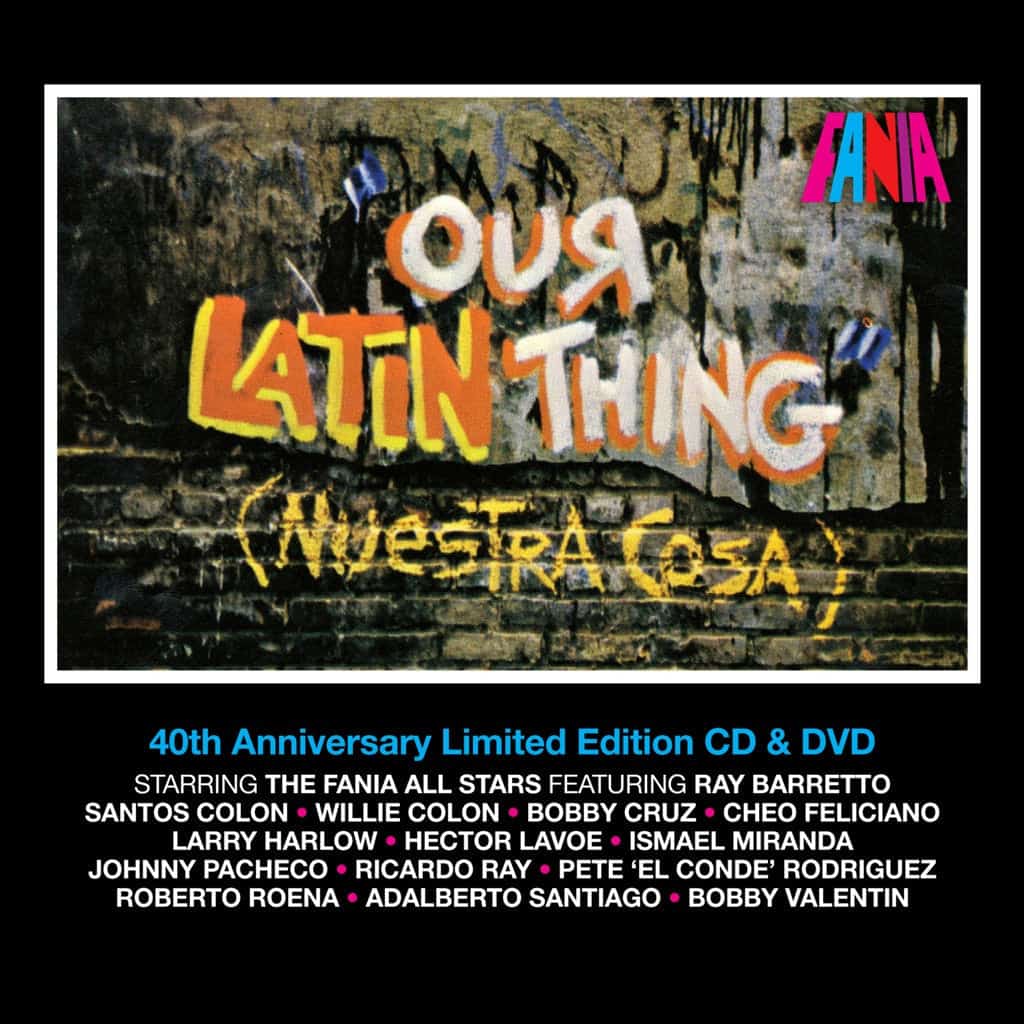
- Film : Our Latin Thing (Nuestra Cosa), released in 1972
- Director : Leon Gast (1936-2021)
- Running time : about 1 hr 42 min
- In the audience : about 2 000 people, according to Pacheco
- Filming : two days, two and a half days, according to Gast
- Title : devised by Jerry Masucci, according to Gast
- Onstage : the Fania All-Stars
Our Latin Thing (1972): the film that showed New York Salsa to the world 🎬🔥
On August 26, 1971, the Fania All-Stars play at the Cheetah, in Manhattan, in front of a packed audience and cameras. The documentary Our Latin Thing (Nuestra Cosa), by Leon Gast, captures that evening and a few New York streets: the same music that brings life today to Salsa classes in Liège and dance floors around the world.
About this article
This article tells the story of Our Latin Thing in chronological order, from Leon Gast’s youth to Willie Colón’s death in 2026, in the words of those who lived through the adventure. The facts come from interviews, the press, the Library of Congress, Fania’s catalog notes, and academic books. The numbers in brackets refer to the footnotes, which also provide details and explain discrepancies between sources.
Last updated: October 2026.
Contents
- Salsa born at the Cheetah, Spanish Harlem, Celia Cruz? The 9 myths about Our Latin Thing
- Jersey City, 1936-1957: Cha-cha-chá, the Palladium, and a year studying film
- New York, 1964: Johnny Pacheco and Jerry Masucci launch Fania
- Manhattan, 1966: the Cheetah opens as a giant discotheque
- New York, 1966-1967: Leon Gast meets Larry Harlow
- 1968: the Red Garter and the first Fania All-Stars
- New York, 1971: whose idea was it to film?
- Lower East Side, 1971: a day of filming in the streets
- Manhattan, Thursday, August 26, 1971: the night at the Cheetah
- Broadway, 1972: the film opens at Cine One
- Yankee Stadium, August 23, 1973: the audience storms the stage
- San Juan, November 1973: Celia Cruz makes her debut with the All-Stars
- New York and Kinshasa, 1974-1976: the Cheetah closes, Gast leaves for Zaire
- Fania Records: disputes, succession, and acquisition
- The Cheetah musicians: what we know about them
- Nuyorican and pan-Latino: “our Latin thing”
- Impact and recognition: what the film has become
- Where to watch Our Latin Thing
- A legacy for Latin dance
- FAQ: all about Our Latin Thing
- Sources and references
On Thursday, August 26, 1971, in a Manhattan club, the Fania musicians play to a packed audience. A film comes out the following year, and much has been said about it ever since, sometimes too much. Salsa is said to have been born that night. The film supposedly shows Spanish Harlem. Celia Cruz supposedly sings in it. Leon Gast, who was behind the camera, sets the record straight in a single statement: “It was all shot on the Lower East Side. Not a frame in Spanish Harlem.” (Everything was filmed on the Lower East Side. Not a single image in Spanish Harlem.) — Leon Gast, Sounds and Colours interview, 2011 [1].
That is not the only legend. Before following the story in order, from Jersey City in 1936 to 2026, here are nine common beliefs to examine. For the label that made it all possible, our article on the history of Fania Records tells what happened next. Want to dance to this music? Book your free trial class at Studio24 !
Salsa born at the Cheetah, Spanish Harlem, Celia Cruz? The 9 MYTHS about Our Latin Thing, TRUE or FALSE
Legends circulate about the film, repeated from one website to another. Here are the nine most common, with the verdict at a glance and the details in the section indicated.
❌ MYTH 1 · Was Salsa born at the Cheetah?
The Cheetah is said to be the birthplace of Salsa
✅ Needs nuance — according to McMains, the concert film cemented Fania’s dominance over the movement, but the word “Salsa” was “not in general circulation in 1971” [2].
❌ MYTH 2 · A film shot in Spanish Harlem?
The film takes us to Spanish Harlem
✅ False — according to Gast, everything was filmed on the Lower East Side [1].
❌ MYTH 3 · Does Celia Cruz sing in the film?
Celia Cruz is supposedly onstage at the Cheetah
✅ False — she is not there; her official debut with the All-Stars was in November 1973, in Puerto Rico [3].
❌ MYTH 4 · The Cheetah, a temple of Salsa?
The Cheetah was supposedly always a Salsa club
✅ False at the outset — it opens in 1966 as a large discotheque [4], and the club occupies the former Palm Gardens [5].
❌ MYTH 5 · The first All-Stars concert?
The Cheetah was supposedly the first time the All-Stars played together
✅ False — they had already played together in 1968: the musicians “had played together twice previously, in 1968 and in 1971” before 1973 [6].
❌ MYTH 7 · Fania, 5 000 $ and an African name?
Fania was supposedly born with 5 000 dollars and an African word
✅ Two versions — 2 500 $ each, according to the Washington Post [8] ; 3 000 $ in total and an African word, according to NPR [9].
❌ MYTH 8 · 45 000 people at Yankee Stadium?
Yankee Stadium was supposedly packed with 45 000 spectators
✅ Needs nuance — 40 000 people according to the Library of Congress, the Washington Post, and Craft [3] ; more than 45 000 according to The Guardian [7].
❌ MYTH 9 · Pure cinéma vérité?
Everything is supposedly pure observation
✅ Needs nuance — some scenes are arranged, others are not: the santería is “Larry’s idea,” but the people singing in the street, “it wasn’t set-up” [1].
JERSEY CITY, 1936-1957: Cha-cha-chá, the Palladium, and a year studying film at Columbia 🎥
Leon Gast is born on March 30, 1936, in Jersey City, New Jersey [10][11]. He did not grow up with Salsa. At his high school, he says, “there were no Latinos in my high school in Jersey City” (there were no Latinos at my high school in Jersey City) [1].
Music comes through his parents. “My parents were into dancing.” (My parents liked to dance.) On weekends, they head up to the Catskills, where hotels and nightclubs play Latin music. “The craze was cha-cha-cha.” (Cha-cha-chá was all the rage.) [1]
He discovers the Palladium with other guys: “a couple of guys would go into a place called the Palladium. On Wednesday night there were dance contests. I went with them and watched some incredible dancers, became fascinated with the music.” (a few guys used to go to a place called the Palladium. On Wednesday nights, there were dance contests. I went with them and watched incredible dancers; the music fascinated me.) [1]
In 1957, he spends a year at Columbia University. “I went to Columbia University for one year and took various courses in film-making. This was in 1957.” (I spent a year at Columbia University and took several film courses. That was in 1957.) What interests him is documentary film: “The class that interested me was documentary film.” (The course that interested me was documentary film.) [1][11]
He then becomes an advertising photographer: “I had done photography work in the ad business” (I had worked in advertising photography) [1]. In journalist Tad Wise’s account, he recalls first photographing hats and wedding dresses, then soon working for Vogue, Esquire and Harper’s Bazaar [12].
🎬 LEON GAST
Leon Gast
Born March 30, 1936, in Jersey City (New Jersey)
Died March 8, 2021, in Woodstock (New York), at age 84 [10]
Advertising photographer, then film director.
NEW YORK, 1964: Johnny Pacheco and Jerry Masucci launch Fania 💿
In 1964, Johnny Pacheco and his business partner Jerry Masucci launch the Fania label [2][8]. Pacheco was born Juan Azarías Pacheco Knipping on March 25, 1935, in Santiago de los Caballeros, in the Dominican Republic. His family settles in the Bronx when he is 11, and he studies percussion at the Juilliard School [8]. He plays the flute [13]. According to NPR, his divorce leads him to a lawyer named Jerry Masucci [9]. The Fania catalog notes describe Masucci as a divorce lawyer and former New York police officer who had developed a taste for Cuban music while serving at Guantánamo during the Korean War [13].
The start is modest. Each puts in 2 500 $, writes the Washington Post, which adds that the label’s name derives from a Cuban song [8]. Pacheco, for his part, tells NPR that the name comes from an African word meaning “family” [9].
He sums up the idea this way: “You know, the black had Motown, the whites – the Anglo – had their own sound, and here we come with a different sound of Latin music.” (You know, Black people had Motown, white people, Anglos, had their own sound, and here we come with a different Latin music sound.) — Johnny Pacheco, NPR, 2006 [9]. And what followed surprised him: “At first we didn’t think we were anything special […] until every place we went, the lines were unbelievable.” (At first we did not think we were anything special […] until, everywhere we went, the lines were incredible.) [8]
On the sound, the Washington Post writes that Pacheco replaced the violin sections of traditional Cuban music with the trumpets and trombones of big band jazz [8]. On the goal, Pacheco says: “Our only goal was to make people dance.” (Our only goal was to get people dancing.) [8]
MANHATTAN, 1966: the Cheetah opens as a giant discotheque 🐆
The Cheetah was not designed for Salsa. It opens in 1966 as a discotheque [4]. The Guardian describes it as “a glitzy discotheque,” decorated with aluminum, black velvet, and thousands of multicolored light bulbs [7]. A New York Times article, quoted by Music Origins, puts it this way: “Both socially and musically, it was an experimental scene, a place for liberties.” (Socially and musically, it was an experimental scene, a place of freedoms.) [4]
As for the address of the 1971 concert, McMains places it at the corner of 52nd Street and 8th Avenue [14]. The club occupies the former Palm Gardens: according to McMains, the film Mambo Madness, believed to have been filmed at the Palladium, was actually filmed at the Palm Gardens, “which later became the Cheetah” (which became the Cheetah later) [5].
NEW YORK, 1966-1967: Leon Gast meets Larry Harlow 🎹
A few years after the Palladium, Gast goes to a show in the Village, in New York, at a place called Village Gate. The opening act is Larry Harlow’s orchestra. “They were fabulous, they knocked me out.” (They were fabulous, they floored me.) [1]
He then meets him: “I was introduced to Larry Harlow and in the mid-60s, around 66 or 67, I started hanging around with him.” (I was introduced to Larry Harlow and, in the mid-60s, around 66 or 67, I started hanging out with him.) [1] Harlow plays all over the New York area, and Gast is emphatic about his popularity: “If the Stones were in New York and the young Latinos, maybe from 15 or 16 to 40 years old had a chance to see Mick Jagger or Larry Harlow they would go to see Larry Harlow, he was that popular.” (If the Stones were in New York and young Latinos, say from 15 or 16 to 40, had a choice between Mick Jagger and Larry Harlow, they would go see Larry Harlow, he was that popular.) [1]
Harlow was born Lawrence Ira Kahn, “a Jewish kid from Brooklyn” (a Jewish kid from Brooklyn), and was Fania’s first artist, according to the catalog notes [15].
1968: the Red Garter and the first Fania All-Stars 🎤
In 1968, Pacheco begins bringing together the best musicians on his label for concerts he calls the Fania All Stars [8]. Larry Harlow plays an important role in forming the group [15]. The first volume of Live at the Red Garter, recorded at this Greenwich Village club, comes out in 1968, with Tito Puente and Eddie Palmieri as guests [16][17][28].
Gast, for his part, creates the covers. “I had done photography work in the ad business and so I did a few album covers for Fania.” (I had worked in advertising photography, so I made a few covers for Fania.) Then: “And I did the first Fania All Stars cover Live At The Red Garter. That was 68.” (And I made the first Fania All Stars cover, Live at the Red Garter. That was in 68.) [1]
The Cheetah concert is therefore not the first time these musicians play together: according to the Society for American Baseball Research, they “had played together twice previously, in 1968 and in 1971” (had already played together twice, in 1968 and in 1971) before the 1973 concert [6].
NEW YORK, 1971: who had the idea to film it? 💡
Three years after the Red Garter, Fania wants to do it again. Here is how Leon Gast tells it: “Three years later they wanted to do another show, and maybe film it. Larry and myself put it together. We convinced Jerry. Then he came up with the title. Our thing. Our Latin Thing. Nuestra Cosa.” (Three years later, they wanted to put on another concert, and perhaps film it. Larry and I put it together. We convinced Jerry. Then he came up with the title. Our thing. Our Latin Thing. Nuestra Cosa.) [1]
Gast is the only eyewitness whose account has been published. Other accounts credit Larry Harlow with the idea [18], or Gast and Harlow together [7], and Gast himself presents it somewhat differently in 2016 [12]. As for the ambition, according to The Guardian, it is Pacheco and Masucci who see this concert as a “Latin Woodstock” [7].
LOWER EAST SIDE, 1971: a day of filming in the streets, not a single shot in Spanish Harlem 🚶
The film goes beyond the concert. Asked about the idea of mixing street footage with the concert, Gast replies: “That was mine.” (It was my idea.) [1]
McMains writes that the film mixes the concert with “scenes of life on the streets of Spanish Harlem and the Bronx” (scenes of life in the streets of Spanish Harlem and the Bronx) [14]. Gast has read this several times, and he corrects it: “It was all shot on the Lower East Side. Not a frame in Spanish Harlem.” (Everything was shot on the Lower East Side. Not a single shot in Spanish Harlem.) [1]
It all takes very little time: “two days filming, maybe two and a half days, that’s all. One day on the streets, the rehearsal was the same day as the actual show at the Cheetah, and the show was at night.” (two days of filming, perhaps two and a half days, that’s all. One day in the streets; the rehearsal took place on the same day as the concert at the Cheetah, and the concert was in the evening.) [1]
Gast’s vignettes
Gast had a plan: “I wanted to take each one of the major players and do a little vignette with each of them for the song that they may have been featured on” (I wanted to take each of the main musicians and make a short vignette with each one, for the song on which they might be featured) [1]. The one featuring Ray Barretto makes it into the film: he sells shaved ice in the street, and a child comes up to ask him for a flavor. Gast says he shot others: Larry Harlow climbing out of a window and starting to run, and Johnny Pacheco as the Pied Piper of Hamelin, followed by the neighborhood children, which he himself considers “Really corny.” (Really corny.) [1]
Another street sequence features the Orquesta Harlow. The plan was for the orchestra to play in the street. “Then Pacheco came down, it was a Sunday.” (Then Pacheco came down, it was a Sunday.) And the result delights Gast: “Pacheco does an incredible flute solo and people were dancing.” (Pacheco plays an incredible flute solo and people were dancing.) [1]
What the film shows, and the criticism it faces
Not everything is staged. On the people singing in the street: “These were just people sitting on the street. It wasn’t set-up.” (They were just people sitting in the street. It wasn’t staged.) [1] Other scenes are arranged. Speaking about the religious ceremony scene, Gast says: “Larry set-up the Santeria thing [the religious ceremony scene], that was Larry’s idea.” (Larry set up the santería thing [the religious ceremony scene], it was Larry’s idea.) [1]
Gast recounts: “Ismael Miranda knew of this cockfighting, it was almost like a league that they held in the Bronx and Brooklyn.” (Ismael Miranda knew about these cockfights, it was almost like a league they held in the Bronx and Brooklyn.) Then: “I had never been to a cockfight before.” (I had never attended a cockfight.) and: “I love that scene, it was one of my favourite scenes ever that one.” (I love that scene, it is one of my favorite scenes of all time.) [1] The Guardian critic sees in it “a bloody, stomach-turning cockfight down a back alley” (a bloody, stomach-turning cockfight at the end of an alley) [7].
The critic Aaron Cutler writes in Screen Slate on August 20, 2026: “the film’s depictions of music-making and animal cruelty convey the light and dark sides of male showmanship” (the depictions of music and cruelty to animals express the light and dark sides of male showmanship) [19].
Opinions differ on the substance. For Calvo Ospina, quoted by McMains, this is the strength of the film: “For the first time, it showed Latin Americans outside the United States the reality for the “Yores” in the Big Apple.” (For the first time, it showed Latin Americans outside the United States the reality of the “Yores” in the Big Apple.) For Calvo Ospina, the film showed “all the wretchedness and isolation people had refused to believe could exist in the “capital of the world.”” (all the misery and isolation that people refused to believe could exist in the “capital of the world”) [14]. Gast, for his part, keeps his distance: “as much as style is concerned, it’s all very formulaic, music and a little bit of the culture” (as far as style goes, it follows a very conventional formula: music and a little culture) [1].
MANHATTAN, Thursday, August 26, 1971: the night of the Cheetah 🎭
The concert takes place on a Thursday evening, August 26, 1971 [14][16]. The rehearsal takes place that same day, and the concert in the evening. Gast is convinced that the band has never sounded as good as it did that night: “And it really is my firm belief that the band never sounded as good as it did that night” (And I firmly believe that the band has never sounded as good as it did that night) [1].
The people in the audience have waited in line all day, writes The Guardian [7]. That evening, about 2 000 people are in the club. Pacheco remembers: “I remember the capacity at the Cheetah was something like 800 people and we put in close to 2,000.” (I remember that the Cheetah had a capacity of about 800 people and we put in nearly 2 000.) [20] The Guardian and uDiscover, for their part, describe a club with a capacity of 2 000 [7][16].
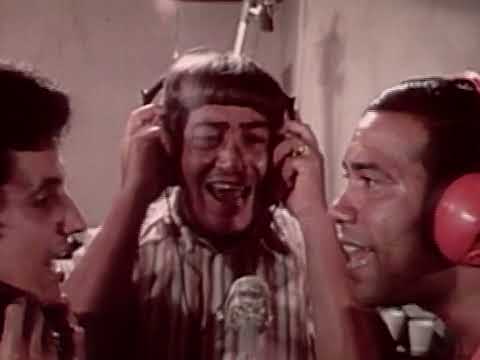
Onstage, according to uDiscover, Ray Barretto on congas, Willie Colón on trombone, Larry Harlow on piano, Roberto Roena on percussion, and Bobby Valentín on bass crowd together with singers Cheo Feliciano, Héctor Lavoe, Ismael Miranda, Bobby Cruz, Adalberto Santiago, and Pete “El Conde” Rodríguez [16]. The master of ceremonies, Izzy Sanabria, calls out from the stage: “¡Que viva la musica! Latin music power – yeah!” (Long live music! Latin music power, yeah!) [16]
The album opens with “Descarga Fania,” where Valentín’s nimble bass answers the audience’s claves. The three percussionists, Barretto, Roena, and Orestes Vilató, let loose on “Ponte Duro.” Cheo Feliciano sings “Anacaona”: it is his return to the stage after years in retirement [16]. The AP news agency writes that Cheo Feliciano “succumbed to heroin addiction shortly afterward and withdrew from the spotlight for nearly three years” (succumbed to heroin addiction soon afterward and stepped out of the spotlight for nearly three years) [21]. He received care from Hogares CREA from 1969 to 1971 [22].
For The Guardian, the most electrifying moment of the film is “Quítate Tú” [7]: about 16 minutes according to uDiscover, 17 according to The Guardian [7][16], during which all the singers take turns improvising, in a “round robin.” The Guardian also describes a cuatro solo by Yomo Toro that slips into “Guantanamera” [7].
Larry Harlow would retain a precise memory, reported by The Guardian: “The audience couldn’t believe it, seeing all their heroes on stage at the same time” (The audience could not believe they were seeing all their heroes onstage at the same time), then: “We never played like that again.” (We never played that way again.) [7]
Speaking about the filming, Gast explains: “There were five or six cameras and I shot sections of it that are in the film.” (There were five or six cameras, and I personally shot passages that are in the film.) His camera operators film with cameras on their shoulders, at a time when cameras are very heavy. The sound is recorded in a truck: “It was 16-track recording. We overdubbed a little.” (It was a 16-track recording. We did a little overdubbing.) [1]
Who played at the Cheetah?
| Role | Musicians credited on the album |
|---|---|
| Musical direction | Johnny Pacheco |
| Vocals | Adalberto Santiago, Cheo Feliciano, Héctor Lavoe, Ismael Miranda, Pete “El Conde” Rodríguez, Santos Colón |
| Piano | Larry Harlow |
| Bass | Bobby Valentín |
| Trumpets | Roberto Rodríguez, Larry Spencer, Héctor “Bomberito” Zarzuela |
| Trombones | Reinaldo Jorge, Barry Rogers, Willie Colón |
| Percussion | Roberto Roena (bongos), Ray Barretto (congas), Orestes Vilató (timbales) |
Other names appear in the press: Bobby Cruz on vocals, Ricardo Ray on piano (their “Ahora Vengo Yo” is mentioned by uDiscover), and Yomo Toro on cuatro [7][16]. Eddie Palmieri was one of the guests at the Red Garter in 1968, but he does not appear among the credited Cheetah musicians [16][23].
Want to listen to these classics? Discover our free Salsa playlists on Spotify!
BROADWAY, 1972: the film opens at Cine One 🎬
The film is released in 1972 [8], starring, McMains writes, “the Fania AllStars and the Spanish Speaking People of New York City” (the Fania AllStars and the Spanish-speaking people of New York City) [2]. It runs for about 1 hour and 42 minutes. Leon Gast directs, Izzy Sanabria is credited with the screenplay, Jerry Masucci with production, and three cinematographers are credited: Ted Churchill, Steve Harris, and Thomas Reichman [19]. The two albums Live at the Cheetah are released that same year [17].
Gast recounts the premiere: “It opened at a theatre called Cine One on Broadway between 37th and 46th. It had an unusually large turnout. It sold out.” (It opened at a movie theater called Cine One, on Broadway between 37th and 46th Streets. The turnout was unusually large. It sold out.) [1]
And the critics? “The reaction was good when it came out. Variety gave it a great review. The Village Voice was okay.” (It was well received on release. Variety gave it an excellent review. The Village Voice thought it was okay.) [1] So the reception is good. In 2011, upon its rerelease, Russ Slater describes it as “fast becoming known as THE definitive salsa documentary” (becoming known as THE definitive documentary on Salsa) [1].
For McMains, the film has “sealed the dominance of the Fania record label over the new musical movement” (cemented the Fania label’s dominance over the new musical movement) [2]. Researcher Marisol Negrón devoted an article to it in the Journal of Popular Music Studies in 2015 [24].
YANKEE STADIUM, August 23, 1973: the audience storms the stage 🏟️
Two years later, the All-Stars fill Yankee Stadium. The concert takes place on August 23, 1973, before about 40 000 people [3][8][17]. The second set will never be finished: a conga duel between Ray Barretto and Mongo Santamaría excites the crowd, who cross the barriers and storm the field, then the stage [3][6].
According to Thomas Muriel’s essay for the Library of Congress, “a bitter internal controversy involving three of their main stars” (a bitter internal controversy involving three of their main stars) caused one of the biggest changes in the lineup: Barretto’s band undergoes a bitter split, five of his musicians leave to found Típica ’73, and Barretto “made it clear he did not want to share the same stage with Orestes Vilató” (made it clear that he did not want to share the same stage as Orestes Vilató). Masucci and Pacheco have to choose: Vilató is replaced by Nicky Marrero [3].
In 1975, Fania releases the albums Live at Yankee Stadium. Despite the title, some of the material comes from the Puerto Rico concert, which had better sound. The albums earn the All-Stars their first Grammy nomination, and the Library of Congress adds them to the National Recording Registry in 2003 [3].
SAN JUAN, November 1973: Celia Cruz makes her debut with the All-Stars ⭐
Celia Cruz was not at the Cheetah and is not in the film.
She does not appear on any of the concert lists [7][16][23]. Her official debut with the Fania All-Stars dates to November 1973, at the concert that inaugurated the Roberto Clemente Coliseum in Puerto Rico. She did not sing at the 1973 Yankee Stadium concert either, the Library of Congress essay notes [3].
Born in 1925, Celia Cruz died in 2003 at age 77 [25]. In 1974, she and Johnny Pacheco recorded the album Celia & Johnny [8], which the Library of Congress added to the National Recording Registry in 2014 [26].
NEW YORK AND KINSHASA, 1974-1976: the Cheetah closes, Gast heads to Zaire 🌍
The Cheetah closes in 1974 [3]. That same year, from September 22 to 24, the Zaïre 74 festival takes place in Kinshasa, at the 80 000-seat 20 May Stadium [27]. The Fania All-Stars perform there, filmed by Leon Gast [28].
Gast is in Kinshasa to film a music festival when he decides to focus on the fight between Muhammad Ali and George Foreman [11]. The film, When We Were Kings, will not be released until more than twenty years later and will earn him the Oscar for Best Documentary [11][12]. According to journalist Tad Wise’s account, Don King, who is organizing the fight, is impressed by Our Latin Thing when he meets Gast [12].
🏆 OSCAR FOR BEST DOCUMENTARY
“When We Were Kings”
1996 film
The Ali–Foreman fight
Kinshasa, Zaire, 1974 [11]
In 1976, Jerry Masucci and Leon Gast co-direct another film, Salsa, which includes footage from the Yankee Stadium concerts and the San Juan concert [28]. Leon Gast dies on March 8, 2021 [10], three weeks after Johnny Pacheco, who died on February 15, 2021, at age 85 [8].
FANIA RECORDS: the disputes, the estate, the acquisition 💼
The full story is available in our dedicated article: The history of Fania Records and its influence on Latin music. Here is what those involved say about the label after the film.
Contracts and royalties: what those involved say
Felix Contreras of NPR writes in 2006: “Stories abound of Jerry Masucci taking advantage of the Fania musicians with bad contracts and holding back royalties. Some sued.” (Stories abound of Jerry Masucci taking advantage of Fania musicians with bad contracts and withholding their royalties. Some filed lawsuits.) [9] Pacheco claims Masucci deceived him about his rights in the company, according to NPR, but when pressed for details, he says only: “Now I consider myself an idiot, because I should have seen what was coming.” (Now I consider myself an idiot, because I should have seen what was coming.) [9]
A lawyer for the Masucci estate responds, also according to NPR, that all contracts were honored, although some lawsuits were settled out of court [9]. The Washington Post describes a “long, bitter dispute over unpaid royalties” (a long and bitter dispute over unpaid royalties) between the two partners during the 1980s, which remained unresolved when Masucci died in 1997 [8]. Researcher Sydney Hutchinson writes that the label became “embroiled in lawsuits related to its brutal treatment of artists and neglect of royalty payment” (embroiled in lawsuits related to its brutal treatment of artists and its neglect of royalty payments) [29].
The estate and acquisitions
Jerry Masucci dies in 1997 [9]. His estate remains tied up for eight years, then, in the summer of 2005, Miami-based Emusica Entertainment buys the entire catalog [9]. On July 27, 2018, Music Business Worldwide announces Concord’s acquisition of Fania from Codigo Entertainment: the catalog includes about 19 000 master recordings and 8 000 compositions [30].
THE MUSICIANS of the Cheetah: what we know about them 🌟
A short portrait of each, with their role in the film. For Celia Cruz, see the November 1973 section above.
🎤 Héctor Lavoe — “El Cantante de los Cantantes”
Héctor Juan Pérez Martínez
Died in 1993 at age 46 [31]
Singer at the Cheetah. With Willie Colón, he records nine studio albums between 1967 and 1973 [32]. The Washington Post refers to him as “la Voz,” the voice of Salsa, thanks in particular to “Mi Gente,” written by Pacheco, and notes that a film, El Cantante, was made about him in 2006 [8].
🎺 Willie Colón — the trombonist
William Anthony Colón Román
Born in 1950 in the South Bronx [32][33]
Willie Colón died on Saturday, February 21, 2026, at age 75 [32].
Trombonist at the Cheetah. He begins recording as a teenager, then releases his first album on Fania, El Malo, which sells hundreds of thousands of copies [33]. With Rubén Blades, he records Siembra in 1978, Fania’s best-selling album [8].
🎵 Johnny Pacheco — the musical director
Juan Azarías Pacheco Knipping
Born on March 25, 1935, in Santiago de los Caballeros
Died on February 15, 2021, at age 85 [8]
Flutist, Fania co-founder, musical director of the All-Stars [23]. Received a Latin Grammy for lifetime achievement in 2005, dubbed the “godfather of salsa” by the Washington Post [8]. In the film, he is the one playing the flute in the streets of the Lower East Side [1].
🎹 Larry Harlow — “El Judío Maravilloso”
Lawrence Ira Kahn
Died in 2021 at age 82 in the Bronx [15]
Pianist, Fania’s first artist. He was nicknamed “El Judío Maravilloso” after his hit “La Cartera,” echoing his idol Arsenio Rodríguez, “El Ciego Maravilloso.” In 1973, he records the Latin opera Hommy, presented at Carnegie Hall [15]. McMains cites him among Fania’s elite: “Jewish American Larry Harlow” [14]. In the film, he is the one who suggests the santería scene [1].
🥁 Ray Barretto — the master of the congas
Ray Barretto
Born on April 29, 1929, in Brooklyn
Died on February 17, 2006, at age 76 [35]
He credits “Manteca,” by Dizzy Gillespie and Chano Pozo, with inspiring his vocation [35]. He signs with Fania in 1967, after the pop hit “El Watusi,” associated with his 1963 album [36]. He is named an NEA Jazz Master in 2006 [35]. In the film, he sells shaved ice to the neighborhood children [1].
🎸 Bobby Valentín — the bassist
Bobby Valentín
Born on June 9, 1941, in Orocovis, Puerto Rico [37]
In 1967, he records his first album for Fania, Young Man With a Horn, and takes up the bass in 1969, one night when his bassist fails to show up. Soy Boricua (1972) became Puerto Rico’s unofficial anthem. In 1975, he reaches an agreement with Fania to distribute his label, Bronco, internationally [37].
🎤 Ismael Miranda — from the neighborhood to the Cheetah
Ismael Miranda
Singer in Larry Harlow’s orchestra [38]
With Harlow, he records his first hits, including “La Contraria” [38]. In the film, he is seen singing with the Orquesta Harlow at an impromptu street party [7], and he was the one familiar with cockfights [1].
NUYORICAN AND PAN-LATIN: “our Latin thing” 🗽
For McMains, Salsa was, in its early days, “more than just entertainment for its working-class Latino adherents in the early years of its development—it was a political movement” (more than mere entertainment for its working-class Latino followers in its early years: a political movement) [14]. She also writes that the film’s international distribution “validated similar experiences of urban barrio life throughout Latin America, inspiring a pan-Latin movement” (validated similar experiences of urban barrio life throughout Latin America and inspired a pan-Latin movement) [14].
Many Fania stars are Puerto Rican or “Nuyorican,” such as Willie Colón, Héctor Lavoe, Eddie Palmieri, and Ray Barretto. But the movement is multiethnic from the start: Fania’s founders are the Dominican Johnny Pacheco and Jerry Masucci, “Jewish Italian American,” and the label’s musical elite comes from many countries [14].
In New York, Sydney Hutchinson writes, since the 1970s, “salsa increasingly became “our Latin thing” (the name of an early Fania documentary film), likely in reaction to experiences of racism” (Salsa increasingly became “our Latin thing” (the name of one of Fania’s early documentaries), probably in reaction to experiences of racism). She adds that, while many New Yorkers learned Salsa, “non-Latinos were sometimes subtly discouraged from performing or teaching it” (non-Latinos were sometimes subtly discouraged from performing onstage or teaching it) [39].
New York is also where the Mambo On2 taught today took shape. Eddie Torres codified it: McMains writes that almost all modern New York-style Salsa and Mambo teachers can trace their lineage back to him, and that his rhythm is called “the “Eddie Torres two,” or the “New York two”” (the “Eddie Torres two” or the “New York two”) [40]. For details, read our biography of Eddie Torres [41].
IMPACT and recognition: what the film has become 🏆
The word “Salsa” itself is debated. Tito Puente, despite being considered one of the fathers of Salsa, often said: “I play Cuban music, not salsa.” (I play Cuban music, not Salsa.) [29] NPR notes that some musicians objected to having their work defined as “sauce” [9]. McMains points out that the term was not in common use in 1971 [2], and Lise Waxer writes that, in the 1970s, “Salsa” became “the standard term of reference throughout Latin America,” largely thanks to Fania [42].
Calvo Ospina saw the film as “the first documentary on the origins of our music as an expression of Latin American social identity” (the first documentary on the origins of our music as an expression of Latin American social identity) [14].
🏛️ National Recording Registry
Three Fania recordings are listed at the Library of Congress [30] :
🏛️ Exhibitions
WHERE TO WATCH “Our Latin Thing” 📺
The film was reissued in 2011 [1]. The Strut and Fania edition is available on DVD with two CDs, or as a box set with two LPs, and also includes tracks from the concert that are not in the film [45]. Two clips are embedded in this article.
A LEGACY for Latin dance 🌎
Our Latin Thing did not bring Salsa into being overnight. It preserves a precise image of it: a club, a stage, streets, musicians at the top of their game. Gast himself claims no more: “music and a little bit of the culture” [1]. This music continues to get the whole world dancing, including in Liège, where Xavier Colina passes on this musical legacy.
To discover how this music later traveled around the world, explore our article on Fania Presents: Salsa Around the World.
All the blog’s portraits are collected on the page about the great names of Salsa, Mambo, and Bachata.
🔥 Learn to dance to this legendary music!
The Salsa of the Fania All-Stars continues to thrill dancers around the world. Xavier Colina, trained in the techniques of New York Mambo On2 with Adolfo Indacochea, passes on this musical legacy to you at Studio24 in Liège.
FAQ about “Our Latin Thing” and the Fania All-Stars ❓
Answers to the most frequently asked questions about the documentary and the history of Salsa.
Was Salsa born at the Cheetah?
No, not in the strict sense. According to McMains, the film of the August 26, 1971 concert sealed Fania’s dominance over the movement, but the word “Salsa” was not in common use in 1971 [2].
Who were the Fania All-Stars?
An ensemble that Johnny Pacheco starts putting together in 1968 with the best musicians from Fania Records [8]. At the Cheetah, the lineup included Johnny Pacheco (musical direction), Willie Colón (trombone), Héctor Lavoe (vocals), Ray Barretto (congas), Larry Harlow (piano), Cheo Feliciano, Bobby Valentín (bass), and Ismael Miranda [23]. Their music continues to inspire dancers around the world — discover it in Salsa classes in Liège.
Who founded Fania Records?
Fania Records was founded in 1964 by Johnny Pacheco (a Dominican musician trained at Juilliard) and Jerry Masucci (a lawyer) [8][9]. The initial investment was 2 500 $ each according to the Washington Post, or 3 000 $ in total according to NPR. For the full story, read our article on the history of Fania Records.
Who directed Our Latin Thing?
How can you learn Salsa in Liège?
To learn Salsa in Liège, Studio24 offers group classes and private lessons with Xavier Colina, who trained in New York Mambo On2 techniques. Classes follow the World Mastery Salsa On1 method by Fernando Sosa and Mambo On2 by Eddie Torres. Book your free trial class to discover the music of the Fania All-Stars on the dance floor!
How can you learn Salsa in Belgium?
In Belgium, several schools offer quality Salsa classes. In Liège, Studio24 offers comprehensive training following international methods (Salsa On1 Fernando Sosa, Mambo On2 Eddie Torres and Adolfo Indacochea). For adult beginners, start by mastering the basic Salsa steps. There are also online Salsa classes available to help you improve from home. Also check our calendar of Salsa parties in Belgium.
Where can you practice Salsa in Liège?
To practice Salsa in Liège, check our guide to Latin dance parties in Liège. The Puerto Rico Nights (last Saturday of the month) are particularly popular for dancing to the music of the Fania All-Stars. To improve between parties, Studio24’s group classes help you perfect your technique. A dance lesson gift voucher also makes an excellent present for a Latin music enthusiast!
Sources and references
- ↩
Interview with Leon Gast :
SLATER, Russ, 2011. It was our thing, Our Latin Thing: An Interview with Leon Gast [online]. Sounds and Colours, November 29, 2011. Available at: https://soundsandcolours.com/articles/united-states/it-was-our-thing-our-latin-thing-an-interview-with-leon-gast-14738/ [accessed October 25, 2026]. Note: a telephone interview, with Gast speaking from his home in Woodstock; it is Russ Slater who writes in the introduction that the film “is fast becoming known as THE definitive salsa documentary”.
Note: the French translations of the quotations in this article are by the author. Quotations are reproduced as written or spoken; any omission is marked […]. - ↩ McMains, chapter 1 : McMAINS, Juliet, 2015. Spinning Mambo into Salsa: Caribbean Dance in Global Commerce. New York : Oxford University Press. Chapter 1, “From Mambo to Salsa: Dancing across Generational Divides,” PDF p. 22. Note: McMains points out that isolated uses of the word “salsa” can be found as early as the 1960s.
- ↩ Library of Congress essay : LIBRARY OF CONGRESS (MURIEL, Thomas), 2010. « Live at Yankee Stadium »–The Fania All-Stars (1975) [online]. National Recording Preservation Board. Available at: https://www.loc.gov/static/programs/national-recording-preservation-board/documents/FaniaAllStars.pdf [accessed October 25, 2026]. Note: a text by Thomas Muriel, first published in 2010 with a reissue of the album, in which he states that his views are not those of the Library of Congress; he writes “Friday, August 23, 1973”, although August 23, 1973, was a Thursday; the Society for American Baseball Research (“FRIDAY, AUGUST 24, 1973”) and the Craft Recordings press release (“August 24, 1973”) give Friday, August 24; on attendance, the essay, the Washington Post, and Craft say 40 000 people, The Guardian “more than 45,000”.
- ↩ The Cheetah nightclub : THE MUSIC ORIGINS PROJECT, 2018. Is Cheetah Club the Birthplace of Salsa? [online]. Available at: https://musicorigins.org/item/is_cheetah_club_the_birthplace_of_salsa/ [accessed October 25, 2026]. Note: a secondary page that cites the New York Times without giving the author or date; it writes that the Cheetah “opened May 28, 1966”, places the club at “53rd Street and Broadway” while noting that “reports of the location differ”, and cites an article that places it at “310 West 52d Street”; the sentence about the place of experimentation comes from that New York Times text.
- ↩ McMains, introduction (notes) : McMAINS, Juliet, 2015. Spinning Mambo into Salsa: Caribbean Dance in Global Commerce. New York : Oxford University Press. Introduction, note 31, PDF p. 15.
- ↩ Concerts at Yankee Stadium : SOCIETY FOR AMERICAN BASEBALL RESEARCH, n.d. Concerts at Yankee Stadium [online]. Available at: https://sabr.org/journal/article/concerts-at-yankee-stadium/ [accessed October 25, 2026]. Note: the page dates the concert to “FRIDAY, AUGUST 24, 1973”; the sentence about 1968 and 1971 appears in the passage devoted to this concert.
- ↩ Guardian article : CHICK, Stevie, 2020. Fania All-Stars, New York City 1971: salsa swaggers into the mainstream [online]. The Guardian, August 10, 2020 (Yahoo News Canada copy). Available at: https://ca.news.yahoo.com/fania-stars-york-city-1971-130007282.html [accessed October 25, 2026]. Note: the newspaper places the Cheetah “on Broadway and 53rd”; on the origin of the film, it writes that “the idea of filming this 1971 shindig came from Gast and Harlow, it was Pacheco and Masucci who envisioned it as a “Latin Woodstock””; it describes a “2,000-capacity” club, a packed room, a shoot lasting “a breakneck three days” and “more than 45,000 fans” in 1973; Harlow’s words are reported secondhand: the newspaper links “The audience couldn’t believe it…” to a 2011 New York Times interview, but does not give the source of “We never played like that again” (“As Larry Harlow later said”).
- ↩ Johnny Pacheco obituary : SCHUDEL, Matt, 2021. Johnny Pacheco, musician whose Fania record label launched salsa music, dies at 85 [online]. The Washington Post, February 19, 2021 (republished by The Boston Globe). Available at: https://www.bostonglobe.com/2021/02/19/nation/johnny-pacheco-musician-whose-fania-record-label-launched-salsa-music-dies-85 [accessed October 25, 2026]. Note: Pacheco’s words are those he spoke to NPR in 2006 and the Los Angeles Times in 1999, as reported by the newspaper; in the article, the sentence “At first we didn’t think we were anything special […] until every place we went, the lines were unbelievable” is interrupted by the aside “Mr. Pacheco told NPR in 2006” and is combined here into a single sentence; the article gives an initial investment of 2 500 $ for each of the two partners, while NPR says 3 000 $ in total; it writes “a 2006 biopic” for El Cantante.
- ↩ NPR report (2006) : CONTRERAS, Felix, 2006. Seminal Latin Label’s Music Resurrected [online]. NPR, Morning Edition, July 17, 2006. Available at: https://www.npr.org/transcripts/5428061 [accessed October 25, 2026]. Note: NPR writes that the two men launched the label “with $3,000” and named it after “an African word that Pacheco says means family”; the sentence about the estate is by Felix Contreras, in reported speech: “An attorney for the Masucci estate says all contracts were honored, though some of the law suits were settled out of court.”; “last summer” refers to the summer of 2005, as the broadcast dates from July 2006.
- ↩ Leon Gast biographical profile : TELEVISION ACADEMY, n.d. Leon Gast [online]. Emmys.com. Available at: https://emmys.com/bios/leon-gast [accessed October 25, 2026]. Note: the profile gives March 30, 1936, as his birth date and March 8, 2021, in Woodstock, as his death date, at age 84; The Hollywood Reporter and Tad Wise report his age as 85, although he was three weeks short of that birthday.
- ↩ Leon Gast obituary : FEINBERG, Scott, 2021. Leon Gast, Oscar-Winning Documentarian Behind ‘When We Were Kings,’ Dies at 85 [online]. The Hollywood Reporter, March 8, 2021. Available at: https://www.hollywoodreporter.com/news/leon-gast-oscar-winning-documentarian-behind-when-we-were-kings-dies-at-85 [accessed October 25, 2026]. Note: the article writes that Gast “graduated from Columbia University”, while Gast speaks of just one year of classes in 1957; it dates the film When We Were Kings to 1996 and states that it won the Oscar for Best Documentary Feature; the ceremony date is not included here.
- ↩ Tad Wise’s account : WISE, Tad, 2021. Woodstock’s Leon Gast, Oscar-winning director of When We Were Kings, dies at 85 [online]. Hudson Valley One, March 24, 2021. Available at: https://hudsonvalleyone.com/2021/03/18/woodstocks-leon-gast-oscar-winning-director-of-when-we-were-kings-dies-at-85/ [accessed October 25, 2026]. Note: the journalist attributes another version of the film’s origin to Gast, whom he says he interviewed in 2016: “Hey wait! You’ve got amazing performers and a guaranteed audience. Why not make a movie?”; the Don King episode is the journalist’s account, not words spoken by King or Gast; the text writes “Harper’s Bizarre” for Harper’s Bazaar.
- ↩ Fania profile: Johnny Pacheco : FANIA RECORDS (Concord), n.d. Artist essentials : Johnny Pacheco (profile by Bobby Marin) [online]. Available at: https://fania.com/artist-essentials/johnny-pacheco [accessed October 25, 2026]. Note: a profile written for the label’s catalog; about Masucci, it writes “a divorce lawyer and former New York City cop”.
- ↩ McMains, chapter 2 : McMAINS, Juliet, 2015. Spinning Mambo into Salsa: Caribbean Dance in Global Commerce. New York : Oxford University Press. Chapter 2, “Commercialization of New York Salsa Music and Dance,” PDF pp. 32-33. Note: McMains writes that the film combines the concert with “scenes of life on the streets of Spanish Harlem and the Bronx”; Hernando Calvo Ospina’s words come from his book ¡Salsa! Havana Heat, Bronx Beat (London : Latin America Bureau, 1995, p. 65, translation by Nick Caistor), as quoted by McMains.
- ↩ Fania profile: Larry Harlow : FANIA RECORDS (Concord), n.d. Artist essentials : Larry Harlow (profile by Bobby Marin) [online]. Available at: https://fania.com/artist-essentials/larry-harlow [accessed October 25, 2026]. Note: a profile written for the label’s catalog; it writes that the Cheetah belonged to promoter Ralph Mercado, which other texts do not say; the New York Times, quoted by Music Origins, says only that Mercado “did the booking” there.
- ↩ Article on the Live at the Cheetah albums : UDISCOVER MUSIC (« Jeff Chairman Mao »), 2025. ‘Live at the Cheetah Vol. 1 & 2′: The Fania All-Stars’ Salsa Masterpiece [online]. August 26, 2025. Available at: https://www.udiscovermusic.com/stories/fania-all-stars-live-at-the-cheetah-salsa-feature [accessed October 25, 2026]. Note: the article writes “Recorded on the evening of Thursday, August 26th, 1971” and describes a “two-thousand-capacity” venue; it attributes the “Latin Woodstock” project to Masucci alone; it dates the Red Garter albums to 1968, with Tito Puente and Eddie Palmieri as guests.
- ↩ Craft Latino press release : GRATEFUL WEB, n.d. Craft Latino press release on the reissue of Latin-Soul-Rock [online]. Available at: https://www.gratefulweb.com/?p=487107 [accessed October 25, 2026]. Note: the press release dates the Yankee Stadium concert to August 24, 1973, and the albums Live at the Cheetah, Vols. 1 and 2, to 1972; it dates the two volumes of Live at the Red Garter to 1968 and 1969, while uDiscover writes 1968 for both.
- ↩ Our Thing podcast : FUTURO STUDIOS, n.d. Episode 3: The Night that Made Salsa [podcast]. Our Thing: The Birth of Salsa in Nueva York [online]. Available at: https://futurostudios.org/episodes/3-the-night-that-made-salsa/ [accessed October 25, 2026]. Note: the quoted passage is the episode summary: “Larry Harlow, a Jewish kid from Brooklyn, and one of the first artists to be signed to Fania, pitches an idea to film an ambitious live concert.”.
- ↩ Film profile : ROTTEN TOMATOES, n.d. Our Latin Thing [online]. Available at: https://www.rottentomatoes.com/m/our-latin-thing [accessed October 25, 2026]. Note: the profile lists a running time of 1 h 42, Leon Gast as director, Izzy Sanabria as screenwriter, Jerry Masucci as producer, and Ted Churchill, Steve Harris, and Thomas Reichman as cinematographers; it includes Aaron Cutler’s review (Screen Slate, August 20, 2026).
- ↩ Billboard oral interview (2014) : COBO, Leila, 2014. Exclusive: Marc Anthony and Other Salsa Legends Share Memories of Legendary Label Fania Records [online]. Billboard, August 28, 2014. Available at: https://www.billboard.com/music/music-news/fania-records-history-johnny-pacheco-marc-anthony-6229288/ [accessed October 25, 2026]. Note: Pacheco gives a capacity of about 800 people and nearly 2 000 in attendance that night; The Guardian describes a club with 2 000 places (“this 2,000-capacity club”) and uDiscover a “two-thousand-capacity” venue; Pacheco’s words are reproduced as printed in the interview.
- ↩ Death of Cheo Feliciano : ASSOCIATED PRESS, 2014. Puerto Rican salsa legend Cheo Feliciano dies in a car accident [online]. CBS News, April 17, 2014. Available at: https://www.cbsnews.com/amp/news/puerto-rican-salsa-legend-cheo-feliciano-dies-in-a-car-accident [accessed October 25, 2026]. Note: the agency describes a 78-year-old singer who died on Thursday, April 17, 2014; it writes that he “succumbed to heroin addiction shortly afterward and withdrew from the spotlight for nearly three years”.
- ↩ Hogares CREA and Cheo Feliciano : PRIMERA HORA, 2014. Hogares CREA lloran la muerte de Cheo Feliciano [online]. Primera Hora (Puerto Rico), April 17, 2014. Available at: https://www.primerahora.com/entretenimiento/musica/notas/hogares-crea-lloran-la-muerte-de-cheo-feliciano/ [accessed October 25, 2026]. Note: the newspaper writes that Feliciano “recibió los servicios de CREA de 1969 a 1971”.
- ↩ Live at the Cheetah album credits : CRAFT RECORDINGS, n.d. Fania All Stars : Live At The Cheetah, Vol. 1 (Remastered) [online]. Album listing on HIGHRESAUDIO. Available at: https://mag.highresaudio.com/de/album/view/3jygy9/fania-all-stars-live-at-the-cheetah-vol-1-live-at-the-cheetah-1971-remastered [accessed October 25, 2026]. Note: the listing names eighteen musicians and Johnny Pacheco as “musical director”; the production line reads “Produces by Jerry Masucci, Larry Harlow”; Bobby Cruz, Yomo Toro, and Ricardo Ray are added based on The Guardian and uDiscover.
- ↩ Article by Marisol Negrón : NEGRÓN, Marisol, 2015. Fania records and its Nuyorican imaginary: Representing salsa as commodity and cultural sign in Our Latin Thing. Journal of Popular Music Studies, vol. 27, no. 3, p. 274-303. DOI 10.1111/jpms.12129. Record available at: https://collaborate.umb.edu/en/publications/fania-records-and-its-nuyorican-imaginary-representing-salsa-as-c/ [accessed October 25, 2026].
- ↩ Fania profile: Celia Cruz : FANIA RECORDS (Concord), n.d. Artist essentials : Celia Cruz (profile by Bobby Marin) [online]. Available at: https://fania.com/artist-essentials/celia-cruz [accessed October 25, 2026]. Note: profile written for the label’s catalog.
- ↩ Inclusion of Celia & Johnny : LIBRARY OF CONGRESS / CBS NEWS, 2014. Latest additions to National Recording Registry [online]. CBS News, April 2, 2014. Available at: https://www.cbsnews.com/amp/pictures/latest-additions-to-national-recording-registry-photos-audio [accessed October 25, 2026]. Note: on April 2, 2014, the slideshow announces the addition of twenty-five recordings, including Celia Cruz and Johnny Pacheco (1974).
- ↩ Rolling Stone on Zaire 74 : GEHR, Richard, 2016. Zaire ’74: How a Pan-Continental Funk Fest Soundtracked Muhammad Ali [online]. Rolling Stone, June 6, 2016. Available at: https://www.rollingstone.com/music/music-news/zaire-74-how-a-pan-continental-funk-fest-soundtracked-muhammad-ali-59935/ [accessed October 25, 2026].
- ↩ Fania profile: the All-Stars : FANIA RECORDS (Concord), n.d. Artist essentials : Fania All Stars (profile by Bobby Marin) [online]. Available at: https://fania.com/artist-essentials/fania-all-stars [accessed October 25, 2026]. Note: the profile writes “Stadu du Hai” for the stadium in Kinshasa, which Rolling Stone calls the May 20 Stadium; it does not give the date of the All-Stars concert; it mentions a 1976 film, “Salsa,” co-directed by Masucci and Gast, with excerpts from the Yankee Stadium concerts of August 1973 and 1975 and from the Coliseo de San Juan, while the Library of Congress essay dates the release of the albums, drawn from the 1973 and San Juan concerts, to 1975.
- ↩ Hutchinson, introduction : HUTCHINSON, Sydney (ed.), 2014. Salsa World: A Global Dance in Local Contexts. Philadelphia : Temple University Press. Chapter 1, “Dancing in Place: An Introduction,” screen 13-14. Note: Hutchinson dates the sale of the label to 1997, while NPR places it in 2005; Tito Puente’s statement is quoted without a date or medium; Pacheco’s words come from Chris Washburne, Sounding Salsa, 2008, p. 20, as cited by Hutchinson.
- ↩ Concord’s acquisition of Fania : MUSIC BUSINESS WORLDWIDE, 2018. Concord acquires independent Latin music company Fania [online]. July 27, 2018. Available at: https://www.musicbusinessworldwide.com/concord-acquires-independent-latin-music-company-fania/ [accessed October 25, 2026]. Note: the article states that Concord buys Fania from Miami-based Codigo Entertainment; it mentions three Fania recordings in the National Recording Registry, without giving the year of Azúcar pa’ ti.
- ↩ Fania profile: Héctor Lavoe : FANIA RECORDS (Concord), n.d. Artist essentials : Héctor Lavoe (profile by Bobby Marin) [online]. Available at: https://fania.com/artist-essentials/hector-lavoe [accessed October 25, 2026]. Note: profile written for the label’s catalog.
- ↩
Death of Willie Colón :
CONTRERAS, Felix, 2026. Willie Colón, salsa pioneer, has died at 75 [online]. OPB (NPR), February 21, 2026. Available at: https://www.opb.org/article/2026/02/21/willie-colon-salsa-pioneer-has-died-at-75/ [accessed October 25, 2026]. Note: the page reads “died Saturday. He was 75 years old.”; the family announced the news on the musician’s Facebook page; no cause is given.
EL DÍA, 2026. Muere Willie Colón, leyenda de la salsa y figura clave de la Fania [online]. El Día (Santo Domingo), with the EFE news agency, February 21, 2026. Available at: https://eldia.com.do/muere-willie-colon-leyenda-de-la-salsa-y-figura-clave-de-la-fania/ [accessed October 25, 2026]. Note: the newspaper states that Colón “falleció este sábado a sus 75 años” and reproduces his family’s statement; the same page lists nine studio albums with Héctor Lavoe between 1967 and 1973. - ↩ Fania profile: Willie Colón : FANIA RECORDS (Concord), n.d. Artist essentials : Willie Colón (profile by Bobby Marin) [online]. Available at: https://fania.com/artist-essentials/willie-colon [accessed October 25, 2026]. Note: the profile reads “He was 16 years old when he began his recording career with Al Santiago”; OPB writes “By age 15, he was recording with a new upstart indie record label called Fania Records” and El Día writes “Con apenas 17 años, Colón se integró” in reference to Fania’s group of artists; the profile mentions “hundreds of thousands of copies” for El Malo.
- ↩ Fania profile: Cheo Feliciano : FANIA RECORDS (Concord), n.d. Artist essentials : Cheo Feliciano (profile by Bobby Marin) [online]. Available at: https://fania.com/artist-essentials/cheo-feliciano [accessed October 25, 2026]. Note: the profile reads “In 1971, he joined Fania,” while the AP news agency states that he joined the Fania All Stars in 1972; the profile dates his arrival with Joe Cuba to 1957, for ten years.
- ↩ Death of Ray Barretto : MAIL & GUARDIAN, 2006. Ray Barretto leaves great musical legacy [online]. Mail & Guardian, February 18, 2006. Available at: https://mg.co.za/2006-02-18-ray-barretto-leaves-great-musical-legacy/ [accessed October 25, 2026]. Note: the article from Saturday, February 18 states that Barretto died “on Friday,” meaning February 17; he was born on April 29, 1929, in Brooklyn.
- ↩ Fania profile: Ray Barretto : FANIA RECORDS (Concord), n.d. Artist essentials : Ray Barretto (profile by Bobby Marin) [online]. Available at: https://fania.com/artist-essentials/ray-barretto [accessed October 25, 2026]. Note: profile written for the label’s catalog.
- ↩ Fania profile: Bobby Valentín : FANIA RECORDS (Concord), n.d. Artist essentials : Bobby Valentín (profile by Bobby Marin) [online]. Available at: https://fania.com/artist-essentials/bobby-valentin [accessed October 25, 2026]. Note: profile written for the label’s catalog.
- ↩ Fania profile: Ismael Miranda : FANIA RECORDS (Concord), n.d. Artist essentials : Ismael Miranda (profile by Bobby Marin) [online]. Available at: https://fania.com/artist-essentials/ismael-miranda [accessed October 25, 2026]. Note: profile written for the label’s catalog.
- ↩ Hutchinson, chapter 2 : HUTCHINSON, Sydney, 2014. What’s in a Number? From Local Nostalgia to Global Marketability in New York’s On-2 Salsa. In: HUTCHINSON, Sydney (ed.), Salsa World: A Global Dance in Local Contexts. Philadelphia : Temple University Press. Chapter 2, screen 52.
- ↩ McMains, chapter 1 (Eddie Torres) : McMAINS, Juliet, 2015. Spinning Mambo into Salsa: Caribbean Dance in Global Commerce. New York : Oxford University Press. Chapter 1, “From Mambo to Salsa: Dancing across Generational Divides,” PDF p. 27 and note 78, PDF p. 31. Note: note 78 mentions an “early codification of the Torres rhythm”; Torres himself says he invented nothing, as reported in our biography of Eddie Torres (“y yo no inventé nada”).
- ↩ Our biography of Eddie Torres : STUDIO24. Eddie Torres, le roi du Mambo [online]. Salsaliege.com. Available at: https://salsaliege.com/eddie-torres-roi-mambo-revolution-salsa-new-york/ [accessed October 25, 2026]. Note: the biography brings together interviews and sources on the codification of Mambo On2.
- ↩ Waxer, introduction : WAXER, Lise, 2002. The City of Musical Memory: Salsa, Record Grooves, and Popular Culture in Cali, Colombia. Middletown : Wesleyan University Press. Introduction, screen 27. Note: the author writes that, in the 1970s, “salsa” had become “the standard term of reference throughout Latin America, owing in large part to its use by Fania Records as a commercial label under which to market this music.”
- ↩ Museum of the City of New York : MUSEUM OF THE CITY OF NEW YORK, n.d. When the People Dance: Salsa, Power, and Performance in New York City [online]. Available at: https://www.mcny.org/node/2381 [accessed October 25, 2026]. Note: the page is for an event on September 17, 2017, “inspired by” the exhibition “Rhythm & Power: Salsa in New York (on view through November 26)”; the year of the exhibition is inferred from this date.
- ↩ Puro Ritmo exhibition : LI, Anita, 2026. National salsa exhibit honors Celia Cruz, South Florida musicians [online]. WLRN, May 12, 2026. Available at: https://www.wlrn.org/arts-culture/2026-05-12/salsa-celia-cruz-florida-music [accessed October 25, 2026]. Note: the exhibition is held at the National Museum of the American Latino, which is part of the Smithsonian; it is advertised as “on display until November 2028.”
- ↩ 2011 reissue : SLATER, Russ, 2011. Our Latin Thing: A New York Cultural Explosion [online]. Sounds and Colours, November 1, 2011. Available at: https://soundsandcolours.com/reviews/film-reviews/our-latin-thing-a-new-york-cultural-explosion-10471/ [accessed October 25, 2026]. Note: the text reads: “Our Latin Thing is released by Strut / Fania and available as a 1DVD and 2CD or 2LP boxset, which includes the original music from the live performance, including songs not featured in the film.”