
One Saturday night, two couples dance side by side to the same song. One moves forward as the other moves back. Neither is making a mistake: the first dances On1, the second On2.
The same basic step, the same music, but a different count for changing direction. This small shift of one count has given rise to schools, disputes, and a whole history, from Cuba to New York.
On1 and On2 at a glance
- What they share: six steps over eight counts[1].
- On1: you change direction on 1 and on 5[2].
- On2: you change direction on 2 and on 6[2].
- Other names: New York On2 is also called Mambo, or Salsa On2[3].
- In Liège: at Studio24, Salsa On1 is danced on Tuesdays, Salsa On2 on Mondays.
Contents
- Eight counts, six steps: what really changes
- What the music says about 1 and 2
- A history that begins in Cuba and at the Palladium
- New York puts numbers to its steps
- Los Angeles, Cuba, Cali: choosing 1
- The dispute over counts
- Common misconceptions about On1 and On2
- Can we dance together?
- What science says, and what it does not say
- Which should you choose to get started?
- FAQ: On1 and On2 in six questions
- Sources and bibliography
Eight counts, six steps: what really changes
Salsa is counted over eight counts. On 1, 2, and 3, the dancer shifts weight three times, then holds on 4. The dancer repeats on 5, 6, and 7, starting with the other foot, and holds on 8[1].
On1 and New York On2 follow this same pattern[1]. “Palladium” On2, however, shifts all the steps by one count: 2-3-4, then 6-7-8[4].
What separates them is the break: the step where you stop moving forward, or backward, to move in the other direction[1]. In On1, it falls on 1 and on 5. In On2, on 2 and on 6[2].

On paper, the difference seems tiny. On the dance floor, it changes the whole feel of the dance: the suspended count, when you do not shift weight, no longer falls at the same point in the step.
Yet this is where both dancers have the most freedom to improvise[5]. Many find On1 livelier and more assertive, and On2 more settled and more elastic[5].
The starting direction changes too. In On1, the Follower moves back on 1-2-3 and forward on 5-6-7; the Leader does the opposite. In New York On2, the Leader moves back first, inviting the Follower to move toward them[6].

What the music says about 1 and 2
At the heart of the Salsa orchestra is the clave: a pattern of five strokes spread over eight counts, around which all the music is organized[7]. Musicians think of it in two halves: the “3-2” clave, for example, is counted “1-2-3 / 1-2.”[7]
On2 dancers listen mainly to the conga. In its basic rhythm, the tumbao, it produces a sharp crack, the slap, on 2 and on 6: exactly when their break happens[8].
In fact, many teachers teach you to find 2 by listening for this crack[8]. On1 dancers reply that the piano and cowbell mark 1[9]. Percussion alone supports both sides: the conga accents 2 and 6, the bongo or cowbell 1 and 5[9].
The music varies too. The conga slap on 2 is almost always there in Puerto Rican Salsa; in Cuban Salsa, improvisation can make it disappear[10].
In some songs, everything points toward 1. In others, with a lot of syncopation, New York On2 becomes easier. No step wins everywhere: the best one depends on each song[11].
A history that begins in Cuba and at the Palladium
Starting offbeat did not originate in New York. In Cuba, this way of dancing “against the beat” is called contratiempo. It is found in son, danzón, bolero, guaracha, and guajira[12].
Son, for example, is danced with the first step on 4 and a pause on 1[12]. But the whole island did not dance the same way: son can also be danced a tiempo, on the strong beat.
Cuban bassist Israel “Cachao” López remembered it: “In Santa Clara the people would dance to the backbeat, and in Havana they’d dance in time” (in Santa Clara, people danced offbeat, and in Havana, in time)[13].
In New York, Mambo finds its home at the Palladium Ballroom, on the corner of Broadway and 53rd Street. From 1952 onward, the venue bills itself as the “Home of the Mambo.”[14]
People dance there on every count, but the best dancers start offbeat: they place their foot just before 1, pause, then break on 2[15]. Some of the crowd even break on 4[15].
No one is talking about “On1” or “On2” yet: these numbers only appear in the 1980s[16]. Luis “Máquina” Flores, a Palladium regular, sums it up this way: “there was no such thing as dancing on two. You danced on clave period” (dancing on 2 did not exist: you danced on the clave, period)[16].
The Palladium closes in 1966. It lives on in memory as the legendary starting point of On2[14]. In the 1970s, as the word Salsa takes hold, most Latino dancers in New York dance on 1 or on 3[17].
New York puts numbers to its steps
In the 1970s and 1980s, some dancers want to make Mambo a recognized art form and make it easier to teach. They codify it, changing its relationship to the clave in the process[18].
Eddie Torres becomes the leading figure of this movement. With June LaBerta, a ballroom dance teacher, he puts numbers to his steps, gives them names, and builds a curriculum[19]. Around 1983, the Copacabana nightclub launches its Salsa Tuesdays and hires him as a teacher[19].
In 1987, Tito Puente asks him to choreograph numbers for a televised tribute to musician Machito at the Apollo Theater. Torres chooses sixty of the best club dancers and trains them for four months.
The success is such that he founds his company, the Eddie Torres Dancers, and others follow his example[19].
His step is counted “1-2-3, 5-6-7,” with the break on 2 and on 6[20]. That same year, 1987, Angel and Addie Rodríguez found the company Razz M’Tazz, which teaches a different On2: the step falls on “2-3-4, 6-7-8,” as in Cuban son and 1950s Mambo[20].
Today, the latter is called “Palladium” On2, or “Power 2,” and Torres’s version is called “New York” On2, or “modern Mambo.”[4] In practice, Torres’s dancers place their foot well before 1 and 5, bringing the two versions closer together[4].
In the early 1990s, New York has a handful of On2 companies; in 2003, around thirty[21].

Los Angeles, Cuba, Cali: choosing 1
Elsewhere, 1 prevails. In the 1990s, most Los Angeles dancers break on the strong beat. With their spectacular style, they become the major exporters of On1 as Salsa starts being sold around the world[22].
To learn more, read the biography of Johnny Vazquez.
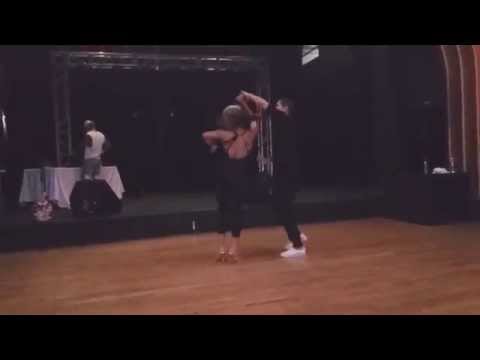
The style from Cali, Colombia, is also danced on 1[23]. In Cuba as in Miami, casino is danced on the strong beat; in Miami, almost always, whereas the Cuban tradition was contratiempo[24].
The dispute over counts
In 1997, the first world Salsa congress brings together dancers from New York, Los Angeles, Puerto Rico, and Cuba in San Juan, Puerto Rico[25]. The surprise is immediate: they cannot dance together.
The Dutch step forward with their right foot and bump into everyone. New Yorkers break on 2 and feel that On1 dancers do not hear the music properly[25].
With classes everywhere and increasingly complex partner figures, dancers need to agree on the same way of entering the music[26]. At first, On2 has little presence: “When we started traveling, it was 5 percent on-2 dancers and 95 percent on-1” (when we started traveling, there were 5% On2 dancers and 95% On1 dancers), recalls the director of a New York company[26].
In about ten years, On2 reportedly captured nearly half the international market. In Paris, in the summer of 2005, half the customers at several clubs dance On2[26].
Behind the technique, there is also prestige and money. Its reputation as a difficult dance gives On2 a certain cachet. As Salsa becomes a profession, claiming to dance the “most authentic” style becomes a strategy for making a living from teaching or performing[27].
For many, 2 becomes far more than a number: the mark of connoisseurs[27]. On1 dancers have their own arguments. “Nobody can really hear the 2; somebody has to teach you to listen to the percussion” (no one really hears 2; someone has to teach you to listen to the percussion), said Luis Vazquez, cofounder of Salsa Brava, the first Salsa company in Los Angeles[28].
Ultimately, perhaps the only reading of the rhythm that would not be authentic is one that forgets that tradition evolves[29].
Common misconceptions about On1 and On2
There are plenty of preconceived ideas about 1 and 2. Here are the ones heard most often, and what those who have studied the subject say about them.
“On2 is the real Salsa”
You may hear it at a party: On2 is supposedly the real Salsa, and On1 a dance for people who cannot hear the music. Some On2 teachers present their style as the most elegant and the most subtle in its relationship with the music[30]. In New York, some Mambo dancers have dismissed Los Angeles Salsa as lacking substance and history[31].
On1 dancers reply that their rhythm is the most natural[32]. Those who have compared the two counts do not name a winner[33]. On1 generally remains the easiest for beginners[34]; yet in some songs with a lot of syncopation, New York On2 finds more points of support[35].
“Only On2 dancers dance on the clave”
They readily say so, and some add that On1 dancers do not hear the music properly[25]. Their argument holds up in part: the conga slap does fall on 2[8].
But the clave can be read in several ways. In a 3-2 clave, it “starts” on 1, and a musician could just as well argue the opposite[36]. The basic step does not exactly imitate the clave in either style, and On1 falls on as many clave strokes as the earliest On2[37].
In some songs, the clave even changes along the way[38]. In Puerto Rico, Tato Conrad, who runs a dance academy, puts it simply: for him, 1 is also clave[39].
“On2 is Puerto Rico’s timing”
The idea is widespread: Palladium On2 is even called “Puerto Rican style”[40]. Yet before 1990, the island mainly danced on 1 and on 3, and On2 was rare there[41].
Tito Ortos, a professional dancer in San Juan, says that television provided the first opportunity to see people dancing on 2[42]. Even today, the island does not dance in just one way: some start on 1, others on 2, on 3, or offbeat[43].
“In Cuba, people dance on 1”
Today, that is often true: in Cuba as in Miami, casino is danced on the strong beat[24]. But that was not the tradition. When contratiempo arrived in New York, it was more popular than dancing on 1 or on 3[44].
In casino’s golden age, dancing offbeat was even the foremost criterion for a virtuoso dancer[45]. Even today, casino teachers observed in Cuba switch from 1 to 3 and to 2 as they dance[46].
“On1 is Los Angeles style”
That is partly true. Los Angeles dancers were the major exporters of On1[22], and “On1” and “L.A. style” are often used to mean the same thing[47].
But On1 is also danced in Cali, Cuba, and Miami[23],[24], and the U.S. version owes a lot to Colombian Salsa[48]. Los Angeles, for its part, did not dance only on 1: several teachers in the city danced both counts, or even only on 2[49].
“At the Palladium, everyone danced On2”
The Palladium Ballroom remains the legendary starting point of On2[14], and dancers today use it to defend the authenticity of their rhythm[50]. Yet people there danced on every count[15], and the numbers “On1” and “On2” only appeared in the 1980s[16].
Dancers still argue over whether Eddie Torres’s On2 or the Palladium’s On2 fits the clave better, and which is the “real” Mambo[51].
“Mambo and Salsa On2 are the same thing”
In conversation, people often switch between the two terms[52]. Many dancers in Eddie Torres’s style call their dance “Mambo” to distinguish it from other Salsas[53]. At Studio24, too, Xavier presents Mambo as Salsa On2.
But the word covers two steps: the “classic” Mambo of the Palladium and the “modern” Mambo of New York[4]. And generations understand it differently: former Palladium dancers say Salsa is the dance they have always danced[54], while a Salsa promoter remembers that, for his generation, Mambo was for old people[55].
Can you dance together?
It is difficult, but possible. An On1 Leader leading an On2 Follower risks hiccups, or even bringing the dance to a halt[56]. So a couple generally chooses one count and keeps it throughout the song[56].
Some dancers practice both[56]. In New Jersey, a school encourages its students to be “bilingual”: it teaches both timings without favoring either[57]. In Los Angeles, too, teachers danced on both counts[49].
Rhythm is not always the biggest obstacle, either. Between a casino dancer and a New York or Los Angeles style dancer, connection, space, and the vocabulary of figures cause more problems[58].
Dancer and researcher Sydney Hutchinson says that when she arrived in New York, she constantly felt she was late: she put her foot down on the count, her partners just after it[59].
What science says, and what it does not
No scientific study has yet compared Salsa On1 and Salsa On2[60]. Researchers have, however, extensively studied what is at stake in the dispute: hearing, syncopation, and the body.
Even without musical training, the ear sorts the counts in a measure into strong and weak ones: it detects syncopation on a strong beat more quickly[61]. When faced with a highly syncopated rhythm, it can also shift its internal pulse to hear it as less syncopated[62].
A moderate level of syncopation, neither too simple nor too complex, creates the strongest urge to move[63]. And recognizing which clave, 3-2 or 2-3, fits a musical excerpt is learned through listening and practice: even for musicians, it is not immediate[64].
The body also changes what we hear. Adults bounced on every other count, or on every third count, of the same ambiguous rhythm: they then heard it as a march or a waltz, depending on how they moved[65].
Dancers, for their part, anticipate the count. Competitive ballroom dancers tap it with a finger more accurately than nondancers, and slightly ahead of it[66]. In classical dance, female ballet dancers also anticipate the count, and music changes this lead by a few milliseconds[67].
Depending on the movement, the same moment in the body’s motion does not always fall on the count: sometimes it is the end of the gesture, sometimes the strongest push of the foot against the floor[68].
When dancing with someone, practice also matters. Dancers coordinate better than nondancers with a partner they imitate, even without music[69], and a simple touch of a finger stabilizes two people swaying together[70]. None of these studies says whether On1 or On2 is more natural or more musical.
Which should you choose to start?
There is no right or wrong count[11]. On1 is often the simplest at first: its eight-count cycle starts at the same time as the music’s two-measure cycle[34]. On2 requires listening more closely to the percussion[8].
In Liège, Studio24 teaches both. Salsa On1 is danced on Tuesdays, Salsa On2, New York style, on Mondays: Introductory at 6:30 pm, Basics+ at 7:30 pm, Intermediate at 8:30 pm.
The Advanced class takes place on Thursdays. A beginner can start with either one.
To feel the difference, watch the first two free lessons on Studio Live: the Salsa On1 basic, then the Mambo On2 basic, on the offbeat.
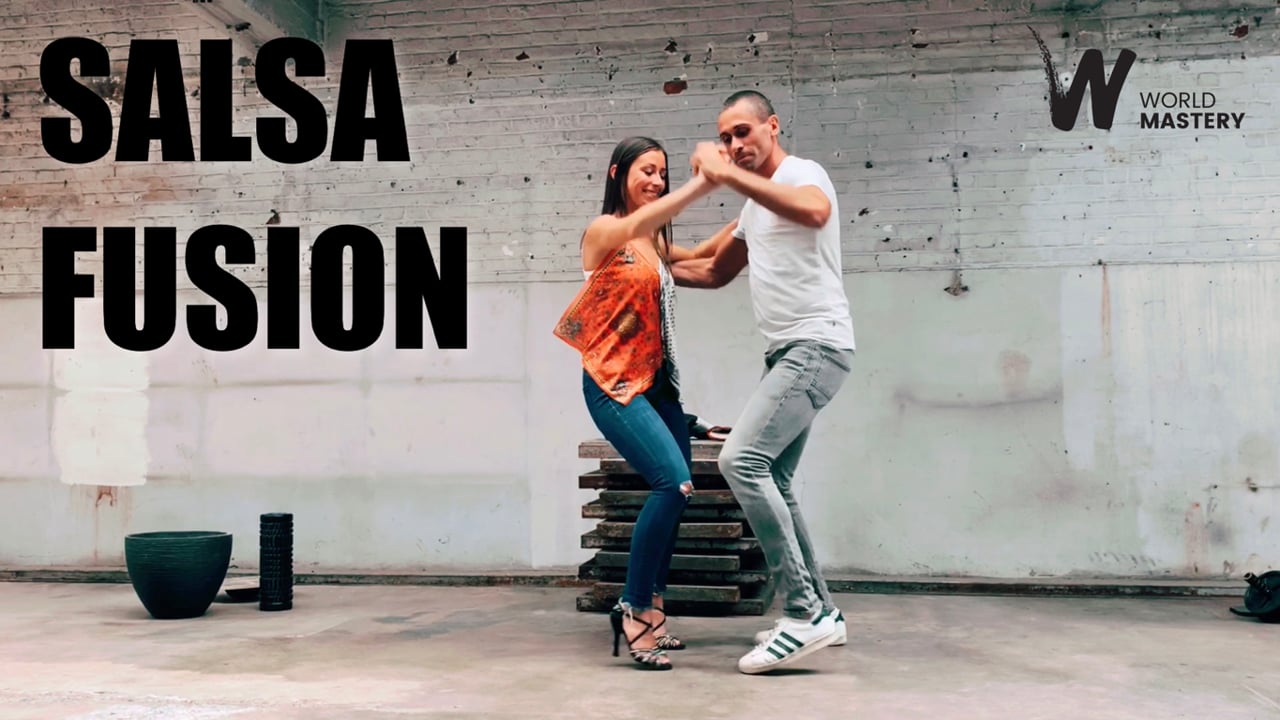

Want to try On1 or On2?
🎓 Xavier teaches Salsa On1 and Mambo On2 at Studio24 in Liège. Or online anywhere in the world through Studio Live.
FAQ: On1 and On2 in six questions
🎵 What is the difference between Salsa On1 and Salsa On2?
Both have six steps over eight counts. In On1, you change direction on 1 and on 5; in On2, on 2 and on 6[1],[2].
🗽 Is Mambo Salsa On2?
At Studio24, yes: Xavier presents Mambo as Salsa On2. Yet the word covers two steps, the Palladium’s and Eddie Torres’s[4], and it can still be a subject of debate[52].
🥁 Is On2 more musical than On1?
Each side has its instruments: the conga marks 2, the piano and the bell mark 1[8],[9]. The best choice depends on each song[11].
💃 Can you dance On1 with someone who dances On2?
It is difficult: a couple generally chooses one count and keeps it throughout the song. So some dancers practice both[56],[57].
🇨🇺 What does “contratiempo” mean?
It is the Cuban word for dancing “against the beat.” Cuban son is danced with the first step on 4 and a pause on 1[12].
🌱 Which should you start with?
On1 is often the simplest at first[34]. At Studio24 in Liège, On1 and On2 both have their Introductory class: Tuesdays for Salsa On1, Mondays for Salsa On2.
Sources and bibliography
- ↩
McMAINS, Juliet, 2015. Spinning Mambo into Salsa : Caribbean Dance in Global Commerce. New York: Oxford University Press. ISBN 978-0-19-932464-4. Chapter 4, “On-1 versus On-2 : Rhythm Debates.”
SIMPSON-LITKE, Rebecca and STOVER, Chris, 2019. Theorizing Fundamental Music/Dance Interactions in Salsa. Music Theory Spectrum. Vol. 41, no. 1, p. 74-103. DOI: 10.1093/mts/mty033. See p. 79. - ↩
BORLAND, Katherine, 2009. Embracing Difference : Salsa Fever in New Jersey. Journal of American Folklore. Vol. 122, no. 486, p. 466-492. DOI: 10.1353/jaf.0.0106. See p. 469.
SIMPSON-LITKE, Rebecca and STOVER, Chris, 2019. Theorizing Fundamental Music/Dance Interactions in Salsa. Music Theory Spectrum. Vol. 41, no. 1, p. 74-103. DOI: 10.1093/mts/mty033. See p. 79.
HUTCHINSON, Sydney, 2004. Mambo On 2 : The Birth of a New Form of Dance in New York City. Centro Journal. Vol. 16, no. 2, p. 108-137. See p. 110-111. - ↩
HUTCHINSON, Sydney, 2004. Mambo On 2 : The Birth of a New Form of Dance in New York City. Centro Journal. Vol. 16, no. 2, p. 108-137. See the abstract, p. 108-109.
SIMPSON-LITKE, Rebecca and STOVER, Chris, 2019. Theorizing Fundamental Music/Dance Interactions in Salsa. Music Theory Spectrum. Vol. 41, no. 1, p. 74-103. DOI: 10.1093/mts/mty033. See p. 82-83. - ↩
SIMPSON-LITKE, Rebecca and STOVER, Chris, 2019. Theorizing Fundamental Music/Dance Interactions in Salsa. Music Theory Spectrum. Vol. 41, no. 1, p. 74-103. DOI: 10.1093/mts/mty033. See p. 82-84.
McMAINS, Juliet, 2015. Spinning Mambo into Salsa : Caribbean Dance in Global Commerce. New York: Oxford University Press. ISBN 978-0-19-932464-4. Chapter 1.
HUTCHINSON, Sydney, 2014. What’s in a Number ? From Local Nostalgia to Global Marketability in New York’s On-2 Salsa. In: HUTCHINSON, Sydney (ed.). Salsa World : A Global Dance in Local Contexts. Philadelphia: Temple University Press, p. 26-45. ISBN 978-1-4399-1006-1. - ↩
McMAINS, Juliet, 2015. Spinning Mambo into Salsa : Caribbean Dance in Global Commerce. New York: Oxford University Press. ISBN 978-0-19-932464-4. Chapters 4 and 5.
HUTCHINSON, Sydney, 2014. What’s in a Number ? From Local Nostalgia to Global Marketability in New York’s On-2 Salsa. In: HUTCHINSON, Sydney (ed.). Salsa World : A Global Dance in Local Contexts. Philadelphia: Temple University Press, p. 26-45. ISBN 978-1-4399-1006-1. - ↩
McMAINS, Juliet, 2015. Spinning Mambo into Salsa : Caribbean Dance in Global Commerce. New York: Oxford University Press. ISBN 978-0-19-932464-4. Chapter 5 and its note 4.
SIMPSON-LITKE, Rebecca and STOVER, Chris, 2019. Theorizing Fundamental Music/Dance Interactions in Salsa. Music Theory Spectrum. Vol. 41, no. 1, p. 74-103. DOI: 10.1093/mts/mty033. See p. 83.
Note: this way of starting, with the Leader going backward, did not exist in the Palladium era, and not all On2 teachers retain it. - ↩
McMAINS, Juliet, 2015. Spinning Mambo into Salsa : Caribbean Dance in Global Commerce. New York: Oxford University Press. ISBN 978-0-19-932464-4. Chapter 4.
SIMPSON-LITKE, Rebecca and STOVER, Chris, 2019. Theorizing Fundamental Music/Dance Interactions in Salsa. Music Theory Spectrum. Vol. 41, no. 1, p. 74-103. DOI: 10.1093/mts/mty033. See p. 75. - ↩
McMAINS, Juliet, 2015. Spinning Mambo into Salsa : Caribbean Dance in Global Commerce. New York: Oxford University Press. ISBN 978-0-19-932464-4. Chapter 4.
SIMPSON-LITKE, Rebecca and STOVER, Chris, 2019. Theorizing Fundamental Music/Dance Interactions in Salsa. Music Theory Spectrum. Vol. 41, no. 1, p. 74-103. DOI: 10.1093/mts/mty033. See p. 82.
HUTCHINSON, Sydney, 2014. What’s in a Number ? From Local Nostalgia to Global Marketability in New York’s On-2 Salsa. In: HUTCHINSON, Sydney (ed.). Salsa World : A Global Dance in Local Contexts. Philadelphia: Temple University Press, p. 26-45. ISBN 978-1-4399-1006-1.
BORLAND, Katherine, 2009. Embracing Difference : Salsa Fever in New Jersey. Journal of American Folklore. Vol. 122, no. 486, p. 466-492. DOI: 10.1353/jaf.0.0106. See p. 469. - ↩
McMAINS, Juliet, 2015. Spinning Mambo into Salsa : Caribbean Dance in Global Commerce. New York: Oxford University Press. ISBN 978-0-19-932464-4. Chapter 4.
SIMPSON-LITKE, Rebecca and STOVER, Chris, 2019. Theorizing Fundamental Music/Dance Interactions in Salsa. Music Theory Spectrum. Vol. 41, no. 1, p. 74-103. DOI: 10.1093/mts/mty033. See p. 82, note 25. - ↩
HUTCHINSON, Sydney, 2004. Mambo On 2 : The Birth of a New Form of Dance in New York City. Centro Journal. Vol. 16, no. 2, p. 108-137. See p. 130-131.
HUTCHINSON, Sydney, 2014. What’s in a Number ? From Local Nostalgia to Global Marketability in New York’s On-2 Salsa. In: HUTCHINSON, Sydney (ed.). Salsa World : A Global Dance in Local Contexts. Philadelphia: Temple University Press, p. 26-45. ISBN 978-1-4399-1006-1. - ↩
SIMPSON-LITKE, Rebecca and STOVER, Chris, 2019. Theorizing Fundamental Music/Dance Interactions in Salsa. Music Theory Spectrum. Vol. 41, no. 1, p. 74-103. DOI: 10.1093/mts/mty033. See p. 88; the three songs are studied on pp. 91-101.
Note: “Lola, Lola” by David Calzado (1997), “Arrepiéntete” by Ray Barretto (1972), and “Rebelión” by Joe Arroyo (1986). - ↩
McMAINS, Juliet, 2015. Spinning Mambo into Salsa : Caribbean Dance in Global Commerce. New York: Oxford University Press. ISBN 978-0-19-932464-4. Chapter 4.
SIMPSON-LITKE, Rebecca and STOVER, Chris, 2019. Theorizing Fundamental Music/Dance Interactions in Salsa. Music Theory Spectrum. Vol. 41, no. 1, p. 74-103. DOI: 10.1093/mts/mty033. See p. 82.
HUTCHINSON, Sydney, 2004. Mambo On 2 : The Birth of a New Form of Dance in New York City. Centro Journal. Vol. 16, no. 2, p. 108-137. See p. 134-135, note 8. - ↩
McMAINS, Juliet, 2015. Spinning Mambo into Salsa : Caribbean Dance in Global Commerce. New York: Oxford University Press. ISBN 978-0-19-932464-4. Chapter 4.
Note: remarks by Israel “Cachao” López recorded in 1994. - ↩
HUTCHINSON, Sydney, 2014. What’s in a Number ? From Local Nostalgia to Global Marketability in New York’s On-2 Salsa. In: HUTCHINSON, Sydney (ed.). Salsa World : A Global Dance in Local Contexts. Philadelphia: Temple University Press, p. 26-45. ISBN 978-1-4399-1006-1.
McMAINS, Juliet, 2015. Spinning Mambo into Salsa : Caribbean Dance in Global Commerce. New York: Oxford University Press. ISBN 978-0-19-932464-4. Chapter 4. - ↩
McMAINS, Juliet, 2015. Spinning Mambo into Salsa : Caribbean Dance in Global Commerce. New York: Oxford University Press. ISBN 978-0-19-932464-4. Chapters 1 and 4.
HUTCHINSON, Sydney, 2004. Mambo On 2 : The Birth of a New Form of Dance in New York City. Centro Journal. Vol. 16, no. 2, p. 108-137. See p. 124-125.
Note: according to Juliet McMains, Palladium dancers already called this way of dancing “on-2,” or “en clave.” - ↩
HUTCHINSON, Sydney, 2004. Mambo On 2 : The Birth of a New Form of Dance in New York City. Centro Journal. Vol. 16, no. 2, p. 108-137. See p. 124-125.
HUTCHINSON, Sydney, 2014. Dancing in Place : An Introduction. In: HUTCHINSON, Sydney (ed.). Salsa World : A Global Dance in Local Contexts. Philadelphia: Temple University Press, p. 1-25.
Note: remarks by Luis “Máquina” Flores, published in 1997 and cited by Sydney Hutchinson. Sources differ: according to Juliet McMains, Palladium dancers already called this way of dancing “on-2,” or “en clave” (chapters 1 and 4). - ↩
McMAINS, Juliet, 2015. Spinning Mambo into Salsa : Caribbean Dance in Global Commerce. New York: Oxford University Press. ISBN 978-0-19-932464-4. Chapter 4.
HUTCHINSON, Sydney, 2014. What’s in a Number ? From Local Nostalgia to Global Marketability in New York’s On-2 Salsa. In: HUTCHINSON, Sydney (ed.). Salsa World : A Global Dance in Local Contexts. Philadelphia: Temple University Press, p. 26-45. ISBN 978-1-4399-1006-1.
Clarification: a witness quoted by Juliet McMains also describes 4 as the most common count in New York in the 1970s. - ↩
HUTCHINSON, Sydney, 2014. What’s in a Number ? From Local Nostalgia to Global Marketability in New York’s On-2 Salsa. In: HUTCHINSON, Sydney (ed.). Salsa World : A Global Dance in Local Contexts. Philadelphia: Temple University Press, p. 26-45. ISBN 978-1-4399-1006-1.
HUTCHINSON, Sydney, 2004. Mambo On 2 : The Birth of a New Form of Dance in New York City. Centro Journal. Vol. 16, no. 2, p. 108-137. See p. 124-125. - ↩
HUTCHINSON, Sydney, 2014. What’s in a Number ? From Local Nostalgia to Global Marketability in New York’s On-2 Salsa. In: HUTCHINSON, Sydney (ed.). Salsa World : A Global Dance in Local Contexts. Philadelphia: Temple University Press, p. 26-45. ISBN 978-1-4399-1006-1.
McMAINS, Juliet, 2015. Spinning Mambo into Salsa : Caribbean Dance in Global Commerce. New York: Oxford University Press. ISBN 978-0-19-932464-4. Chapter 4.
Clarification: Eddie Dorfer, who also danced with June LaBerta, states that she taught the rhythm used by the other Palladium dancers (McMains, chapter 1, note 78). - ↩
HUTCHINSON, Sydney, 2014. What’s in a Number ? From Local Nostalgia to Global Marketability in New York’s On-2 Salsa. In: HUTCHINSON, Sydney (ed.). Salsa World : A Global Dance in Local Contexts. Philadelphia: Temple University Press, p. 26-45. ISBN 978-1-4399-1006-1.
HUTCHINSON, Sydney, 2004. Mambo On 2 : The Birth of a New Form of Dance in New York City. Centro Journal. Vol. 16, no. 2, p. 108-137. See p. 124-125.
McMAINS, Juliet, 2015. Spinning Mambo into Salsa : Caribbean Dance in Global Commerce. New York: Oxford University Press. ISBN 978-0-19-932464-4. Chapter 1.
RENTA, Priscilla, 2004. Salsa Dance : Latino/a History in Motion. Centro Journal. Vol. 16, no. 2, p. 138-157. Available at: https://www.redalyc.org/articulo.oa ?id=37716210 [accessed October 25, 2026]. See p. 147-148. - ↩
HUTCHINSON, Sydney, 2014. What’s in a Number ? From Local Nostalgia to Global Marketability in New York’s On-2 Salsa. In: HUTCHINSON, Sydney (ed.). Salsa World : A Global Dance in Local Contexts. Philadelphia: Temple University Press, p. 26-45. ISBN 978-1-4399-1006-1.
HUTCHINSON, Sydney, 2004. Mambo On 2 : The Birth of a New Form of Dance in New York City. Centro Journal. Vol. 16, no. 2, p. 108-137. See p. 126-127. - ↩
McMAINS, Juliet, 2015. Spinning Mambo into Salsa : Caribbean Dance in Global Commerce. New York: Oxford University Press. ISBN 978-0-19-932464-4. Chapters 4 and 5.
SIMPSON-LITKE, Rebecca and STOVER, Chris, 2019. Theorizing Fundamental Music/Dance Interactions in Salsa. Music Theory Spectrum. Vol. 41, no. 1, p. 74-103. DOI: 10.1093/mts/mty033. See p. 80. - ↩
SIMPSON-LITKE, Rebecca and STOVER, Chris, 2019. Theorizing Fundamental Music/Dance Interactions in Salsa. Music Theory Spectrum. Vol. 41, no. 1, p. 74-103. DOI: 10.1093/mts/mty033. See p. 82, note 26.
HUTCHINSON, Sydney, 2014. Dancing in Place : An Introduction. In: HUTCHINSON, Sydney (ed.). Salsa World : A Global Dance in Local Contexts. Philadelphia: Temple University Press, p. 1-25. - ↩
McMAINS, Juliet, 2015. Spinning Mambo into Salsa : Caribbean Dance in Global Commerce. New York: Oxford University Press. ISBN 978-0-19-932464-4. Chapter 6, “Casino Dancing in Cuba and Miami.”
SIMPSON-LITKE, Rebecca and STOVER, Chris, 2019. Theorizing Fundamental Music/Dance Interactions in Salsa. Music Theory Spectrum. Vol. 41, no. 1, p. 74-103. DOI: 10.1093/mts/mty033. See p. 82, note 26. - ↩
McMAINS, Juliet, 2015. Spinning Mambo into Salsa : Caribbean Dance in Global Commerce. New York: Oxford University Press. ISBN 978-0-19-932464-4. Chapters 4 and 7.
BORLAND, Katherine, 2009. Embracing Difference : Salsa Fever in New Jersey. Journal of American Folklore. Vol. 122, no. 486, p. 466-492. DOI: 10.1353/jaf.0.0106. See p. 467. - ↩
McMAINS, Juliet, 2015. Spinning Mambo into Salsa : Caribbean Dance in Global Commerce. New York: Oxford University Press. ISBN 978-0-19-932464-4. Chapter 4 and its note 10.
HUTCHINSON, Sydney, 2014. Dancing in Place : An Introduction. In: HUTCHINSON, Sydney (ed.). Salsa World : A Global Dance in Local Contexts. Philadelphia: Temple University Press, p. 1-25.
Clarification: statements by Nelson Flores, director of the Descarga Latina Dance Company, recorded on September 22, 2011; half of the international market is an estimate by Juliet McMains. - ↩
McMAINS, Juliet, 2015. Spinning Mambo into Salsa : Caribbean Dance in Global Commerce. New York: Oxford University Press. ISBN 978-0-19-932464-4. Chapter 4.
HUTCHINSON, Sydney, 2014. What’s in a Number ? From Local Nostalgia to Global Marketability in New York’s On-2 Salsa. In: HUTCHINSON, Sydney (ed.). Salsa World : A Global Dance in Local Contexts. Philadelphia: Temple University Press, p. 26-45. ISBN 978-1-4399-1006-1.
Clarification: analysis by Juliet McMains and Sydney Hutchinson. - ↩
McMAINS, Juliet, 2015. Spinning Mambo into Salsa : Caribbean Dance in Global Commerce. New York: Oxford University Press. ISBN 978-0-19-932464-4. Chapter 4.
Clarification: statements by Luis Vazquez reported by the New York Times and cited by Juliet McMains. - ↩ McMAINS, Juliet, 2015. Spinning Mambo into Salsa : Caribbean Dance in Global Commerce. New York: Oxford University Press. ISBN 978-0-19-932464-4. Chapter 4.
- ↩
BORLAND, Katherine, 2014. From Hip-Hop and Hustle to Mambo and Salsa : New Jersey’s Eclectic Salsa Dance Revival. In: HUTCHINSON, Sydney (ed.). Salsa World : A Global Dance in Local Contexts. Philadelphia: Temple University Press, p. 46-63. See the passage on the teacher Juan Calderón.
Clarification: Katherine Borland reports these statements by On2 teachers, referring to Sydney Hutchinson (2004). - ↩
GARCÍA, Cindy, 2013. The Great Migration : Los Angeles Salsa Speculations and the Performance of Latinidad. Dance Research Journal. Vol. 45, no. 3, p. 125-136. DOI: 10.1017/S0149767712000289. See p. 132.
Clarification: statements by Maricruz, a Los Angeles dancer, recorded by Cindy García; they concern the early days of Los Angeles Salsa in the late 1990s. - ↩
McMAINS, Juliet, 2015. Spinning Mambo into Salsa : Caribbean Dance in Global Commerce. New York: Oxford University Press. ISBN 978-0-19-932464-4. Chapter 4.
HÖFLING, Ana Paula, 2018. Dancing Latinidad : Spinning a World of Salsa Scholarship. Latin American Research Review. Vol. 53, no. 3, p. 666-670. DOI: 10.25222/larr.236. See p. 669.
Clarification: the word “natural” is the one used by On1 dancers, according to Juliet McMains. - ↩
SIMPSON-LITKE, Rebecca and STOVER, Chris, 2019. Theorizing Fundamental Music/Dance Interactions in Salsa. Music Theory Spectrum. Vol. 41, no. 1, p. 74-103. DOI: 10.1093/mts/mty033. See p. 88.
McMAINS, Juliet, 2015. Spinning Mambo into Salsa : Caribbean Dance in Global Commerce. New York: Oxford University Press. ISBN 978-0-19-932464-4. Chapter 4. - ↩ SIMPSON-LITKE, Rebecca and STOVER, Chris, 2019. Theorizing Fundamental Music/Dance Interactions in Salsa. Music Theory Spectrum. Vol. 41, no. 1, p. 74-103. DOI: 10.1093/mts/mty033. See p. 80.
- ↩
SIMPSON-LITKE, Rebecca and STOVER, Chris, 2019. Theorizing Fundamental Music/Dance Interactions in Salsa. Music Theory Spectrum. Vol. 41, no. 1, p. 74-103. DOI: 10.1093/mts/mty033. See p. 99.
Clarification: song “Arrepiéntete” by Ray Barretto (1972). - ↩ HUTCHINSON, Sydney, 2014. What’s in a Number ? From Local Nostalgia to Global Marketability in New York’s On-2 Salsa. In: HUTCHINSON, Sydney (ed.). Salsa World : A Global Dance in Local Contexts. Philadelphia: Temple University Press, p. 26-45. ISBN 978-1-4399-1006-1. Note 2.
- ↩
McMAINS, Juliet, 2015. Spinning Mambo into Salsa : Caribbean Dance in Global Commerce. New York: Oxford University Press. ISBN 978-0-19-932464-4. Chapter 4.
SIMPSON-LITKE, Rebecca and STOVER, Chris, 2019. Theorizing Fundamental Music/Dance Interactions in Salsa. Music Theory Spectrum. Vol. 41, no. 1, p. 74-103. DOI: 10.1093/mts/mty033. See p. 86. - ↩
SIMPSON-LITKE, Rebecca and STOVER, Chris, 2019. Theorizing Fundamental Music/Dance Interactions in Salsa. Music Theory Spectrum. Vol. 41, no. 1, p. 74-103. DOI: 10.1093/mts/mty033. See p. 99-100.
Clarification: “Arrepiéntete” by Ray Barretto (1972), in which a pause shifts the clave from 2-3 to 3-2, and “Rebelión” by Joe Arroyo (1986), in which it is broken by two consecutive “2” halves. - ↩
RENTA, Priscilla, 2014. The Global Commercialization of Salsa Dancing and Sabor (Puerto Rico). In: HUTCHINSON, Sydney (ed.). Salsa World : A Global Dance in Local Contexts. Philadelphia: Temple University Press, chapter 7. See p. 136.
Clarification: statements by Tato Conrad, owner of the Arthur Murray Caribbean Dance Academy in Puerto Rico; other Puerto Ricans think that dancing “on the clave” means dancing on 2 (same page). - ↩
SIMPSON-LITKE, Rebecca and STOVER, Chris, 2019. Theorizing Fundamental Music/Dance Interactions in Salsa. Music Theory Spectrum. Vol. 41, no. 1, p. 74-103. DOI: 10.1093/mts/mty033. See p. 82.
Clarification: the text lists “Puerto Rican Style” among the names for Palladium On2. - ↩
McMAINS, Juliet, 2015. Spinning Mambo into Salsa : Caribbean Dance in Global Commerce. New York: Oxford University Press. ISBN 978-0-19-932464-4. Chapter 4.
HUTCHINSON, Sydney, 2014. Dancing in Place : An Introduction. In: HUTCHINSON, Sydney (ed.). Salsa World : A Global Dance in Local Contexts. Philadelphia: Temple University Press, p. 1-25. Note 11.
RENTA, Priscilla, 2014. The Global Commercialization of Salsa Dancing and Sabor (Puerto Rico). In: HUTCHINSON, Sydney (ed.). Salsa World : A Global Dance in Local Contexts. Philadelphia: Temple University Press, chapter 7. See p. 138, note 8.
Clarification: Priscilla Renta reports that two New York Mambo dancers, Aníbal Vásquez and Mike Ramos, brought On2 back to the island as early as the 1950s. - ↩
RENTA, Priscilla, 2014. The Global Commercialization of Salsa Dancing and Sabor (Puerto Rico). In: HUTCHINSON, Sydney (ed.). Salsa World : A Global Dance in Local Contexts. Philadelphia: Temple University Press, chapter 7. See p. 135.
Clarification: statements by Tito Ortos recorded by Priscilla Renta on June 7, 2006, in San Juan. - ↩
HUTCHINSON, Sydney, 2014. Dancing in Place : An Introduction. In: HUTCHINSON, Sydney (ed.). Salsa World : A Global Dance in Local Contexts. Philadelphia: Temple University Press, p. 1-25. Note 11.
Clarification: the sentence quotes Ángel Quintero Rivera (2009). - ↩ McMAINS, Juliet, 2015. Spinning Mambo into Salsa : Caribbean Dance in Global Commerce. New York: Oxford University Press. ISBN 978-0-19-932464-4. Chapter 4.
- ↩
BALBUENA GUTIÉRREZ, Barbara, 2014. Dancing Salsa in Cuba : Another Look. Translated by Sydney HUTCHINSON. In: HUTCHINSON, Sydney (ed.). Salsa World : A Global Dance in Local Contexts. Philadelphia: Temple University Press, chapter 6.
Clarification: Barbara Balbuena Gutiérrez describes the criteria for a virtuoso casino dancer; the first is dancing offbeat relative to the clave. - ↩
McMAINS, Juliet, 2015. Spinning Mambo into Salsa : Caribbean Dance in Global Commerce. New York: Oxford University Press. ISBN 978-0-19-932464-4. Chapter 6.
Clarification: Juliet McMains describes casino classes observed in Cuba, most often taught on 1. - ↩
KABIR, Ananya Jahanara, 2013. The European Salsa Congress : Music and Dance in Transnational Circuits. In: QUAYSON, Ato and DASWANI, Girish (eds.). A Companion to Diaspora and Transnationalism. [S. l.] : Blackwell Publishing, chapter 15. See p. 267.
GARCÍA, Cindy, 2013. The Great Migration : Los Angeles Salsa Speculations and the Performance of Latinidad. Dance Research Journal. Vol. 45, no. 3, p. 125-136. DOI: 10.1017/S0149767712000289. See p. 135, note 21. - ↩
HUTCHINSON, Sydney, 2014. Dancing in Place : An Introduction. In: HUTCHINSON, Sydney (ed.). Salsa World : A Global Dance in Local Contexts. Philadelphia: Temple University Press, p. 1-25.
Clarification: the text draws on Alejandro Ulloa Sanmiguel and Jonathan Marion. - ↩
MARION, Jonathan S., 2014. Contextualizing Content and Conduct in the L.A. Salsa Scene. In: HUTCHINSON, Sydney (ed.). Salsa World : A Global Dance in Local Contexts. Philadelphia: Temple University Press, chapter 4.
Clarification: Josie Neglia is cited as an example. - ↩ McMAINS, Juliet, 2015. Spinning Mambo into Salsa : Caribbean Dance in Global Commerce. New York: Oxford University Press. ISBN 978-0-19-932464-4. Chapter 4.
- ↩
HUTCHINSON, Sydney, 2004. Mambo On 2 : The Birth of a New Form of Dance in New York City. Centro Journal. Vol. 16, no. 2, p. 108-137. See p. 124.
Clarification: the debate pits Eddie Torres’s count against Razz M’Tazz’s. - ↩ HUTCHINSON, Sydney, 2004. Mambo On 2 : The Birth of a New Form of Dance in New York City. Centro Journal. Vol. 16, no. 2, p. 108-137. See p. 126.
- ↩ McMAINS, Juliet, 2015. Spinning Mambo into Salsa : Caribbean Dance in Global Commerce. New York: Oxford University Press. ISBN 978-0-19-932464-4. Introduction.
- ↩
McMAINS, Juliet, 2015. Spinning Mambo into Salsa : Caribbean Dance in Global Commerce. New York: Oxford University Press. ISBN 978-0-19-932464-4. Chapter 1.
Clarification: statements by Palladium dancers, including Michael Terrace, reported by Juliet McMains. - ↩
McMAINS, Juliet, 2015. Spinning Mambo into Salsa : Caribbean Dance in Global Commerce. New York: Oxford University Press. ISBN 978-0-19-932464-4. Chapter 1.
Clarification: statements by Albert Torres, a Salsa promoter; according to Juliet McMains, dancers trained in the 1970s and 1980s said the same thing. - ↩
McMAINS, Juliet, 2015. Spinning Mambo into Salsa : Caribbean Dance in Global Commerce. New York: Oxford University Press. ISBN 978-0-19-932464-4. Chapter 4.
BORLAND, Katherine, 2009. Embracing Difference : Salsa Fever in New Jersey. Journal of American Folklore. Vol. 122, no. 486, p. 466-492. DOI: 10.1353/jaf.0.0106. See p. 470.
SIMPSON-LITKE, Rebecca and STOVER, Chris, 2019. Theorizing Fundamental Music/Dance Interactions in Salsa. Music Theory Spectrum. Vol. 41, no. 1, p. 74-103. DOI: 10.1093/mts/mty033. See p. 84.
Clarification: dancers can also unintentionally shift from one reference point to another when the music is ambiguous (Simpson-Litke and Stover, p. 84, note 40). - ↩ BORLAND, Katherine, 2014. From Hip-Hop and Hustle to Mambo and Salsa : New Jersey’s Eclectic Salsa Dance Revival. In: HUTCHINSON, Sydney (ed.). Salsa World : A Global Dance in Local Contexts. Philadelphia: Temple University Press, p. 46-63.
- ↩ McMAINS, Juliet, 2015. Spinning Mambo into Salsa : Caribbean Dance in Global Commerce. New York: Oxford University Press. ISBN 978-0-19-932464-4. Chapter 4.
- ↩
HUTCHINSON, Sydney, 2014. What’s in a Number ? From Local Nostalgia to Global Marketability in New York’s On-2 Salsa. In: HUTCHINSON, Sydney (ed.). Salsa World : A Global Dance in Local Contexts. Philadelphia: Temple University Press, p. 26-45. ISBN 978-1-4399-1006-1. Note 4.
SIMPSON-LITKE, Rebecca and STOVER, Chris, 2019. Theorizing Fundamental Music/Dance Interactions in Salsa. Music Theory Spectrum. Vol. 41, no. 1, p. 74-103. DOI: 10.1093/mts/mty033. See p. 86. - ↩ Clarification: a search in PubMed, Europe PMC and Crossref on October 26, 2026: no study compares the two Salsa counts.
- ↩ LADINIG, Olivia et al., 2009. Probing Attentive and Preattentive Emergent Meter in Adult Listeners without Extensive Music Training. Music Perception. Vol. 26, no. 4, p. 377-386. DOI: 10.1525/mp.2009.26.4.377.
- ↩ FITCH, W. Tecumseh and ROSENFELD, Andrew J., 2007. Perception and Production of Syncopated Rhythms. Music Perception. Vol. 25, no. 1, p. 43-58. DOI: 10.1525/mp.2007.25.1.43.
- ↩
WITEK, Maria A. G. et al., 2014. Syncopation, body-movement and pleasure in groove music. PLoS ONE. Vol. 9, no. 4, article e94446. DOI: 10.1371/journal.pone.0094446.
Clarification: funk drum sequences, without dancing. - ↩
GETZ, Laura M., BARTON, Scott and KUBOVY, Michael, 2014. The specificity of expertise : For whom is the clave pattern the “key” to salsa music ? Acta Psychologica. Vol. 152, p. 56-66. DOI: 10.1016/j.actpsy.2014.07.005.
Clarification: excerpts of Mambo, merengue, bomba and calypso. - ↩
PHILLIPS-SILVER, Jessica and TRAINOR, Laurel J., 2007. Hearing what the body feels : auditory encoding of rhythmic movement. Cognition. Vol. 105, no. 3, p. 533-546. DOI: 10.1016/j.cognition.2006.11.006.
Clarification: the movement was a bounce in place (bending the knees). - ↩
JIN, Xinhong et al., 2019. Does dance training influence beat sensorimotor synchronization ? Differences in finger-tapping sensorimotor synchronization between competitive ballroom dancers and nondancers. Experimental Brain Research. Vol. 237, no. 3, p. 743-753. DOI: 10.1007/s00221-018-5410-4.
Clarification: 41 competitive ballroom dancers and 41 nondancers, who tapped the count with a finger. - ↩
TALEBI, Mohammad et al., 2023. Influence of musical context on sensorimotor synchronization in classical ballet solo dance. PLOS ONE. Vol. 18, no. 4, article e0284387. DOI: 10.1371/journal.pone.0284387.
Clarification: four female dancers, an excerpt from Odile’s variation. - ↩
WAKIYAMA, Takuya et al., 2025. Temporal relationship between dancer’s body movements and music beats in classical ballet. Scientific Reports. Vol. 15, no. 1, article 29976. DOI: 10.1038/s41598-025-15571-y.
Clarification: ten dancers, to a metronome. - ↩ WASHBURN, Auriel et al., 2014. Dancers entrain more effectively than non-dancers to another actor’s movements. Frontiers in Human Neuroscience. Vol. 8, p. 800. DOI: 10.3389/fnhum.2014.00800.
- ↩
SOFIANIDIS, George et al., 2012. Somatosensory driven interpersonal synchrony during rhythmic sway. Human Movement Science. Vol. 31, no. 3, p. 553-566. DOI: 10.1016/j.humov.2011.07.007.
Clarification: with a metronome, only experienced dancers benefit from it to synchronize better.
Want to DANCE on 1 or on 2? Take the first step!
📖 Also read: Eddie Torres · Johnny Vazquez · Fania Records · The blog