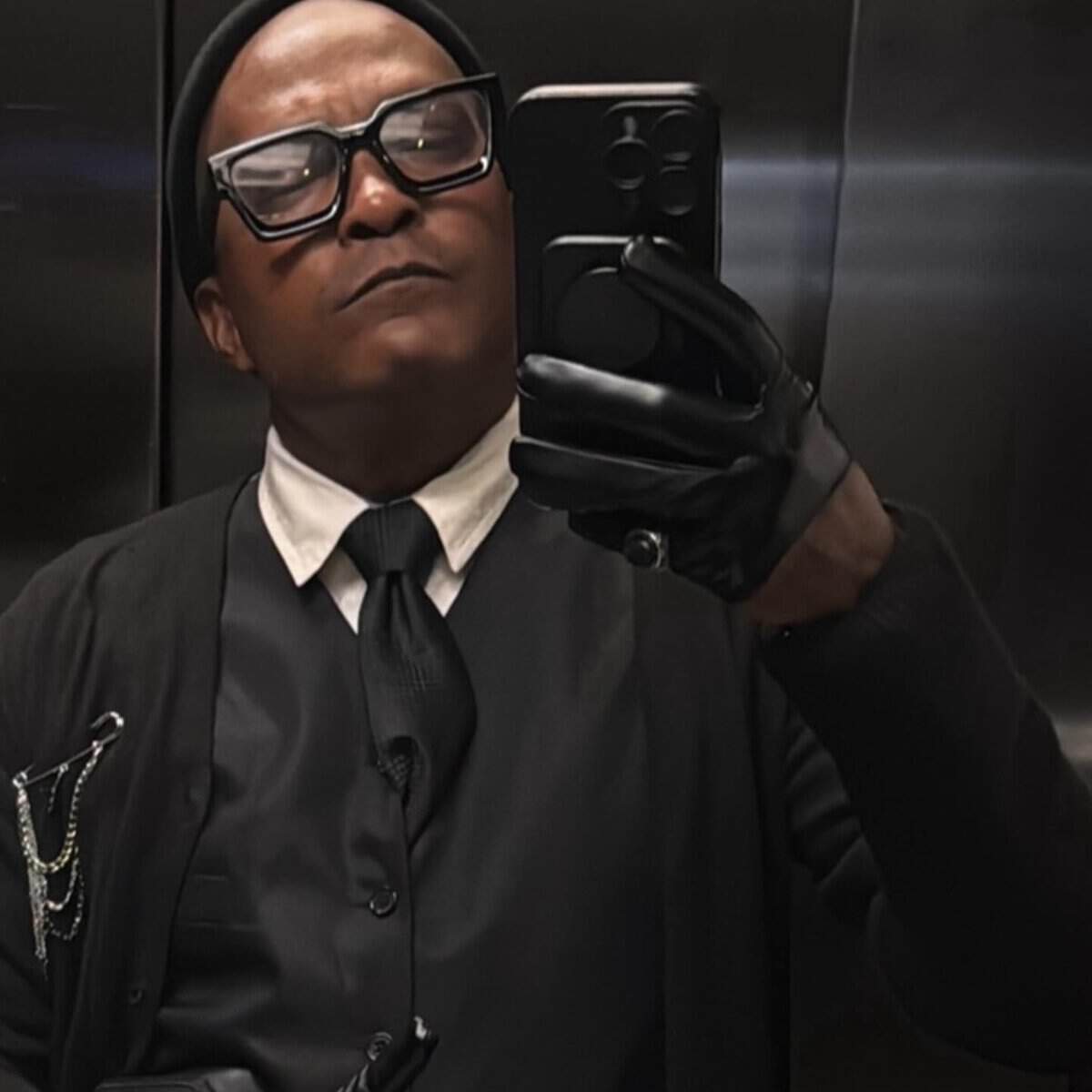
JUAN MATOS at a glance
- Stage name: Juan Matos, known as Juan “Pachanga” Matos
- Origin and home base: Santo Domingo 🇩🇴 [1]; New York, then around twenty years in Europe, mainly in Milan [1][2]
- Stage partners: Jessica Ortiz, Burju Hurturk, Kimberli Flores, Amneris Martinez (from 2006), Giada Cristofari (2018); Mambo Aces with Adolfo Indacochea (2013) [2][3][4]
- Teams: Osmar Perrones’s student group, then Santo Rico, then his own project Fogarate [1][5]
- Style: New York-style Mambo (On2), rumba, afro [2][6]
- Mentors: Vitico Pacheco, Osmar Perrones, Thomas Guerrero [1][5]
- Nickname: Pachanga, already used in Santo Domingo before he started dancing [1]
- Status: says he has retired from dancing as a full-time profession [1]
Juan Matos, known as Pachanga: from Santo Domingo to Milan, Mambo danced by feel
He was born in Santo Domingo, learned Salsa at a New York club, and spent twenty years living in Europe. Juan Matos, whom everyone calls Pachanga, dances a Mambo that is felt more than counted: “it’s not style, it’s FEELING.”
Misquoted claims circulate about him: a native New Yorker, a step that supposedly gave him his nickname. Here is his story in order, in his own words.
About this article
This article follows Juan Matos’s life in order, from Santo Domingo and New York to the present, with his own words at every stage. The facts come from his interviews, the specialist press, and the accounts of those who have danced with him. The numbers in brackets refer to the notes at the bottom of the page.
Last updated: October 2026.
Contents
- True or false: the 6 myths about Juan Matos
- Santo Domingo: boleros, a father who dances, a nickname
- New York, 1996-1997: a club, a class, Vitico Pacheco
- Osmar Perrones’s group and a first Mambo Showdown
- Santo Rico: Thomas Guerrero, breaking down the music
- Fogarate and Latin Madness, around 2001-2002: a project of his own
- Europe and Milan: “I lived on a plane”
- His stage partners
- 2012-2014: Mambo Aces, Adolfo Indacochea, Michael Fons
- Today: “retired,” but still here
- His style: feeling, body weight, rumba
- His way of teaching: saying what each person can do
- What he says about himself: having fun, staying humble
- In brief: Juan Matos’s journey
- Learning Mambo On2 in Liège and online
- FAQ: all about Juan Matos
- Sources and bibliography
“Because for me, it’s not style, it’s FEELING.” (Because for me, it’s not style, it’s FEELING.) This is what Juan Matos says in a 2013 interview on the Dance Me Free website [6][7].
A nickname everyone knows, Pachanga, a style no one quite copies, a project called Fogarate: his journey is hard to sum up. Claims circulate around him: raised in New York, Eddie Torres’s student, pachanga as a step.
And there is what those claims leave out: a boy from Santo Domingo walking into a New York club, a class, a mentor, and a love of having fun that he has never lost.
Born in New York, trained in dance, Eddie Torres’s student? The 6 MYTHS about JUAN MATOS, TRUE or FALSE
Before telling his story, there is something we need to address. Workshop and directory biographies of Juan Matos circulate, copied from one website to another, with dates that do not line up. Six claims keep coming up. Which ones hold up? The verdict at a glance, followed by the details in the sections indicated.
❌ MYTH 1 · A native New Yorker?
He supposedly grew up in New York
✅ False — he was born in Santo Domingo. Half of his family already lived in New York, where he spent summers and Christmas before moving there.
❌ MYTH 2 · Pachanga, a step?
His nickname supposedly came from a Pachanga step
✅ False — he already had this nickname in Santo Domingo, before he started dancing. For him, pachanga means a big party.
❌ MYTH 3 · A dancer trained in dance?
He supposedly had classical training
✅ False — in 2008, he says he has “ninguna formación en otro tipo de baile.” He learns in clubs, with his teachers, and from videos.
❌ MYTH 4 · A student of Eddie Torres?
He supposedly studied with the Mambo King
✅ Needs nuance — Juan says he never studied with Eddie Torres; Eddie includes him among those who spent “un ratito” by his side.
❌ MYTH 5 · “Magic Combination,” his group?
He supposedly started out in the Magic Combination Dancers
✅ Needs nuance — “el magic era de Vitico”: it is Vitico Pacheco’s group. Juan talks about Osmar Perrones‘s student group, then Santo Rico.
❌ MYTH 6 · “Forgarate,” a group?
Fogarate is supposedly his dance group
✅ Needs nuance — he spells it Fogarate and prefers to say “project” or “family”: dancers from different groups.
SANTO DOMINGO: his grandfather’s boleros, a father who dances, a nickname before dancing
Juan Matos is born in Santo Domingo: “I was born in the Dominican Republic” (I was born in the Dominican Republic) — Juan Matos, Salsa Language, 2024 [1]. But his family is already in New York: “half of my family was living in New York already […] So I used to go to New York for summer, Christmas, and stuff like that” (half of my family was already living in New York […] so I used to go to New York in the summer, at Christmas, and so on) [1].
Music is everywhere at home. His grandfather plays boleros on the radio: “after dinner, he used to sit down in the porch of the house, play music, but he was playing boleros” (after dinner, he would sit on the porch of the house and put on music, but it was boleros) [1]. His father dances: “My father was a ‘champion’ in Latin Hustle in the eighties” (my father was a “champion” in Latin Hustle in the 1980s). Juan draws a lesson from this: “That’s not the dance I chose, but the music from my background was always there” (it is not the dance I chose, but the music I grew up with was always there) [6].
The nickname “Pachanga” comes from there too. He has spoken about it several times, always to dismiss the idea of a step: “they used to call me like that even when I was in Dominican Republic, but it’s not because the step of the pachanga” (they already called me that in the Dominican Republic, but it is not because of the Pachanga step) [1]. Pachanga means a party: “Pachanga in a lot of countries in America means a big party, not a step” (in many countries in the Americas, pachanga means a big party, not a step). And this is how he sees himself: “I’m the life of my family” (I am the life of the party in my family) [1].
NEW YORK, 1996-1997: a club, a SALSA class, and Vitico Pacheco
Juan Matos moves to New York around 1996 [3][5]. There were no Salsa classes in Santo Domingo: “I started going to salsa classes because of a girl” (I started going to Salsa classes because of a girl) — Juan Matos, La Voz del Mambo [2]. At a club, she tells him that the only way to see her again is to go to her class. His reaction: “salsa class, what the hell is that” (a Salsa class, what is that thing) [2].
He goes. The teacher is Vitico “La Magia” Pacheco. He gives the date himself in 2008: “Mi primera clase fue a mediados de 1997 con Vitico ‘Magia’ Pacheco” (My first class took place in mid-1997 with Vitico “Magia” Pacheco) [2]. The class is weekly: “I took a month of classes with him, but it was only one class per week” (I took a month of classes with him, but only one class a week). Then Vitico offers to let him continue without paying: “he told me to keep coming to the class and I would not have to pay because I had talent” (he told me to keep coming to class and that I would not have to pay because I had talent) [2].
Then an accident keeps him away from dancing, early in his classes. He tells the story at different times, with different details. In 2008, he says: “Debido a un accidente de auto, el cual me dejó medio paralítico, no pude seguir en el baile” (because of a car accident that left me half paralyzed, I could not keep dancing) [2]. In the La Voz del Mambo interview, he speaks of almost a year: “I had a car accident and I could not walk or dance for almost a year” (I had a car accident and could not walk or dance for almost a year) [2]. He still meets up with Dominican dancers in the clubs, and draws a lesson from it: “I learned so much during that time of watching and listening to their advice” (I learned so much during that period by watching and listening to their advice) [2].
In 2020, he describes the scene. He is in a taxi, in the snow: “el taxi se vio para atrás y chocó con otro carro que estaba parqueado” (the taxi backed up and hit another car that was parked). Then: “los huesos me hicieron así, entonces duré un tiempo” (my bones went like this, so I was out of action for a while). He then mentions therapy, without saying for how long [5].
His respect for Vitico remains absolute: “y es mi grandísimo maestro, no sólo de baile, también en lo personal” (and he is my great mentor, not just in dance, but in my personal life too) — Juan Matos, De Tú a Tú, Franco Rocha, 2020 [5].
NEW YORK: OSMAR PERRONES’s group and a first MAMBO SHOWDOWN
At the same club, another young woman points him toward a group: Osmar Perrones‘s student group [1]. Juan learns the choreography and gets ready to go on stage. It is not the neighborhood club he was expecting: “I thought it was gonna do a little club in the Bronx full of Dominicans” (I thought it would be a little club in the Bronx full of Dominicans) — Juan Matos, Salsa Language, 2024 [1]. His first performance takes place around the year 2000 [1][2][5].
It is a Mambo Showdown, and the room leaves him stunned: “even the bartender was dancing I was like oh my god where am I” (even the bartender was dancing, I was thinking: my God, where am I?). He describes an event resembling a congress: “was like a tiny Congress” (it was like a very small congress) [1]. His group is the only student group in the show [5].
His first costume remains a funny memory. He is skinny, and they add padding: “mi primer vestuario era una camisa roja de la de mambero” (my first costume was a red mambero shirt), then “yo parecía […] como un palillo y le pusieron las dos cajas de fósforo a los lados” (I looked like […] a toothpick, and they put two matchboxes on the sides) [5].
Workshop biographies describe the “Magic Combination Dancers” as his first group. Juan clarifies: “el magic era de Vitico” (Magic was Vitico’s group) [5].
And then comes the revelation: “from there i was like i belong here” (from that point on, I thought: this is where I belong) [1].
SANTO RICO: Thomas Guerrero and the art of breaking down music
Juan moves from the student group to the professional group, which later disbands. He then joins Santo Rico, the company led by Thomas Guerrero [1][3]. He stays there for two to three years [1].
Santo Rico teaches him to read the music: “I learned how to break down music […] when I went and I started training with Santo Rico, with Thomas Guerrero” (I learned to break down music […] when I went to train at Santo Rico, with Thomas Guerrero) [1]. It is also where, for the first time, he is given the freedom to create something, in a choreography titled “Gangster”: “Gracias a Dios fue la primera vez que me dieron carta abierta en montar algo” (thank God, it was the first time I was given free rein to create something) [5].
He sums it up this way: “They gave me the opportunity, and I learned. And then from there, my career started up” (they gave me the chance, and I learned. And from that point on, my career started) [1]. He adds: “I was lucky and I was blessed. Because I came in when the industry was growing up” (I was lucky, I was blessed. Because I arrived when the scene was growing rapidly) [1].
FOGARATE and LATIN MADNESS, around 2001-2002: a project of his own
After Santo Rico, Juan founds his own project: Fogarate Dance Project [3][5]. The word is a popular saying from Santo Domingo: “un dicho urbano popular de Santo Domingo” (a popular urban saying from Santo Domingo) [5]. For Juan, it is not a group, it is a family: “For us it’s a family thing. When we come together for a rehearsal or performance, we enjoy being together and hanging out more than doing a show” (for us, it’s a family thing. When we get together for a rehearsal or a show, we enjoy being together and hanging out more than putting on a show) — Juan Matos, La Voz del Mambo [2].
Around 2001-2002, Adolfo Indacochea, who is still living in Mexico, attends his first congress in New York. There he sees Juan Matos dancing with Fogarate [8]. At the same time, Juan joins the off-Broadway musical Latin Madness: he dances with Addie Diaz in a recreation of a number by Cuban Pete and Millie Donay, two major names of the Mambo era [9]. The experience leaves a strong impression on him: “eso me enseñó un montón” (that taught me so much) [5].
There he meets other dancers trained by Eddie Torres [9]. He says he never studied with Eddie: he only took classes with him when they met at congresses [5]. Eddie, for his part, names Juan among the dancers he has worked with: “Juan Matos estuvo conmigo un ratito” (Juan Matos stayed with me for a little while) — Eddie Torres, Dimension Latina, 2020 [10].
His style is born on the social dance floor: “it just came out naturally” (it came naturally). And social dancing makes his name: “That’s how my name and my way to be as a person got me popular quickly in the New York scene” (that’s how my name and my way of being quickly made me popular on the New York scene) [1].
EUROPE and MILAN: “I was living on a plane”
In the early 2000s, congresses multiply, and Juan is in the right place: “I was there at the right time at the right place” (I was there at the right time, in the right place) — Juan Matos, Salsa Language, 2024 [1]. His fame travels with tapes and DVDs: “So the way I got famous, it was like that by mouth, not the little videos on Instagram” (that’s how I became famous, by word of mouth, not through little Instagram videos) [1].
He leaves for Italy. His reason: “I moved to Italy because I believe that Italy has a bigger market” (I moved to Italy because I believe Italy has a bigger market). People there mostly dance On1 or Cuban style, but they are ready to change: “They want to learn on2 because for them it is a different feeling, something brand new” (they want to learn On2 because for them it’s a different feeling, something brand new) [2].
He then lives between New York and Milan [2], and his pace is hectic: “Me.. I basically live in Italy.. actually I live in a plane” (me… I basically live in Italy… actually I live on a plane) [2]. He will spend twenty years in Europe without ever opening a school: “I never opened up a school out there” (I never opened a school there) [1].
His stage PARTNERS: Jessica Ortiz, Burju Hurturk, Kimberli Flores, Amneris Martinez
Juan names his stage partners himself: “my other dance partners (Jessica Ortiz and my sister Burju Hurturk)” (my other dance partners (Jessica Ortiz and my sister Burju Hurturk)), followed by Kimberli Flores. Of the latter, he says: “Kimberli brought the best out of me” (Kimberli brought out the best in me) — Juan Matos, La Voz del Mambo [2]. A video of their performance at Mardi Gras Mambo II is circulating as early as October 2006 [11].
In April 2006, according to her, Amneris Martinez starts dancing with Juan and his Fogarate project [3]. Cuestión de Baile, which republishes a 2008 interview in 2011, writes that he is “currently” dancing with her, the women’s category champion of a free steps competition in Barcelona [2]. The event she runs speaks of a ten-year partnership: “together with Juan Matos revolutionized the world of salsa with a partnership that lasted 10 years” (with Juan Matos, she revolutionized the world of Salsa, with a partnership that lasted 10 years) [3].
On February 3, 2018, in the United Kingdom, he teaches an On2 and Cha Cha workshop, followed by a Cha Cha partnerwork class with his partner Giada Cristofari [3].
Marco Ferrigno, for his part, is a student and someone close to Juan. Marco says of Juan in 2020: “que igual fue mi maestro por un tiempo” (who was my teacher for a time) [12]. Juan counts him among his own: “but Marco […] is mine” (but Marco […] is one of mine) [1].
2012-2014: MAMBO ACES with ADOLFO INDACOCHEA, and the project with MICHAEL FONS
Juan and Adolfo Indacochea come together on stage. In Freiburg in 2012, Adolfo is reminded of the announcement of a fusion between Mambo and Cuban Salsa with Michael Fons and Juan Matos. Adolfo’s answer: “Yeah, well, we’ve done it already” (yes, well, we’ve already done it) — Adolfo Indacochea, Freiburg Salsa Festival, 2012 [8].
The duo has a name, Mambo Aces: Los Mambo Ace at the Benidorm Salsa Congress on Sunday, July 14, 2013, and the Mambo Aces Megajam workshop at Milan’s On2 Salsa Congress that same year [4]. Juan counts three or four shows with Adolfo: “it was Adolfo […] three shows, four shows” (it was Adolfo […] three shows, four shows). He adds: “And Adolfo, of course, is his family too” (and Adolfo, of course, is his family too) — Juan Matos, Salsa Language [1].
In 2014, Eddie Torres mentions them both as ambassadors of On2 in Europe: “you have guys like Adolfo and Juan Matos, you have these people who are ambassadors now” (you have guys like Adolfo and Juan Matos, people who are now ambassadors) [10]. Adolfo, for his part, names Juan among his inspirations: “dancers like Tito Ortos, Juan Matos, Michael Fons” (dancers like Tito Ortos, Juan Matos, Michael Fons), he says in Freiburg [8].
Michael Fons is one of his best friends. They meet during a weeklong event in Italy: “after that week, that’s it, we became best friends” (after that week, that was it, we became best friends) — Juan Matos, Salsa Language [1]. Michael Fons teaches him Afro and Cuban dance; Juan teaches him to dance in line [1].
TODAY: “retired,” but still here
In the Salsa Language interview posted online in 2024, Juan Matos says he has retired from dancing as a full-time profession: “I’m retired. What I mean by retired is that this is not my living anymore” (I’m retired. What I mean is that it’s no longer how I earn my living) — Juan Matos, Salsa Language, 2024 [1]. Dancing has not disappeared, though: “It became a hobby now” (it’s become a hobby) [1].
There is a story behind this retirement: a difficult period he talks about openly. “I went through hell in my career and in my personal life” (I went through hell in my career and in my personal life) [1]. That is why, he says, he stopped dancing: “I was not loving what I was doing no more” (I no longer loved what I was doing). He talks about alcoholism: “I was falling into alcoholism” (I was slipping into alcoholism), then depression: “I went through a deep depression” (I went through a deep depression). He got through it, and not alone: “I had the heart to get out of it. Not alone” (I had the heart to get through it. Not alone). In 2024, he says: “I’ve been sober for four years” (I’ve been sober for four years) [1].
He remains close to those who trained him: “Thomas Guerrero which is one of my instructors and a really close friend” (Thomas Guerrero, who is one of my teachers and a very close friend) [1]. And he passes on one thing above all: “I create leaders. I don’t create followers” (I create leaders, not followers) [1].
Want to learn Mambo On2?
🎓 Xavier teaches Mambo On2 at Studio24 in Liège. Or online anywhere in the world through Studio Live.
His STYLE: feeling before steps, body weight, rumba
For Juan Matos, style cannot be taught: “for me, it’s not style, it’s FEELING” (for me, it’s not style, it’s FEELING) — Juan Matos, Dance Me Free, 2013 [6]. His advice: “FEEL the music. Do what the music is telling you to do” (FEEL the music. Do what the music tells you to do) [6].
His territory is Afro, Cuban dance, and rumba: “I feel more the Afro and the Cuban and Rumba” (I feel Afro, Cuban dance, and rumba more) [6]. From Cuban rumba, he takes the use of body weight: “I learned a lot how to work with my body weight with the rumba, with the Cuban rumba” (I learned a lot about working with my body weight through rumba, Cuban rumba) [1]. His influences also come from jazz, Bob Fosse, and Michael Jackson [1]. In 2008, he says he has no training in any other type of dance: “Lamentablemente no tengo ninguna formación en otro tipo de baile” (unfortunately, I have no training in any other type of dance) [2].
There is still the word that follows him. In his classes, he turns it into a way of being: “Let it go. Relax. Have fun” (let go. Relax. Have fun) [1].
His way of TEACHING: saying what each person can do
Juan Matos starts with the person when he teaches: “I’m going to tell you what I know you can do. I’m not going to tell you what I think you should do” (I’m going to tell you what I know you can do. I’m not going to tell you what I think you should do) — Juan Matos, Salsa Language, 2024 [1].
He has no written plan: “I’m very spontaneous. So I don’t come with a list. I don’t come with a script” (I’m very spontaneous. I don’t come with a list. I don’t come with a script) [1].
His idea of a good teacher dates back to 2008: “si eres en verdad un buen maestro nunca esperes que el estudiante suba a ti, tú tienes que bajar a buscarlo y así lo ayudas a subir” (if you’re truly a good teacher, never expect the student to come up to your level: you have to go down to meet them, and that is how you help them rise) — Juan Matos, 2008 interview [2].
What he says about himself: having fun, staying humble, creating
Sum up his career in one word? “I came in to have fun. I did have fun and I’m continuing to have fun. Simple” (I came to have fun. I had fun and I keep having fun. Simple) [1]. It was not for money or fame: “I was in there for the fun I was not in there for the money I was not in there for the fame” (I was there for the fun, not for the money, not for the fame) [1].
He reminds people that all of this is still dancing: “it’s still just dancing. Get that through your heads […] Be humble” (it’s still just dancing. Get that into your heads […] Be humble) — Juan Matos, La Voz del Mambo [2].
And for him, dancing is a way of saying something: “I just love to express myself with the music” (I simply love expressing myself through music) [1]. For him, art should not be predictable: “Art is not supposed to be predictable” (art is not supposed to be predictable) [1].
In SUMMARY: Juan Matos’s journey
Eight milestones mark his journey.
- Who: a Dominican dancer of New York-style Mambo, known as Juan “Pachanga” Matos.
- His nickname: he already had it in Santo Domingo, before dancing; it is not a step [1].
- 1996-1997: New York, a Salsa class, Vitico Pacheco [2][3].
- His teams: Osmar Perrones’s group, Santo Rico, then his own project Fogarate [1][5].
- Around 2001-2002: Latin Madness and Fogarate in New York [8][9].
- From the early 2000s: Europe, Milan, congresses [1][2].
- 2013: Mambo Aces, with Adolfo Indacochea [4][8].
- His style: feeling, rumba, body weight [1][6].
Learn MAMBO On2 in Liège and online
The Mambo Juan Matos dances is New York style, on the second count. In Liège, Mambo On2 is danced on Monday: Introduction at 6:30 pm, Basics+ at 7:30 pm, Intermediate at 8:30 pm. After about a year of practice, move on to the Advanced level on Thursday at 6:30 pm. Everywhere else, Studio Live offers video classes you can follow at your own pace.
Want to dance Mambo On2?
🎓 Xavier teaches Mambo On2 at Studio24 in Liège. Or online anywhere in the world through Studio Live.
FAQ: all about JUAN MATOS
🌎 Who is JUAN MATOS?
Juan Matos, known as Juan “Pachanga” Matos, is a Dominican dancer of New York style Mambo. Born in Santo Domingo, he discovers Salsa in New York in a class with Vitico Pacheco, joins Osmar Perrones’ group and then Santo Rico, and later founds his Fogarate project. He then lives in Europe for about twenty years, mainly in Milan, dances with Amneris Martinez, and forms the Mambo Aces with Adolfo Indacochea [1][2][3][4].
🎶 Why is he called PACHANGA?
He had this nickname in Santo Domingo, before he danced. It is not a step: pachanga means a big party, and he says he is “the life of my family” (the life of the party in my family). In 2008, he talks about an urban story about a character named Juan Pachanga; in 2024, about a song and an uncle who calls him that [1][2].
🗽 Was he born in New York?
No. He was born in Santo Domingo. Half of his family lived in New York, where he would go in the summer and at Christmas, before moving there around 1996 [1][3].
🤝 Who does he dance with on stage?
He names Jessica Ortiz, Burju Hurturk, and Kimberli Flores as partners [2], then Amneris Martinez, starting in April 2006 according to her [3], and Giada Cristofari in 2018 [3]. With Adolfo Indacochea, he forms the Mambo Aces; with Michael Fons, he has already created, Adolfo says, a fusion of Mambo and Cuban Salsa [4][8].
🌀 What is FOGARATE?
It is Juan Matos’ project: dancers from different groups coming together “as a family.” The word is a popular saying in Santo Domingo [2][5].
🏆 What are the MAMBO ACES?
It is the name of Adolfo Indacochea and Juan Matos’ duo: Los Mambo Ace at the Benidorm Salsa Congress on July 14, 2013, and a workshop at the On2 Salsa Congress in Milan [4]. Juan counts three or four shows with Adolfo [1].
🎓 Is he a student of Eddie Torres?
He says he has never studied with Eddie Torres: he took classes with him at congresses. Eddie lists him among those who spent “un ratito” with him [5][10].
🤝 What is his connection to Marco Ferrigno?
Marco Ferrigno says Juan was his teacher “por un tiempo”; Juan counts him as one of his own [1][12].
🌟 Is he still active?
He says he has retired from dancing full time. Dance has become a hobby, he says, but he stays close to his former teachers and friends [1].
🎓 Want to dance MAMBO On2? Where should you start?
With the foundations — that is what makes all the difference. Xavier Colina teaches Mambo On2 at Studio24 Liège. In Liège: first trial class for 10€, no reservation needed. Just starting out? Come on Monday at 6:30 pm for Introduction. Then Basics+ at 7:30 pm and Intermediate at 8:30 pm. On Thursday, the Advanced level includes Mambo On2 at 6:30 pm. Practice in the evening at Puerto Rico Nights. Anywhere in the world: Studio Live — +300 HD lessons, 7-day free trial.

About the author
Xavier Colina teaches Salsa On1, Mambo On2, and Bachata at Studio24 in Liège (Belgium) and online through Studio Live. Trained in the direct lineage of Eddie Torres → Adolfo Indacochea (World Mastery program), Fernando Sosa and Korke y Judith. Learn more →
Sources & Bibliography
- ↩ Juan Matos speaks — Salsa Language (2024) : SALSA LANGUAGE, 2024. Interview with Juan Matos: Self Expression, Finding Your Own Style, Depression, Artist vs Dancer [online]. Salsa Language, July 30, 2024. Available at: https://www.youtube.com/watch?v=BM695-CC8gU [accessed October 25, 2026]. Note: a 1-hour 52-minute interview with the host of the Salsa Language podcast, in English; cited passages: [01:06], [01:16], [04:04], [04:25], [04:42], [04:56], [06:22], [07:41], [08:19], [11:09], [11:48], [12:10], [12:25], [13:29], [23:34], [24:12], [24:26], [26:43], [27:56], [28:31], [32:06], [35:07], [35:31], [35:58], [38:53], [42:29], [54:35], [54:44], [54:52], [55:00], [55:16], [68:58], [69:08], [74:44], [78:15], [80:10], [83:36], [83:44], [91:55], [106:45], [109:05]; for the difficult period: [45:12], [45:18], [45:22], [45:27], [46:10], [46:16], [46:49]. About his first stage performance, he says in 2024: “it was at 99” [06:38], then that he performed it “thinking was January or February of 2000”; in 2008, he places his entry into Osmar Perrones’ student group at the end of 2000 (Cuestión de Baile); in 2020, he talks about the end of 2000 and the very beginning of 2001 (note 5, [27:51], [28:07], choppy passage). The text keeps the wording around the year 2000. The podcast was posted on its own website on August 26, 2024.
- ↩
Juan Matos speaks — La Voz del Mambo and Cuestión de Baile :
LA VOZ DEL MAMBO. Juan Matos Interview – Italy [online]. Available at: https://www.lavozdelmambo.com/dancers/juan-matos-interview/ [accessed October 25, 2026]. Note: interview conducted by Johnny; the page has a publication date in its metadata, June 2, 2012, from which the date of the interview cannot be inferred; Juan talks about Vitico Pacheco, Italy, Fogarate, his stage partners, and humility. The interviewer spells the project’s name “Forgarate,” which Juan corrects.
CUESTIÓN DE BAILE. Juan Matos [online]. Available at: https://cuestiondebaile.wordpress.com/2011/04/07/juan-matos/ [accessed October 25, 2026]. Note: a post dated April 7, 2011, reproducing an interview from October 6, 2008, by Evelyn Viana for the magazine Salseros; Juan talks about his first class, Santo Rico, his influences, and the word pachanga. The post uses the spellings “Fogaraté” and “Ammeris Martínez.” About the accident: La Voz del Mambo, “almost a year” and “I learned so much during that time of watching and listening to their advice”; Cuestión de Baile, “medio paralítico” (no duration in this version). - ↩
Workshop and directory biographies :
ALCHEMY DANCE. Archive – Juan Matos Workshop [online]. Available at: https://www.alchemydance.co/juan-matos-workshop [accessed October 25, 2026]. Note: presentation of the workshop on Saturday, February 3, 2018, in Basingstoke; it dates his arrival in New York to 1996, uses the spelling “Fogarate,” and announces Juan and his partner Giada Cristofari for a partner Cha Cha class.
SALSEROS EN CLAVE. Juan Matos Workshops in Tampa [online]. Available at: https://salserosenclave.com/juan-matos-workshops-in-tampa/ [accessed October 25, 2026]. Note: workshop announcement published on March 13, 2019; it also gives 1996 for his arrival in the United States (“April 1996”) and 1997 for his first Mambo class.
GO&DANCE. Amneris Martinez [online]. Available at: https://www.goandance.com/en/artist/181/amneris-martinez [accessed October 25, 2026]. Note: an artist profile stating that, since April 2006, the dancer has shared the stage with Juan Matos and his group Fogarate Dance Project.
WOMEN’S PRIDE. About [online]. Available at: https://womenspridenyc.com/about/ [accessed October 25, 2026]. Note: page for the event directed by Amneris Martinez; it mentions a ten-year partnership with Juan Matos. - ↩
The Mambo Aces (2013) :
BENIDORM SUMMER FESTIVAL, 2014. LOS MAMBO ACE – ADOLFO INDACOCHEA & JUAN MATOS (New York – Milán) @ Benidorm Salsa Congress 2013 [online]. Benidorm Summer Festival, April 29, 2014. Available at: https://www.youtube.com/watch?v=xIMIet1wXUw [accessed October 25, 2026]. Note: the description places the performance at the “Show del Domingo en el Palacio de Cristal,” on Sunday, July 14, 2013.
MORNINGSTARKOZ, 2013. Adolfo Indacochea & Juan Matos – Mambo Aces Megajam WS [online]. morningstarkoz, May 1st, 2013. Available at: https://www.youtube.com/watch?v=G3U3tRG_ZwY [accessed October 25, 2026]. Note: the description states “On2 Salsa Congress 2013 – Milan, Italy.” - ↩
Juan Matos speaks — Franco Rocha (2020) :
FRANCO ROCHA, 2020. DE ” TU A TU ” FRANCO ROCHA CON JUAN MATOS (first part) [online]. Franco Rocha, June 11, 2020. Available at: https://www.youtube.com/watch?v=jezc3BFNl-k [accessed October 25, 2026]. Note: the show De Tú a Tú; cited passages: [13:41], [21:37], [21:39], [21:46], [21:49], [21:57], [27:51], [28:07], [29:05], [29:23]. The accident is recounted at [21:13]-[21:57]: a taxi in the snow, affected bones, therapy, no duration given. The host suggests the years 1996 and 1997; Juan replies “por ahí más o menos” to the first [08:03].
FRANCO ROCHA, 2020. DE ” TU A TU ” FRANCO ROCHA CON JUAN MATOS (second part) [online]. Franco Rocha, June 11, 2020. Available at: https://www.youtube.com/watch?v=RJZyOG7yg2o [accessed October 25, 2026]. Note: continuation of the show; cited passages: [01:54], [02:29], [10:36], [12:16], [13:39]. The phrase about the “carta abierta” [02:29] follows the mention of the choreography “Gangster” [02:08], created with Thomas Guerrero and Osmar. - ↩ Dance Me Free (2013) : DANCE ME FREE. « It’s About the Moment » – Reminisce on VIS – Interview #4 – Juan Matos [online]. 2013. Available at: https://dancemefree.com/2013/09/24/reminisce-on-vis-interview-4-juan-matos/ [accessed October 25, 2026]. Note: interview by Trajwani with Juan Matos after the VIS festival; the page bears the date December 1st, 2013, and a URL dated September 24, 2013.
- ↩ Translations: The translations of the quotations in this article, from Spanish and English into French, are by the author.
- ↩
Adolfo Indacochea talks about Juan Matos :
SALSA STEVE, 2021. Dance Insider with Adolfo Indacochea Ep. 19 [online]. Salsa Steve, December 29, 2021. Available at: https://www.youtube.com/watch?v=QQdw0b3txOw [accessed October 25, 2026]. Note: Adolfo recounts his first New York congress, which he dates to 2001 or 2002 [18:23]-[18:34], where he sees Juan Matos dancing with Juan’s own project.
RICO JOCHEN ANDERER, 2012. Interview Adolfo Indacochea @ Freiburg Salsa Festival 2012 [online]. Rico Jochen Anderer, October 1st, 2012. Available at: https://www.youtube.com/watch?v=s9OT1tMC4PA [accessed October 25, 2026]. Note: cited passages: [00:30], [01:58]. - ↩ Latin Madness : MCMAINS, Juliet, 2015. Spinning Mambo into Salsa: Caribbean Dance in Global Commerce. New York: Oxford University Press, 2015. Note: passage about the recreation of the Palladium (“The 2001/2002 Off-Broadway show Latin Madness included a number reconstructing the routine of mambo era greats Cuban Pete and Millie Donay, danced by salseros Juan Matos and Addie Diaz”); the final chapter dates the musical to 2001 [accessed October 25, 2026].
- ↩
Eddie Torres talks about Juan Matos :
DIMENSION LATINA CHANNEL, 2020. Collegamenti dal Mondo : Intervista in collegamento Live con “MAMBO KING” Eddie Torres [online]. Dimension Latina Channel, June 26, 2020. Available at: https://www.youtube.com/watch?v=oCnvgTut0tA [accessed October 25, 2026]. Note: Eddie Torres lists the dancers with whom he has had “la dicha de trabajar” [17:15]-[17:30].
RENE SALSA LT, 2014. Eddie Torres interview with Rene in Warsaw 2014 (part 5) [online]. Rene SALSA LT, December 31, 2014. Available at: https://www.youtube.com/watch?v=d93TR5hw2iA [accessed October 25, 2026]. Note: Eddie Torres’ comments on Europe [00:45]-[00:57]. - ↩ Juan Matos and Kimberli Flores (2006) : ADDICTED2SALSA, 2006. Best of Salsa Dance – Juan Matos and Kimberli Flores [online]. Addicted2Salsa, October 12, 2006. Available at: https://www.youtube.com/watch?v=Ae1k7PNRGGw [accessed October 25, 2026]. Note: the description places the performance at Mardi Gras Mambo II.
- ↩ Marco Ferrigno talks about Juan Matos : ARGENTINA SALSA CONGRESS, 2020. Marco Ferrigno – Entrevista en vivo parte 2 [online]. Argentina Salsa Congress, April 6, 2020. Available at: https://www.youtube.com/watch?v=KkdQomEYqpo [accessed October 25, 2026]. Note: live interview; cited passage: [14:00]-[14:10].
Want to DANCE Mambo? Take the first step!
+1500 students have been there before you. Even those who swore they had “two left feet.” We’re waiting for you 💃
🎁 Give a gift voucher · 📱 Learn online · 📖 Blog & articles